REVIEW · BUCHAREST
9 days Balkans Tour from Bucharest to Sofia and Budapest
Book on Viator →Operated by Guided Europe Tours · Bookable on Viator
Danube dreams start with a cave. This 9-day Balkans route links Romania, Bulgaria, North Macedonia, Albania, Montenegro, Bosnia, Serbia, and Hungary with an air-conditioned coach and local guides at key sights, so you get structure without feeling rushed. You’ll also sleep in the middle tier of the travel world—4-star hotels with breakfast—then walk through the kind of places you’d struggle to stitch together on your own.
One drawback to keep in mind: comfort and timing can be inconsistent. At least one past participant complained about an uncomfortable vehicle and that the day started very late, which matters when you’re paying for limited vacation days.
In This Review
- Key Things I’d Focus On Before You Go
- Bucharest to Budapest Without Backtracking: What the Route Means
- The Coach Ride: Air-Conditioned Comfort vs. Real-World Seat Time
- Day 1: Devetashka Cave, Krushuna Falls, and Lovech Overnight
- Devetashka Cave
- Krushunskiye Waterfalls
- Lovech Hotel Night
- Day 2: Lovech Covered Bridge and Sofia’s Evening Walking Loop
- Day 3: Rila Monastery (UNESCO) and Skopje’s Big Hitting Sights
- Rila Monastery
- Skopje Orientation After Arrival
- Day 4: Skopje’s Walking Tour Plus Ohrid’s Lakefront UNESCO Old Town
- Day 5: Tirana After the Border Crossing, With Skanderbeg at the Center
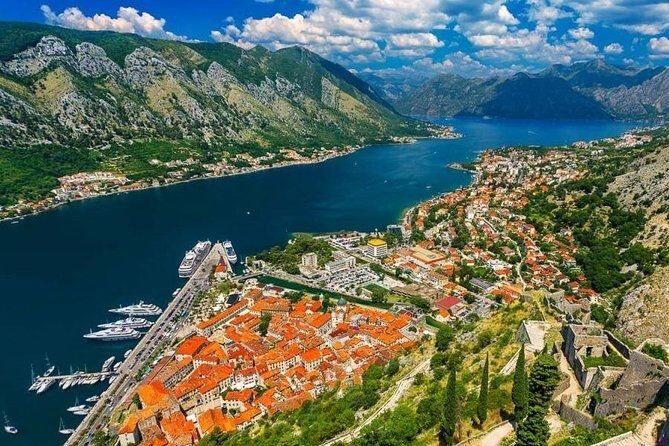
- Day 6: Kotor Old Town (Stari Grad) and the Wall-to-View Feeling
- Day 7: Mostar’s Old Bridge Story, Then Sarajevo’s Ottoman and Austro-Hungarian Mix
- Mostar and the Old Bridge
- Scenic Drive to Sarajevo
- Sarajevo Walking Tour
- Day 8: Belgrade’s Republic Square, Skadarlija, Kalemegdan, and the Danube Meeting
- Day 9: Novi Sad Stop and Budapest Arrival With 3 Hours to Get Oriented
- Hotels, Breakfast, and the Reality of Mid-Range Comfort
- How Much Walking You’ll Actually Do
- Price and Value: What $1,191.42 Buys (and What It Doesn’t)
- Should You Book This Bucharest to Sofia and Budapest Tour?
- FAQ
- What countries and major cities does the tour cover?
- What is included in the price?
- Are entrance fees included for museums and attractions?
- How much walking should I expect?
- Where do I meet the tour, and where does it end?
- Do I need a passport?
Key Things I’d Focus On Before You Go
- One-way route, no backtracking: you move forward through the Balkans, so sightseeing time isn’t wasted on repeat roads.
- Air-conditioned transport for long drives: great for heat, bad for boredom, and you’ll want snacks and water either way.
- Local guides at several countries’ highlights: Romania, Sofia, Skopje, Tirana, and Sarajevo get specific attention.
- UNESCO-heavy day plan: monasteries, old towns, and fortresses appear repeatedly, not just as a quick photo stop.
- Easy-to-moderate walking pace: expect 2–5 hours of walking some days, with examples like Sofia at about 4 km for a 1.5-hour tour.
- Max 46 travelers: a group size big enough for energy, small enough for the guide to keep things moving.
Bucharest to Budapest Without Backtracking: What the Route Means
This is a big “from here to there” trip, and the smart part is the direction. You start around Bucharest, then work your way south and west through the Balkans, ending in Budapest. That one-way feel is more than marketing. It means fewer days where you’re staring out the window thinking, Why are we going back?
You’re also getting a tour leader and English-speaking setup. The tour language is listed as English, and the group cap is 46 travelers. That usually keeps things organized at border crossings and busy city centers, where delays can turn a good plan into a bad one.
The catch: it’s still a multi-country drive. Expect long sit-down travel days sprinkled with walking-focused sightseeing. If your ideal trip is slow and spontaneous, this one might feel like a guided checklist. If you want coverage—fast—and you like knowing what you’ll see each day, it’s a solid match.
You can also read our reviews of more tours and experiences in Bucharest.
The Coach Ride: Air-Conditioned Comfort vs. Real-World Seat Time
The included transport is an air-conditioned vehicle for the entire tour, which is genuinely helpful in hot months and on long stretches between cities. You’re also traveling as a group, so you avoid the stress of coordinating intercity buses and timing your arrival for evening check-ins.
But here’s the practical part: seats are seats, and vehicle comfort varies. One review raised a red flag about an uncomfortable small van and even mentioned a broken windshield. I can’t verify what your day will look like, but you can use that information in your decision. If you’re sensitive to cramped seating or you hate late departures, it’s worth considering that this tour is a bus/van-style operation, not a private luxury car.
My advice: pack for the ride. Bring water, a light layer for air-conditioning, and something to pass the time. Also, build your expectations around arriving, walking, eating, and sleeping—because that’s the rhythm here.
Day 1: Devetashka Cave, Krushuna Falls, and Lovech Overnight
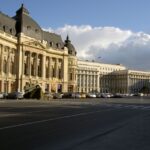
You’ll depart early (the schedule lists an 8:30am start time, and the day’s departure is shown as 08:00 from the University Square area). The meeting point is listed at Bulevardul Regina Elisabeta 7, București.
Then you get your first taste of Bulgaria with two very different natural stops:
Devetashka Cave
Devetashka is a karst cave near waterfalls, and the standout detail is how usable it feels inside. It’s described as very well lit, with a floor covered in lush greenery in spring and summer. That’s the kind of cave where you’re not just staring into darkness—you’re actually walking through something that feels alive.
Admission is not included here, so budget a small extra fee.
Krushunskiye Waterfalls
Krushuna Falls are described as the biggest travertine cascade in Bulgaria. You’re looking at multiple terraces, small natural pools, and a main waterfall around 20 meters high that splits into smaller ones along soft limestone rock. If you like waterfalls but also like places that aren’t just one single drop, this stop fits.
Again, admission is not included for this one.
Lovech Hotel Night
You end the day in Lovech for an overnight. The accommodation is listed as 4-star for the tour’s hotel package, and you’ll get breakfast included on the next morning. After a day with caves and waterfalls, this first night is where you reset before cities take over.
Day 2: Lovech Covered Bridge and Sofia’s Evening Walking Loop
Day two starts with a quick hit in Lovech: the Covered Bridge over the Osam River. It connects two halves of town and is treated as one of Lovech’s must-see sights. If you like small-town details, this is a nice breather before the bigger, denser capitals.
Then you head to Sofia and arrive in the evening for a walking tour of the city center. This is where your legs start doing the sightseeing work, but it’s also a practical way to get oriented.
You’ll see the gold-domed Alexander Nevsky Cathedral, Sveta Sofia Church, Banya Bashi Mosque, the Sofia Synagogue, and you’ll also walk the main shopping street Vitosha.
Everything listed for this part shows admission free, which is nice. The main thing you pay with is time and energy: comfortable shoes matter because you’ll be walking rather than just driving past these landmarks.
Day 3: Rila Monastery (UNESCO) and Skopje’s Big Hitting Sights
After breakfast, the plan shifts into a major cultural day.
Rila Monastery
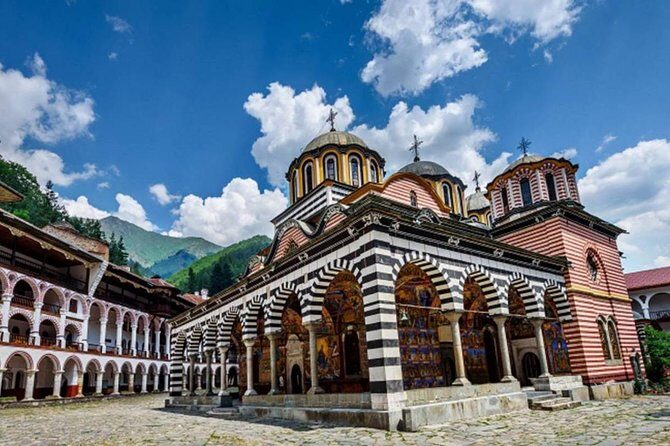
Rila Monastery is Bulgaria’s most famous tourist site and a UNESCO World Heritage location. It was founded in the 10th century by Saint Ivan Rilsky (St John of Rila). The tour specifically includes visiting the Church, with artwork connected to 19th-century masters from schools tied to Samokov, Bansko, and Debar.
This is the kind of stop that rewards calm attention. If you rush it, you’ll miss the way the monastery served as a center of Bulgarian culture and Orthodox belief for centuries. Admission is listed as free for this included visit.
Skopje Orientation After Arrival
In the early evening you arrive in Skopje for an orientation tour and a centrally located hotel.
Your walking route includes:
- the Vardar river quay
- the narrow streets in the Old Bazaar (listed as the biggest bazaar preserved in the Balkans)
- the Memorial house of Mother Teresa
- Kale fortress
- Macedonia Square, with the statue of Alexander the Great on horseback
This day is mostly about getting your bearings so the next stop can feel more meaningful.
Day 4: Skopje’s Walking Tour Plus Ohrid’s Lakefront UNESCO Old Town
Skopje again—this time a focused walking tour after breakfast. You’ll revisit its key landmarks: Vardar river quay, Old Bazaar lanes, Kale fortress, and Macedonia Square.
Then the pace changes to Ohrid, another UNESCO site and a lakefront city on the border of Macedonia and Albania. Ohrid is described as Europe’s oldest lake, formed over three million years ago, which is a fun fact you can use while you’re standing on the waterfront and realizing you’ve got more time-depth around you than you expected.
Your old town walk includes:
- narrow streets and squares
- the Ancient Theater
- older churches, monasteries, and basilicas like Sveti Sofia Church
- Tsar Samuil’s (Samuel’s) Fortress
- a pedestrian shopping street for a break
Admission is listed free for the walking tour segment. The realistic consideration: by this point, you’ve done multiple cities and multiple walks. Build in time to sit down, even if it’s just a short pause with a drink.
Day 5: Tirana After the Border Crossing, With Skanderbeg at the Center
You cross the Macedonian–Albanian border and reach Tirana, Albania’s capital. The walking tour hits the major city anchors:
- Skanderbeg main square
- National History Museum (as a listed highlight)
- Et’hem Bey Mosque
- Skanderbeg’s statue
This day is less about chasing a single ancient site and more about understanding the capital’s layout and its central figures. It’s also a good day to observe how architecture and public space shift as you move west.
Everything listed here is admission free. You’ll still pay for meals on your own, which adds up across nine days, so it’s smart to keep a rough daily food budget.
Day 6: Kotor Old Town (Stari Grad) and the Wall-to-View Feeling
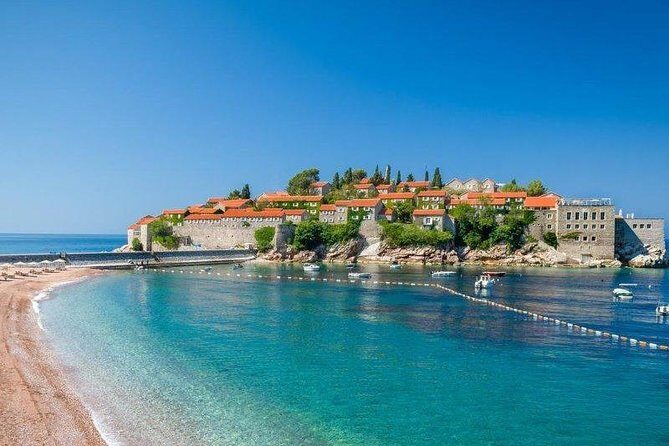
Evening arrival in Kotor means you get the fortified old town atmosphere when the day’s crowds may soften.
You’ll discover Stari Grad, which is UNESCO-listed. Even without extra details, a fortified old town usually means narrow lanes, steep stone corners, and a sense that the city was designed for defense first. It’s the kind of place where walking is the whole point.
The tour segment is listed as admission free. Practical note: stone streets and steep steps can be a real leg workout. If you’ve been using softer shoes, upgrade here in your mind, not in your suitcase.
Day 7: Mostar’s Old Bridge Story, Then Sarajevo’s Ottoman and Austro-Hungarian Mix
This is a two-city day, and it’s one of the emotional peak days on the route.
Mostar and the Old Bridge
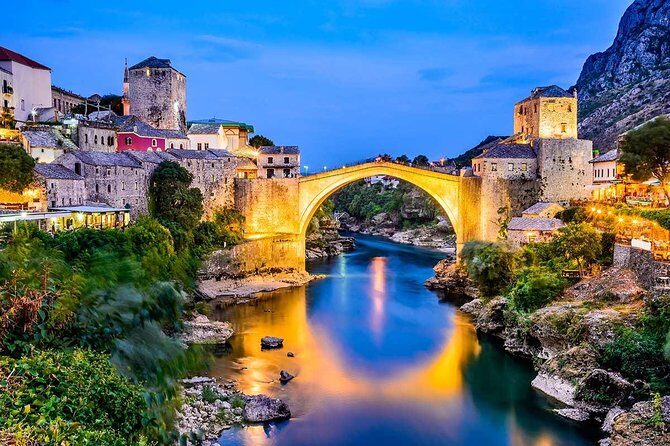
After breakfast you go to Mostar for the old town and the Old Bridge of Mostar. The bridge was built in 1566 and it became important for Mostar’s development. Then in November 1993, during the Siege of Mostar, the bridge was destroyed. The walking tour includes the reasons and key facts around that event.
Mostar also keeps a tradition alive: since the bridge’s reconstruction, there’s bridge diving. Young divers compete to earn a few euros by jumping off the bridge in front of tourists.
This segment is listed as admission free.
Scenic Drive to Sarajevo
From Mostar to Sarajevo you take a scenic road that passes the Jablanica lake and goes via the Neretva river canyon. This is one of those segments where you’ll want to stay attentive; views can be part of the reward for the driving day.
Sarajevo Walking Tour
Sarajevo is the longer walking story of the day—about 3 hours. You’ll hear origins of Sarajevo and the medieval Bosnian kingdom, then focus on both Ottoman and Austria-Hungarian parts of the city.
Your tour is described as covering markets, bazaars, mosques, churches, and synagogues—so it’s not just one architectural style. You’ll also visit the Latin Bridge and learn how World War I was triggered there. The tour also mentions Sarajevo 1984 Winter Olympics and life during the Siege of Sarajevo.
Admission is listed as free for this portion. The consideration here isn’t money—it’s emotions and walking stamina. By this point, you’ll likely appreciate pauses.
Day 8: Belgrade’s Republic Square, Skadarlija, Kalemegdan, and the Danube Meeting
After breakfast you head to Belgrade and arrive in the afternoon.
Your Belgrade walking visit includes:
- Republic Square
- national theater and national museum (as listed highlights)
- Skadarlija, Belgrade’s old quarter
- the oldest part of town with Ottoman heritage
- the only mosque in the city (as listed)
- Kalemegdan park and Belgrade Fortress
- Victor, a famous Belgrade symbol
- the confluence of the Sava and Danube rivers
The tour segment is listed as admission free.
This day is a good example of what you’re paying for with a guided format. Belgrade is big enough that you could get lost in the effort of finding landmarks on your own. A guided walk helps you cover the essentials without turning your afternoon into a map session.
Day 9: Novi Sad Stop and Budapest Arrival With 3 Hours to Get Oriented
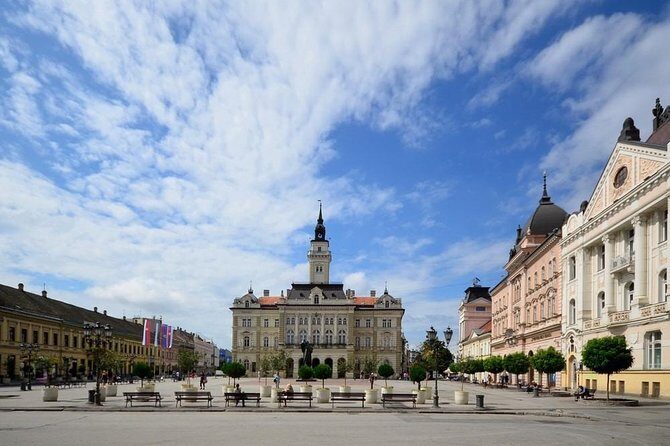
You leave for Budapest with a stop in Novi Sad. You’ll visit Zmaj Jovina Street, the promenade, and the ornamental Palace of the Orthodox Bishop. You’ll also see Dunavska street with its long line of single-storied 19th century houses and the Danube embankment, plus the outside view of Petrovaradin Fortress across the river.
This segment is admission free and about an hour.
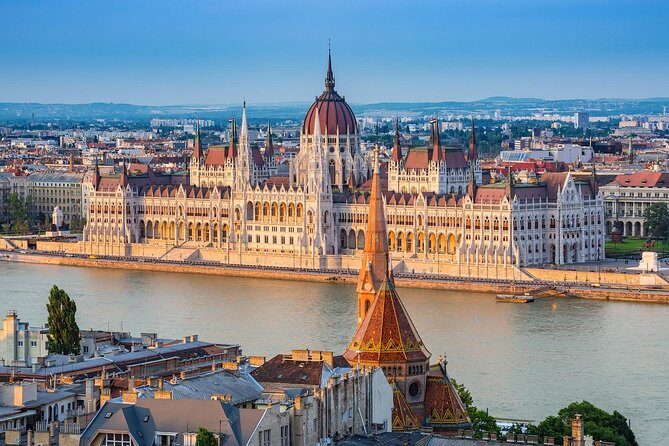
Then you arrive in Budapest in the evening and take a 3-hour walking tour to get bearings in the capital. The tour frames Budapest as the Queen of Danube, and honestly, arriving by guided walk is one of the better ways to start. Nighttime helps you spot the scale fast, even if you’ll plan your detailed sightseeing later.
Hotels, Breakfast, and the Reality of Mid-Range Comfort
The tour includes 8 nights accommodation in 4-star hotels and provides breakfast (8). But the general description also mentions daily 3-star hotels with breakfast. Star ratings can shift by country and by how a hotel markets itself. The best way to think about it: you’re buying convenience and location more than luxury finishes.
You should also know the tour’s physical setup. It’s described as an easy walking tour with moderate pace for people with good general fitness. You’ll carry your own bag on some steps to get into hotels, though many hotels have elevators.
If that’s a concern, keep your luggage small. A day like Mostar plus Sarajevo plus later Belgrade can wear you down, even if the walking tours are labeled moderate.
How Much Walking You’ll Actually Do
This isn’t a sit-and-smile tour. The walking tours range from about 2 hours up to 4 or 5 hours depending on the sights, and distances are described as roughly 1 km to 7 km.
Concrete examples given help you picture it:
- Sofia: 1.5 hours equals about 4 km
- Skopje: 1.5 hours equals about 3 km
So you can expect a mix of shorter city loops and longer walks on days with multiple landmarks or tighter historic cores. Comfortable shoes are not optional here. Bring something that handles cobblestones and steep stone lanes.
Price and Value: What $1,191.42 Buys (and What It Doesn’t)
At $1,191.42 per person, this tour is priced for guided coverage across a large chunk of the Balkans. You’re not just paying for someone to point at a cathedral. You’re paying for:
- air-conditioned group transport
- a professional tour leader
- 8 nights in hotels
- breakfast every morning included (8 times)
- walking tours across major city cores and UNESCO sites
- at least some local guides for specific countries and cities
What’s not included is also important:
- tips for the driver/tourguide: 5 euro/day/person
- food and drinks (unless specified)
- entrance fees at museums
Also note that some nature attractions have admissions not included, like Devetashka Cave and Krushunskiye Waterfalls. The tour lists many walking tours as admission free, but not every stop is costless.
My take on value: you’re getting a lot of landmark density for the money, and the included breakfast cuts one daily expense. If you eat at mid-range places and budget for a few entrance fees, the total cost is manageable. If you hate group travel logistics, your frustration can outweigh the value fast.
Should You Book This Bucharest to Sofia and Budapest Tour?
Book it if you want structured Balkan coverage with local-guided walking tours, UNESCO stops, and the convenience of hotels plus breakfast. This is also a good fit for first-timers who want to see how the region shifts from Orthodox monasteries to Ottoman and Austria-Hungarian city layers, then into Serbia and Hungary.
I’d think twice if you’re picky about vehicle comfort or you need mornings to start early. One review complained about a cramped ride setup and a late daily start, and that’s exactly the kind of thing that can ruin a trip if it affects you physically or mentally.
If you do book, plan like a seasoned traveler: light bag, good shoes, water and snacks for driving days, and a realistic budget for tips and entrance fees. This tour is built for momentum. Bring the right expectations, and you’ll end with a lot of stamps in your travel brain.
FAQ
What countries and major cities does the tour cover?
The tour runs through Romania, Bulgaria, North Macedonia, Albania, Montenegro, Bosnia, Serbia, and Hungary. The main cities and towns visited include Bucharest, Lovech, Sofia, Skopje, Ohrid, Tirana, Kotor, Mostar, Sarajevo, Belgrade, Novi Sad, and Budapest.
What is included in the price?
The tour includes 8 nights accommodation in 4-star hotels, transport by air-conditioned vehicle for the entire tour, a professional tour leader, and breakfast for 8 days.
Are entrance fees included for museums and attractions?
Entrance fees at museums are not included. Some specific stops list admission as not included, such as Devetashka Cave and the Krushunskiye Waterfalls.
How much walking should I expect?
The tour is described as an easy walking tour with a moderate pace. Walking tours typically run from about 2 hours to 4/5 hours, covering distances roughly from 1 km to 7 km depending on the sites. Sofia is listed as about 1.5 hours and around 4 km, and Skopje as about 1.5 hours and around 3 km.
Where do I meet the tour, and where does it end?
You start at Bulevardul Regina Elisabeta 7, București 030167, Romania, and the tour starts at 8:30am. It ends in Budapest at Kerepesi út 2, 1087 Hungary (train station).
Do I need a passport?
Yes. A current valid passport is required on the day of travel.