REVIEW · BUCHAREST
The Execution of Nicolae Ceauşescu, the end of communism
Book on Viator →Operated by Supplier · Bookable on Viator
This tour turns Bucharest into a final act. It traces Nicolae Ceaușescu’s last days through the Bucharest sites tied to his escape on December 22, 1989, with a certified guide and private air-conditioned comfort.
I love how the guide ties the street-level locations to what actually happened there, not just a parade of names and dates. I also like the practical feel: hotel pickup and drop-off in the Bucharest area, plus a mobile ticket setup so you’re not juggling extras all day.
One drawback to plan around is driving time. If your pickup stretches beyond central Bucharest, the day can shift toward logistics, leaving less time for the places that matter most.
In This Review
- Key points worth knowing before you go
- A last-days route across Bucharest and toward Târgoviște
- Piata Revolukiei: where the escape story starts to make sense
- Ceaușescu Mansion: the propaganda world in rooms people could never enter
- House of the Free Press: when architecture served the message
- Bulevardul Carol I 68: the arrest and the trial-linked location
- Price and logistics: what you’re paying for (and what you still pay extra for)
- Comfort during a heavy subject: how the pacing works
- Who should book this tour?
- Should you book Nicolae Ceaușescu and the end of communism?
- FAQ
- How long is the Nicolae Ceaușescu execution and end of communism tour?
- Is hotel pickup and drop-off included?
- Are the attraction entrance fees included in the tour price?
- What language is the tour offered in?
- Where do the stops take place?
- Is this a private tour?
Key points worth knowing before you go
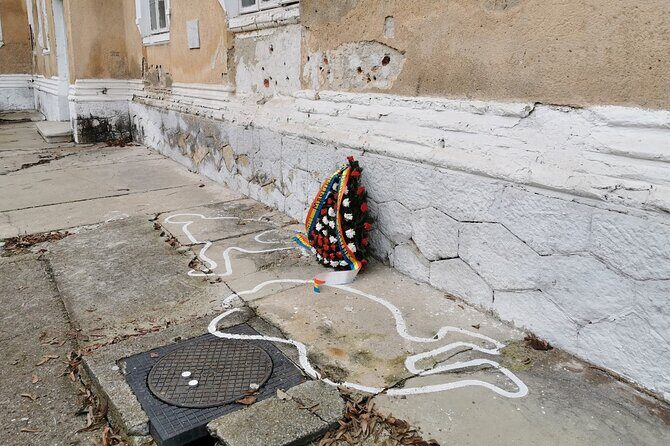
- Revolution Square (Piata Revolukiei) connects directly to the moment Ceaușescu and Elena fled by helicopter on December 22, 1989
- Ceaușescu Mansion shows the secrecy and false grandeur behind the personality cult, with visitor access since 2016
- House of the Free Press (Casa Presei Libere) is a communist-era media HQ, renamed after the 1989 Revolution
- Bulevardul Carol I 68 is the grim stop linked to the arrest, trial, and execution sequence in Târgoviște
- Private, air-conditioned transport keeps the route comfortable for a full ~8-hour outing
- Entrance fees are extra, so budget for the mansion and the execution place on top of the tour price
A last-days route across Bucharest and toward Târgoviște
If you want history that feels like it’s happening in real space, this is the kind of tour that does that well. You’re not stuck reading plaques. You’re standing in the locations tied to Ceaușescu’s escape, capture, and the aftermath that followed the Romanian Revolution of December 1989.
The format is also practical. You get a professional guide, private air-conditioned transportation, and pickup and drop-off around Bucharest. The tour lasts about 8 hours, which sounds long until you realize you’re covering multiple sites with real emotional weight and a lot of road time.
One important planning note: entrances to key sites are not included in the base price. The Ceaușescu Mansion and the execution place have separate entrance fees you’ll pay during the day. That’s not a reason to skip—just don’t assume the ticket is fully covered.
You can also read our reviews of more tours and experiences in Bucharest.
Piata Revolukiei: where the escape story starts to make sense
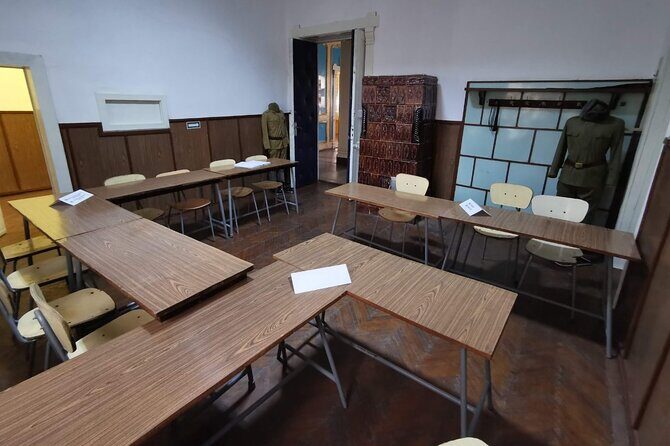
Your first major stop is Piata Revolukiei, Revolution Square, right on Calea Victoriei. This is one of those Bucharest squares where the buildings around you explain the politics. In communist Romania, power wasn’t just abstract. It was housed in visible institutions.
The square includes the former Central Committee building of the Romanian Communist Party. On December 22, 1989, the story goes that Ceaușescu and his wife fled from this complex by helicopter. Later, in 1990, the building became the seat of the Senate, and in 2006 it houses the Ministry of Interior and Administrative Reform. Seeing that sequence in one place helps you understand how quickly regimes can change hands—and how buildings keep serving new masters.
This stop is listed for about 30 minutes. That’s a good length for a square: long enough to get oriented and absorb the main story, not so long that you start staring at stone thinking about lunch.
Practical tip: because it’s in central Bucharest and linked to major streets, it’s easy to connect the stop to your wider day. Even if you arrived with zero background, you’ll leave with a clear starting point.
Ceaușescu Mansion: the propaganda world in rooms people could never enter
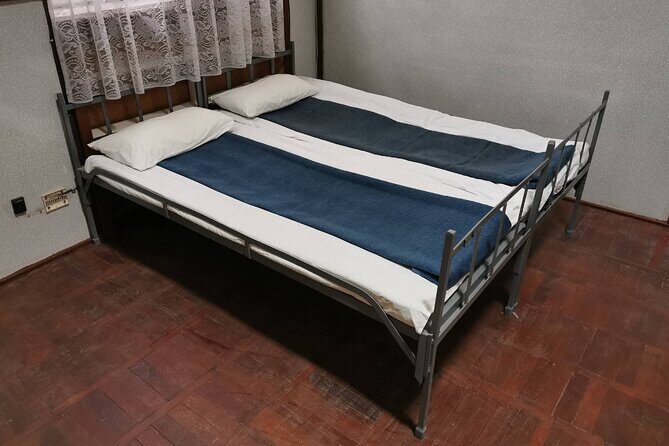
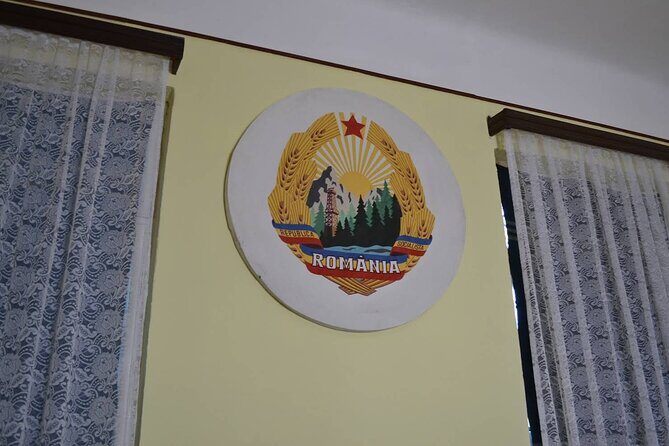
Then you move to the Ceaușescu Mansion, and this is where the “cult of personality” theme becomes real. The mansion opened for visitors in 2016, but the point is what it represents: this was a residence wrapped in secrecy, off-limits for most of the public, with access restricted to close family and top party members.
The guide’s job here is crucial. The mansion is not just a pretty interior tour. It’s a physical example of double standards—how a regime could demand sacrifice from ordinary people while shielding its leadership behind privileged walls. When you walk through spaces like this, you start to understand why personality cults aren’t only about speeches. They’re about controlling the environment, the access, and the story.
The time block is about 1 hour, and the entrance is not included. You should plan on paying the mansion ticket separately (listed as 70 lei, about €14 per person). That’s worth budgeting for because this stop is one of the few in the route where you’re not just observing history—you’re entering a protected private space built to feel untouchable.
A small caution: this stop can feel emotionally heavy even if you’re only passively interested in politics. If you dislike darker, authoritarian-themed sites, you might want to pace yourself and treat it like a serious visit rather than casual sightseeing.
House of the Free Press: when architecture served the message
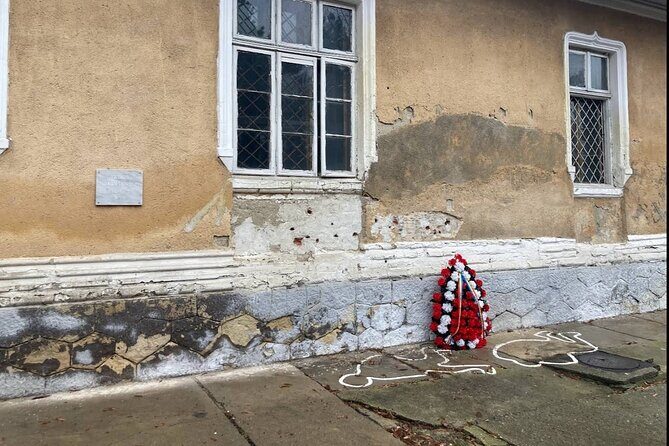
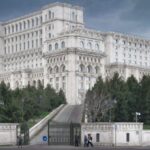
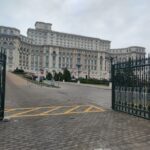
Next is the House of the Free Press (Casa Presei Libere), formerly called Casa Scânteii. The name change after the 1989 Revolution is the first clue that the building has been part of shifting power. Under the communist regime, it served as headquarters for the party’s publication Scânteia, meaning it was designed to operate under communist authority.
This stop is brief—around 10 minutes—but it’s packed. The building combines elements promoted by Soviet architecture with details linked to religious architectural traditions in Wallachia and Moldavia. In other words, it’s not one uniform style. It’s a statement of control that borrows recognizable forms and repackages them into a system that looks official and permanent.
The sheer size matters too. The building is described as having a strong horizontal presence over its vertical line. Even if you don’t know architecture terms, you’ll feel the intent: it’s meant to dominate your view, the way an institution can dominate public life.
Why this matters for your understanding: the communist regime didn’t just enforce rules. It managed what people saw, read, and heard. A “free press” building tells you about the shift in values after 1989, but the structure itself reminds you what it replaced.
If you want to get value from this quick stop, do one thing: spend a minute looking at scale. Then listen closely to what the guide explains about how media institutions were built into the system.
Bulevardul Carol I 68: the arrest and the trial-linked location
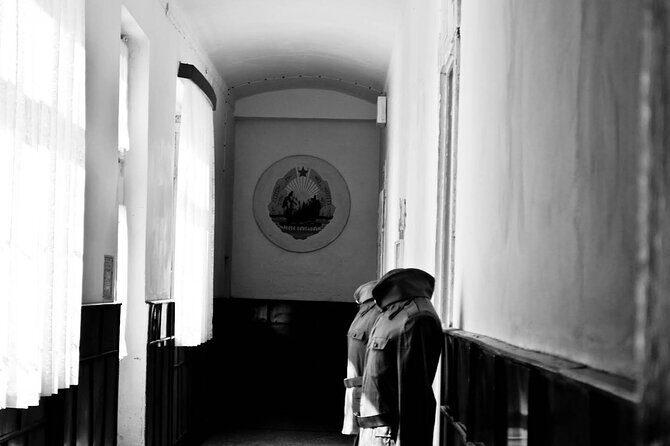
Your final major stop is Bulevardul Carol I 68, tied to the end phase of Ceaușescu’s story. This is where the tour leans hardest into the dramatic and tragic sequence.
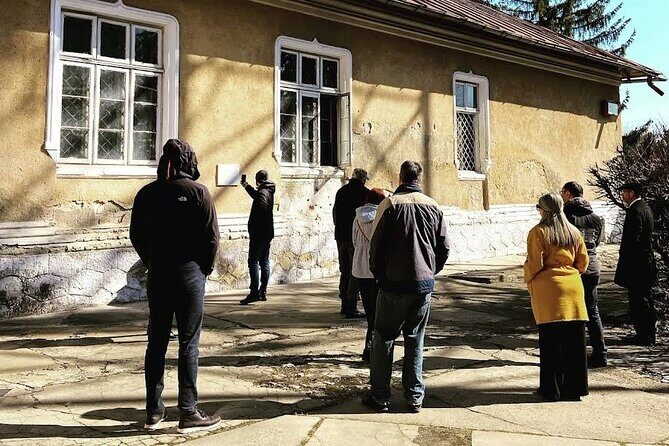
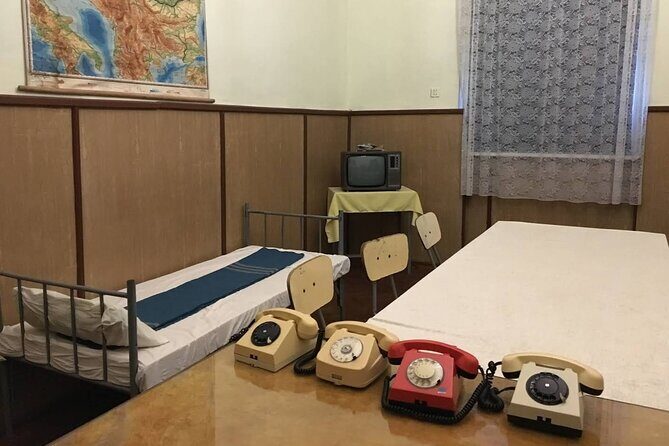
The key points connected to this location are clear: on December 22, 1989, Ceaușescu and Elena fled Bucharest during the anti-communist uprising. They were then arrested and imprisoned in a military base in Târgoviște for the next three days. On December 25, they were tried for genocide in the same building, sentenced to death, and were shot in the inner courtyard shortly after the court hearings were completed.
That’s the timeline you carry with you as you arrive. A place like this doesn’t work like a normal attraction, where you mostly look for photos. It works best as a guided, respectful understanding of how quickly the revolutionary moment accelerated into court and execution.
The stop is listed for about 1 hour, and an entrance fee applies to the execution place (listed as 30 lei, about €6). Plan to budget that extra cost. More importantly, plan your mindset: this is not a “quick stop and walk away” situation.
This is also where private transportation pays off. You’re not hopping between groups on unclear schedules. You’re moving with your guide’s pacing so the context stays intact.
Price and logistics: what you’re paying for (and what you still pay extra for)
The tour price is $188.17 per person, and what you get for that money is mostly the invisible stuff that can make history tours either smooth or stressful.
You’re paying for:
- a professional guide
- private air-conditioned transportation
- hotel pickup and drop-off within the Bucharest area
- a private group setup (only your group participates)
- a mobile ticket style experience
And you’re not paying for:
- Ceaușescu Mansion entrance (70 lei / about €14)
- execution place entrance (30 lei / about €6)
So, in practical terms, your day’s total out-of-pocket tends to be the tour price plus those site fees. That may still feel like a lot until you compare it to the cost of assembling transport, managing multiple tickets, and trying to find a reliable guide who can connect each location in a coherent story.
The main reason people feel differently about value is time distribution. The tour is about 8 hours, and you’ll spend some of that on the road. There’s a real difference between being picked up in central Bucharest and being picked up from farther out. If your pickup has extra distance, you might feel like the driving takes bites out of your on-site time.
My advice: if you can choose where you meet, prioritize central areas. If you’re staying outside Bucharest and pickup is offered as an exception, go in knowing you may trade some time at the key sites for convenience. It’s still a good structure—just adjust your expectations.
Comfort during a heavy subject: how the pacing works
This is a history tour, but it’s also a full-day logistics puzzle. The itinerary is organized around short, purposeful stops: squares and buildings where context matters, then the mansion and the execution-linked location where you need time to absorb what you’re seeing.
The pacing looks like:
- about 30 minutes at Revolution Square
- about 1 hour at Ceaușescu Mansion
- about 10 minutes at the House of the Free Press
- about 1 hour at Bulevardul Carol I 68
That’s roughly 2.5 to 3.0 hours of on-site time, with the rest of the day used for transportation and moving between areas. That math is the reason the vehicle and guide matter. You’re relying on a driver and a guide to keep you from wasting time guessing directions or losing momentum.
If you like walking history, this tour is still manageable. If you prefer minimal walking and maximum explanation, you’ll do fine. Most of the work here is watching, listening, and letting each place reframe the next.
Who should book this tour?
I think this tour fits best if you want:
- a guided explanation of the final days of Ceaușescu, tied to real sites
- a mix of political and architectural context (not just grim scenes)
- comfort and structure, especially with private transport
It’s also a good choice if you’re the type who hates vague “freedom and democracy” tours that never show you where power actually sat. Here, you can see institutions built to control the system—then you can see what the country did after 1989.
Avoid if you’re looking for a light, casual day of sightseeing. This route covers execution-linked locations and won’t treat the subject like background noise. Also, if you’re sensitive to long driving days, focus on central pickup locations if that option exists for you.
Should you book Nicolae Ceaușescu and the end of communism?
Yes—if you want a serious, organized route through the places that shaped Romania’s 1989 turning point. The strongest part of the experience is the guide support and the way the locations are linked to what happened there: escape routes, media power, and the end-of-regime legal and violent sequence.
Book it if you:
- value context and interpretation, not just photos
- like private, air-conditioned transport for a long day
- are okay paying extra for the mansion and execution place entrances
Skip or reconsider if:
- your schedule is tight and you hate road time
- you expect all attractions to be included in the base price
- you want something upbeat and low-emotion
FAQ
How long is the Nicolae Ceaușescu execution and end of communism tour?
The tour runs for about 8 hours.
Is hotel pickup and drop-off included?
Yes, hotel pickup and drop-off are included in the Bucharest area.
Are the attraction entrance fees included in the tour price?
No. Entrance fees are listed as extra: Ceaușescu Mansion (70 lei / about €14 per person) and the execution place (30 lei / about €6 per person).
What language is the tour offered in?
The tour is offered in English.
Where do the stops take place?
The route includes stops in Bucharest and the execution-linked location in the Târgoviște area.
Is this a private tour?
Yes. Only your group participates, with private transportation and guide service.