REVIEW · SIBIU
Sibiu: Scholar-Led Baroque Masterclass – Church & Brukenthal
Book on GetYourGuide →Operated by Mai Uman Research Centre in Sustainable Development · Bookable on GetYourGuide
Baroque art gets a lot easier to see. This Sibiu masterclass turns church interiors and palace salons into a readable system, with trompe l’oeil and courtly design explained like real-world visual tricks. I love how the guide teaches you the why behind the look, and I love the switch from sacred space to display space inside Brukenthal Palace. One possible drawback: it’s a short, focused route, so if you want lots of walking or many different rooms, this may feel a bit tight.
You’ll start in one active Catholic church in the city center—Holy Trinity, Ursuline, or Franciscan—then move to selected Brukenthal Palace salons. Expect careful attention to craft: how plaster becomes marble, how forced perspective changes scale, and how light lands on gilded stucco. The focus is not on checking off sights. It’s on giving you a clearer eye for how Baroque persuasion works.
The price, about $23 per person, is surprisingly reasonable for what’s included: private guiding, entry into the selected palace areas, and a take-home note with references. Still, plan for cobblestones and a few steps along the way, since this route isn’t ideal for wheelchairs.
In This Review
- Key things to know before you go
- Choosing One Baroque Church in Sibiu: Holy Trinity, Ursuline, or Franciscan
- Reading Baroque Space Like a Language
- Trompe l’oeil, Perspective Grids, and the Craft Behind the Illusion
- From Devotion to Display: Brukenthal Palace Salons and Courtly Taste
- A Private, Scholar-Led Session With École du Louvre Training
- Price and Value: What $23 Buys in Real Learning
- Where This Masterclass Fits Best (and When It Might Not)
- After the Tour: Keep Learning Without Going Back
- Should You Book This Sibiu Baroque Masterclass?
- FAQ
- Where does the masterclass start?
- Which churches are used during the experience?
- How long is the experience?
- Is Brukenthal Palace entry included?
- Is this a private tour or a group tour?
- What languages are available?
- Are photos allowed?
- What should I wear or how should I behave in churches?
- Are donations required?
- What’s the cancellation policy?
- Is “reserve now, pay later” available?
Key things to know before you go
- One church, chosen on the spot: Holy Trinity first, or Ursuline/Franciscan if there’s a service underway
- Baroque explained through optics: perspective, grids, mirrors, proportion, and illusion technique
- A practical look at acoustics: how the vault carries sound with music and architecture
- Brukenthal salons as theater: etiquette, sightlines, seating plans, and the choreography of rank
- Private, scholar-led guiding with École du Louvre training
- Post-visit references plus a small printed keepsake to keep learning after you leave
Choosing One Baroque Church in Sibiu: Holy Trinity, Ursuline, or Franciscan
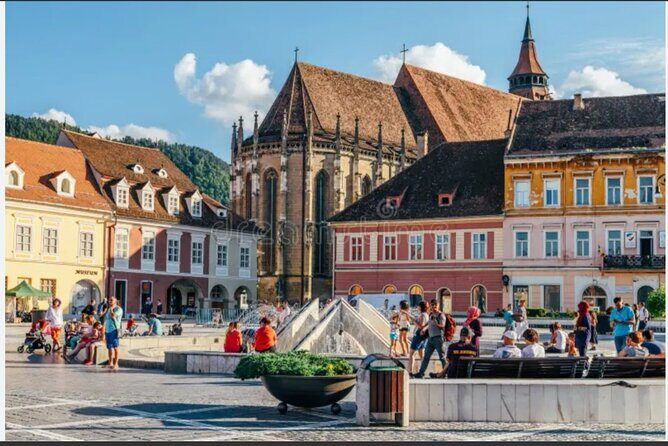
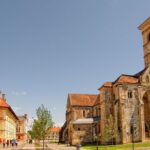
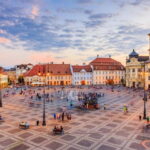
Your meeting point is right in the center, in front of the Holy Trinity Roman Catholic Church portal on Piața Mare 3. That’s the default starting spot, because it anchors the story in Sibiu’s most public square-facing Baroque setting.
If a church service is already underway, your guide will adapt. Your start may shift to the Ursuline church (Str. General Magheru 36–38) or the Franciscan church (Str. Șelarilor 12–14). That flexibility matters more than it sounds. It keeps the experience respectful, and it also changes your “reading” of the space. In an active church, you’ll often notice how worship changes behavior: where people pause, how sound carries, and how attention moves across altars and side chapels.
One practical point for your comfort: the churches and the short route between points involve cobblestones and a few steps. You’ll want stable shoes. If you use a wheelchair, this setup may feel challenging because the route isn’t designed for easy access.
You can also read our reviews of more tours and experiences in Sibiu.
Reading Baroque Space Like a Language
This is the heart of the masterclass: you learn to treat Baroque interiors as a visual language. Instead of just naming styles, you’ll get a toolkit for seeing how the building guides your eye and your emotions.
Inside the church, the guide points out features as if they’re parts of a grammar:
- Trompe l’oeil effects where plaster reads as marble
- Foreshortening that makes vaults and ceilings feel higher than they are
- Gilded stucco that turns light into a spotlight
- Side-altars that shape attention and movement
The best part is that you don’t only look. You learn how to interpret. You’ll consider how optics and proportion work together, and you’ll get a clear sense that Baroque is often about persuasion. The guide frames the illusion as a process, not a magic trick.
Even acoustics gets a role here. You’ll briefly explore how the vault carries sound, and how music and architecture cooperate. It’s the kind of detail that changes how you experience a concert later—or even just how you notice echoes in a church when you walk in on your own.
In short: you leave with an explanation for what you’re seeing, plus a mental habit you can reuse.
Trompe l’oeil, Perspective Grids, and the Craft Behind the Illusion
Trompe l’oeil can look effortless from the outside. Up close, it’s a disciplined job. In this masterclass, you’ll learn how the illusion is engineered through optics and technique—the kind of things that make your brain accept the scene as real.
You’ll talk about how Baroque painters and builders use:
- perspective rules and proportion planning
- grids and alignment logic
- mirrors and reflectivity (when they’re part of the design)
- repetition of motifs that helps the eye travel smoothly
What makes this valuable is that it teaches you to separate the effect from the myth. You won’t just walk away thinking, wow, it looks fake. You’ll walk away thinking, now I know how it was built to be read.
And yes, photographs are allowed where permitted. The rule is simple: avoid flash and respect posted signs. In churches, posted guidance matters. If you see restrictions, treat them as part of the experience, not an inconvenience.
From Devotion to Display: Brukenthal Palace Salons and Courtly Taste
After the church, you shift scenes—from sacred space to curated display. The Brukenthal Palace salons included in the session focus on what you could call courtly intelligence: how people staged rank, hospitality, and taste through objects and room layout.
In the salons, you’ll study how etiquette shows up in architecture and design:
- fabrics and mirror placements that amplify light and status
- seating plans and sightlines that control who sees whom
- the choreography of entrances and exits
The guide also connects ornament to meaning. You’ll notice how decorative details quote antiquity, and how color and sheen communicate social position. Small arts matter here. Stucco, gilding, and marquetry aren’t treated as filler. They’re treated as the supports of illusion—just like in the church, only aimed at conversation, ceremony, and reception.
This part of the masterclass keeps the same theme as the church: Baroque craft makes ideas visible. But the purpose changes. In the church, it supports belief and attention. In the palace salons, it supports power, taste, and social rhythm.
So if you’re the type of person who likes art history but gets bored by long lists of facts, this is a good fit. You’re learning how the rooms work on people.
A Private, Scholar-Led Session With École du Louvre Training
This is a private experience. That changes the vibe immediately. You can ask questions and steer the pace. The session isn’t about rushing through stops. It’s about getting clarity.
The guiding is led by a licensed specialist with École du Louvre training. In practice, you’ll notice the tone: confident, structured, and backed by documentation. One of the standout points from past participants is how Aleksandra balances scholar-level context with a warm host’s approach. If your learning style likes both precision and people skills, this kind of guiding tends to hit the sweet spot.
You can also expect the session to be dialogue-led. The guide doesn’t just lecture at you. You’ll use questions to set direction—especially when it comes to optical effects and the logic of design.
Language options include Romanian and English. That’s a big deal for this kind of learning, because small wording differences can decide whether a concept lands clearly. If you’re comfortable in English, you’ll be able to follow the technical parts without them turning into a jumble.
Timing is listed as about 45 minutes, yet the session is also described as a private 2-hour session in the inclusions. The practical way to handle this: treat it as a compact but deep experience. Either way, the design of the tour emphasizes depth over distance—one church focus, then selected salons.

Price and Value: What $23 Buys in Real Learning
At around $23 per person, this is one of those experiences where the pricing makes sense once you see what’s included.
Here’s what you’re getting that you’d otherwise pay for or arrange yourself:
- entry into selected Brukenthal Palace salons
- private guiding inside one Catholic church
- a short, focused masterclass format
- a post-visit note with references (digital)
- a small printed card keepsake
The value is in the pairing. You don’t just hear about Baroque in the abstract. You see illusion and persuasion in the same city, in two different contexts: church and palace. That contrast helps you understand the “how” faster than if you only visited rooms as a tourist checklist.
Is it perfect value for everyone? If you want long sightseeing loops, you might feel time-pressed. But if you want to return home with a stronger way to look at what you’ve seen, this price-to-learning ratio tends to feel fair.
Where This Masterclass Fits Best (and When It Might Not)
This experience is ideal if you like:
- architecture and art, especially when craft is explained step by step
- learning to read spaces instead of memorizing names
- short, high-focus activities with room for questions
It’s also a great match for people who enjoy both sacred and courtly worlds. The shift from church devotion to palace display gives you a balanced view of how Baroque shaped different kinds of public life in Sibiu.
A mismatch to consider:
- If you need an option that’s wheelchair-friendly, the cobblestones and steps may be a problem since the route isn’t ideal for that kind of access.
- If you’re expecting lots of walking, multiple churches, or a wide museum-style circuit, the single-church focus may feel limiting.
After the Tour: Keep Learning Without Going Back
You don’t just leave with photos. You leave with a plan.
After the masterclass, you’ll receive a short note with references for further looking and listening, delivered digitally. It’s designed so the session can continue at your pace. You’ll also get a small printed interpretive card, a simple keepsake that helps reinforce what you learned while it’s still fresh.
For me, that follow-up is part of the value. Baroque can feel overwhelming when you’re sightseeing in a rush. A little guided reading afterward turns the experience into something you can actually build on.
Should You Book This Sibiu Baroque Masterclass?
I’d book it if you want a smarter way to see Baroque, not just more places to visit. The combination of a working church, a clear “how it works” optical lesson, and Brukenthal Palace salons focused on courtly taste is a rare mix. Add in private guiding with École du Louvre training, plus the included palace entry and take-home references, and you get a genuinely useful learning experience for the money.
I’d skip or reconsider if you need heavy accessibility support, or if you strongly prefer long walking routes and lots of variety in stops. This is about precision and clarity. When that fits your travel style, it’s a great use of your time in Sibiu.
FAQ
Where does the masterclass start?
You meet in front of the Holy Trinity Church portal on Piața Mare 3 in Sibiu. If access requires, your confirmation may list Ursuline (Str. General Magheru 36–38) or Franciscan (Str. Șelarilor 12–14) as the start.
Which churches are used during the experience?
The session uses one Baroque Catholic church: Holy Trinity, Ursuline, or Franciscan.
How long is the experience?
The duration is listed as 45 minutes, and the inclusions also describe it as a private 2-hour session.
Is Brukenthal Palace entry included?
Yes. Admission to Brukenthal Palace is included for the selected salons.
Is this a private tour or a group tour?
It’s a private group experience with live guiding.
What languages are available?
The guide provides Romanian and English.
Are photos allowed?
Photos are allowed where permitted. Avoid flash and respect any posted signs and rules inside the churches.
What should I wear or how should I behave in churches?
Churches are active places of worship. Plan for modest attire and quiet conduct.
Are donations required?
No. Donations in churches are optional, not required.
What’s the cancellation policy?
Free cancellation is available up to 24 hours in advance for a full refund.
Is “reserve now, pay later” available?
Yes. You can reserve your spot and pay nothing today.