REVIEW · TARGOVISTE
Real Dracula Princely Court and Real Dracula’s Fortress
Book on GetYourGuide →Operated by Nicolas Experience Tours SRL · Bookable on GetYourGuide
One day, and you feel like you’re walking inside a Romanian story. I like how this tour keeps the focus on Vlad the Impaler’s real power centers, not costumes, while also giving you a proper climb at Chindia Tower for eye-level views. The biggest drawback is also the simplest: Poienari Castle means serious stair climbing, so plan for it.
You’ll get a private driver/guide and your own car from Bucharest, which makes a long day feel controlled instead of chaotic. I also like that the itinerary includes both court-life architecture (Târgoviște and its churches) and the wild, defensive side of Vlad’s world at Poienari.
Because it’s an 11-hour day with multiple transfers and outdoor sections, you’ll want to dress for walking and photos, and you’ll have to accept that entrance fees are not included.
In This Review
- Key points you’ll notice on this Dracula route
- Why this trip works: real sites tied to Vlad, not just Dracula branding
- Bucharest pickup and private driving: less stress, more time-on-site
- Royal Court of Târgoviște and Chindia Tower: the view that explains the whole place
- The Chindia Tower balcony: why climbing actually matters here
- Two surviving churches: Holy Friday and the Great Princely Church
- Curtea de Argeș: royal graves, old town ruins, and churches that set the tone
- Argeș Monastery and the royal connection
- Ruins that teach: seeing the court footprint
- Poienari Castle and the 1480 stairs: the most physical Dracula moment of the day
- What you’re really doing when you climb
- If Poienari is closed
- Vidraru Dam: a necessary breath between fortress and fortress
- The Wallachia stop and finishing the medieval loop
- Time and pacing: what to expect from an 11-hour private day
- What to pack and how to prepare for stairs
- Price and value: is $323 per person fair for what you get?
- Who should book this tour?
- Should you book Real Dracula Princely Court and Real Dracula’s Fortress?
- FAQ
- How long is the tour?
- Where is the pickup location?
- Is this a private tour?
- Are food and drinks included?
- Are entrance fees included?
- What sites does the itinerary include?
- Does the tour include a climb?
- What languages are available for the live guide?
- Is there free cancellation?
- Is there a reserve now, pay later option?
Key points you’ll notice on this Dracula route
- Chindia Tower views: you can see the court layout and the ruins tied to the princely palaces
- 15th-century church heritage: the Great Princely Church is highlighted as an original-preservation 15th-century monument in Southern Romania
- Poienari’s 1480 stairs: a physical route to Vlad’s fortress story, not just a quick stop
- Vidraru Dam break and history: a major landmark swap that gives your legs a change of rhythm
- Tragoviste/Târgoviște medieval layer: historical record dates back to 1417–1418, with connections to Vlad Dracul and expansion from fortress to residence
- Guides that keep the day moving with breathing room: extra time for photos and exploration is part of the appeal
Why this trip works: real sites tied to Vlad, not just Dracula branding
If you’re drawn to Vlad the Impaler because of movies and myths, you’ll probably enjoy the way this day re-centers you on places that actually shaped Wallachian power. Instead of relying on legend alone, you spend time in princely-court spaces, churches tied to the royal family, and a fortress setting where the terrain itself explains why defense mattered.
I also like the balance. Some tours only chase fortress drama. This one also takes you into the more human side of ruling—monuments, royal churches, and court structures—so your Dracula interest turns into something grounded.
One more practical advantage: you’re not stuck in a huge group. The private setup means your guide can answer questions on the fly, and the pacing isn’t built around herding people through photo lines.
You can also read our reviews of more tours and experiences in Targoviste.

Bucharest pickup and private driving: less stress, more time-on-site

Pickup starts in Bucharest, and you’ll travel by private car with your licensed English-speaking guide/driver. Your day is built around guided stops plus short breaks, so you’re not constantly recalculating transit on your own.
In a long, multi-stop day, the private car matters more than you’d think. You get:
- Hotel pickup and drop-off, so you’re not coordinating taxis
- Car expenses handled (gas, parking, road tolls)
- Flexible start times and a guide who can manage the flow
The trade-off is obvious: 11 hours still means you’ll be in the vehicle at parts of the day. If you’re sensitive to long drives, pack snacks for the ride mentally—even though food isn’t included.
Royal Court of Târgoviște and Chindia Tower: the view that explains the whole place
Your first real “wow” moment comes at the Royal Court of Târgoviște. This is where the tour turns Dracula-adjacent curiosity into an understanding of what a princely court needed: power, visibility, and control of the surrounding area.
You’ll get a photo stop and then a guided visit. You’ll also have a short break and free time for a breather and additional sightseeing, which is smart because the next part is the climb.
The Chindia Tower balcony: why climbing actually matters here
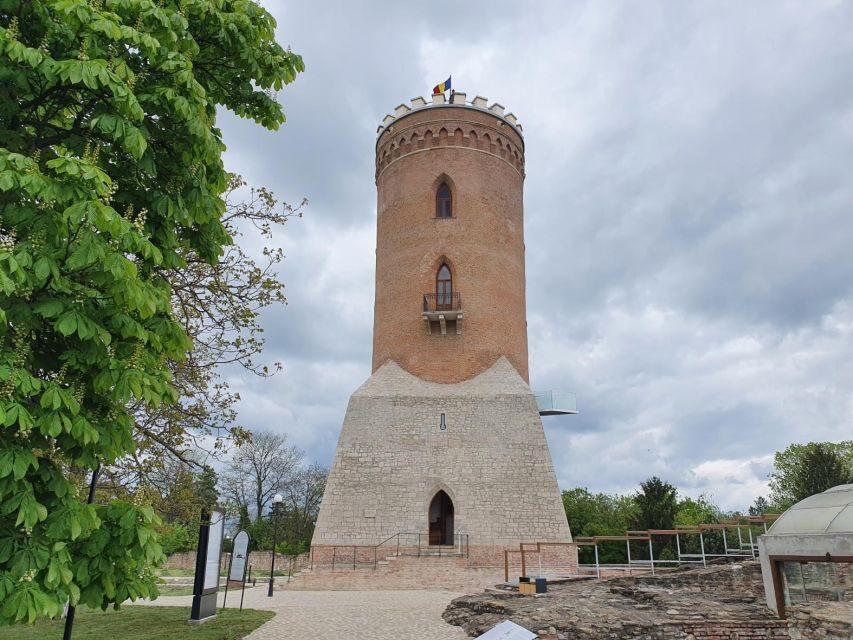
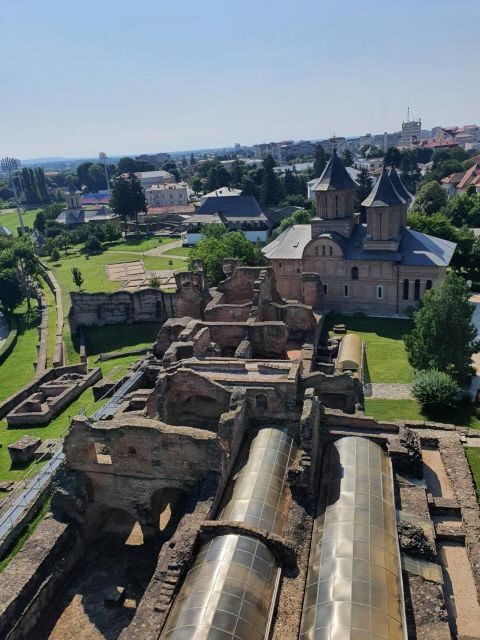
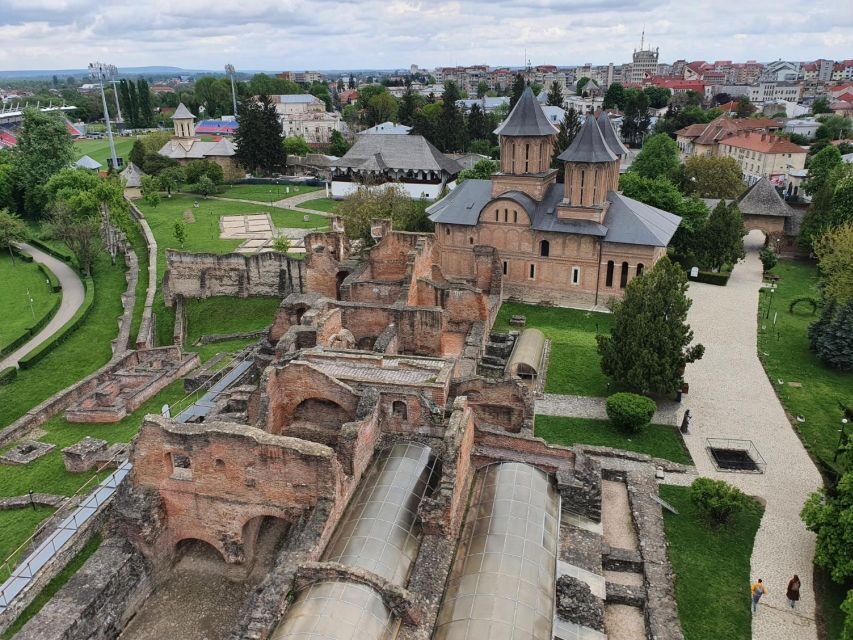
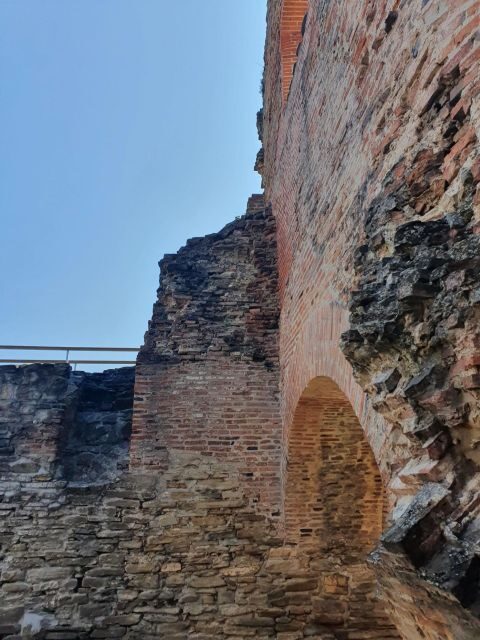
The centerpiece is Chindia Tower, the symbol of the princely court of Târgoviște. You’ll walk up to the tower, then experience the view from the balcony. This isn’t just a scenery stop. From up there, you can visually connect:
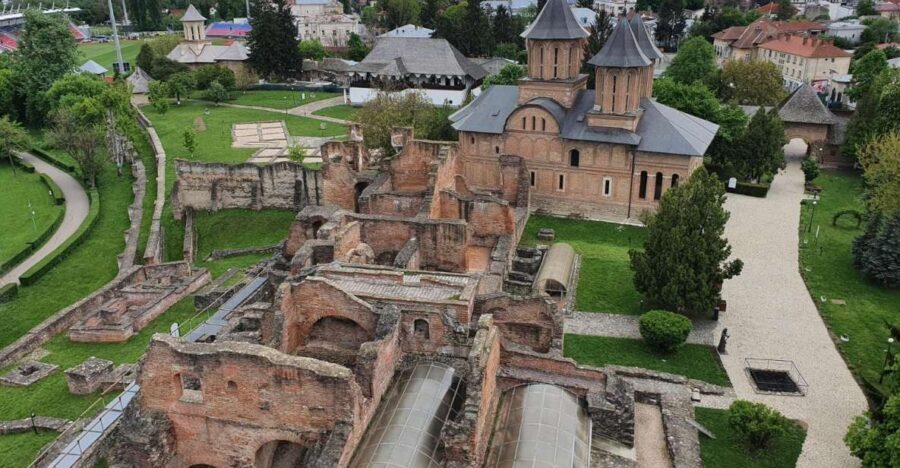
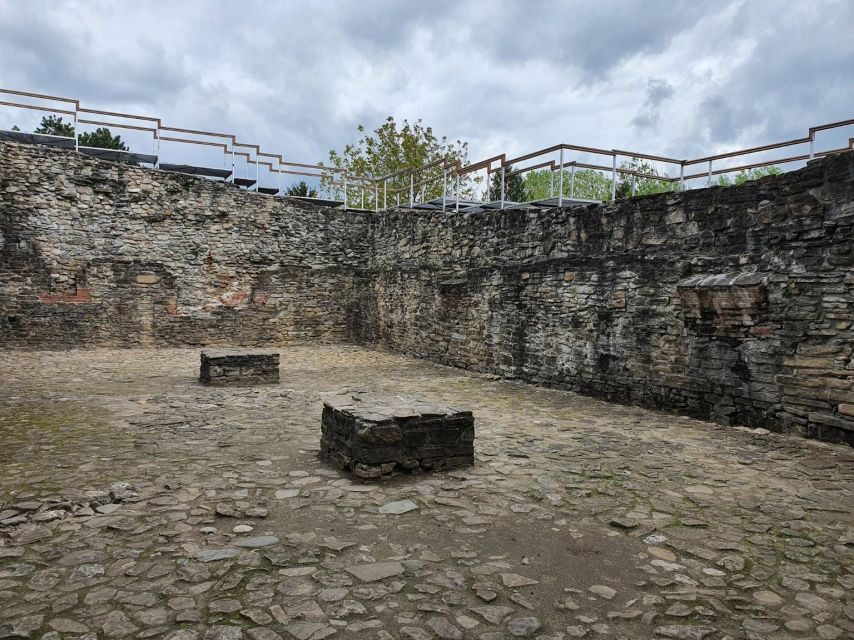
- the ruins of the two princely palaces
- the court layout
- the silhouette of a church dated back to 1415
And yes, it ties directly to Vlad the Impaler, since he’s linked to the emblematic tower’s story in this itinerary.
Practical tip: wear shoes you can trust on stairs and stone steps. A good portion of this day is movement, and you’ll enjoy the view much more if you’re not thinking about your feet.
Two surviving churches: Holy Friday and the Great Princely Church
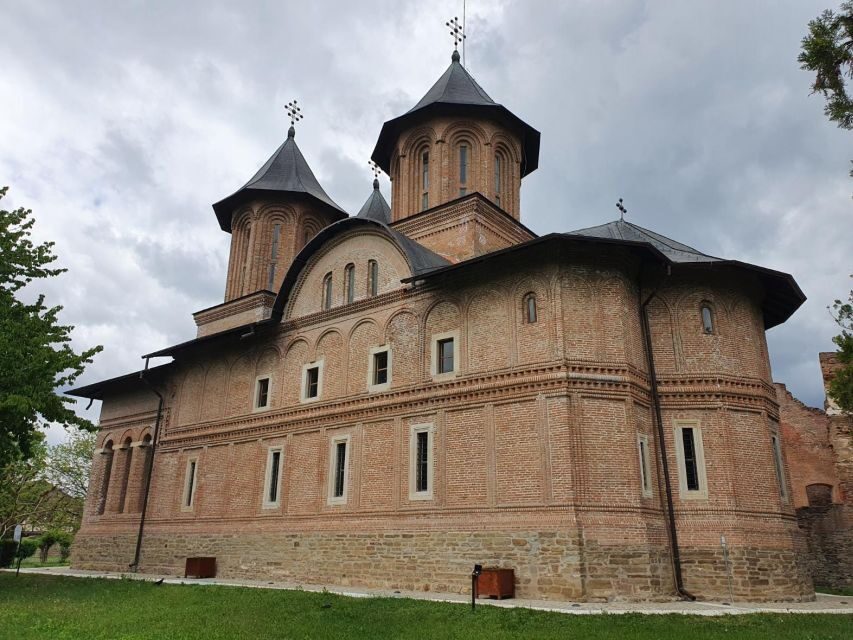
After the tower, you keep walking around what remains of the palace area and then visit two churches that still survive:
- the small Holy Friday Church
- the Great Princely Church
The tour highlights the Great Princely Church as the only monument built in the 15th century in Southern Romania still conserved in its original form. Even if you’re not a church architecture nerd, this detail helps you understand why your guide spends time here: it’s not just another stop; it’s a specific survival of a specific era.
Curtea de Argeș: royal graves, old town ruins, and churches that set the tone
Next you head to Curtea de Argeș, the kind of town where the past feels close because the monuments are still part of the daily scenery.
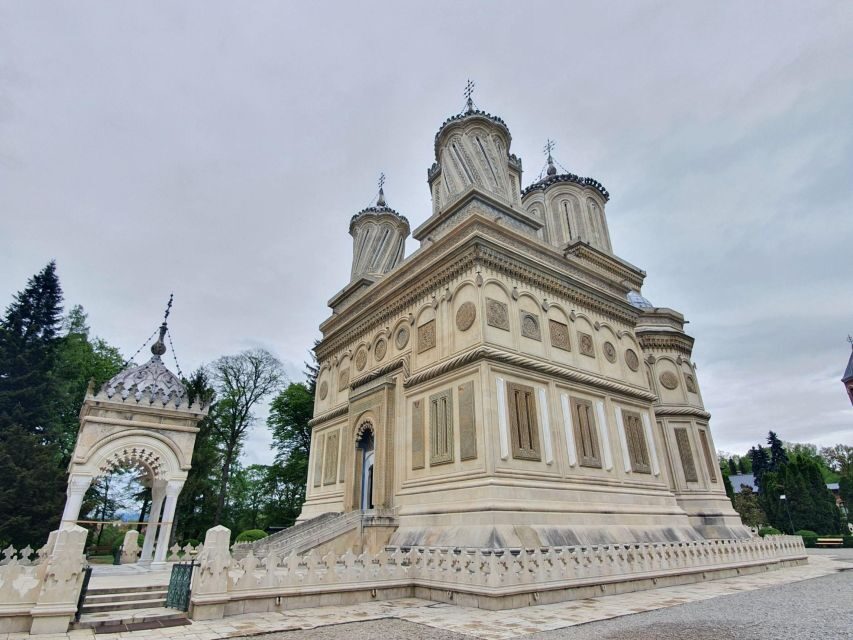
You’ll do a photo stop, a guided visit, and time on your own to look around. The itinerary includes ruins of a Wallachian princely court and even a 13th-century Royal Church, plus the famous Argeș Monastery.
Argeș Monastery and the royal connection
The guide connects the site to the royal family and points out where the graves of the Romanian Kings are located. That matters because it reframes the monastery from a scenic building into a place of national memory.
You’ll also hear interesting and sad history tied to the locations you see. This is one of those stops where having a guide genuinely helps: you get names, dates, and reasons, not just locations.
Ruins that teach: seeing the court footprint
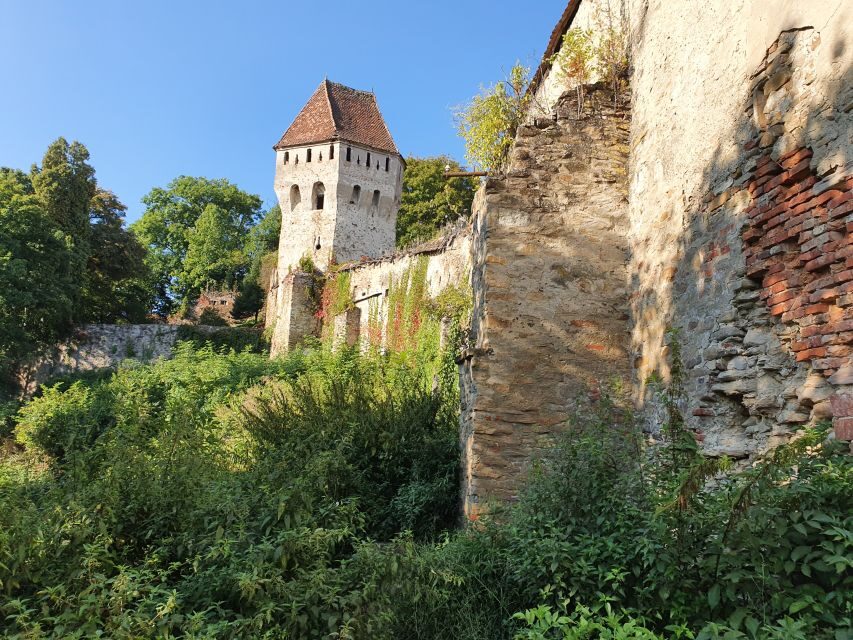
Ruins can be frustrating without context. Here, you’ll see remnants of a princely court and a 13th-century royal church, and you’ll learn how those parts fit into the larger Wallachian story. It’s the kind of “pause and look” moment that turns photos into understanding.
Poienari Castle and the 1480 stairs: the most physical Dracula moment of the day
Poenari Castle is the stop Dracula fans have circled, but this one works because it’s not just a viewpoint. You follow in the footsteps of Vlad and climb the 1480 stairs of Poienari Castle.
That number isn’t there for drama. It’s a clear signal that your comfort level with stairs is part of the experience. If you go in expecting a gentle walk, you’ll be disappointed. If you go in expecting effort, you’ll probably feel proud at the top.
What you’re really doing when you climb
Walking up 1480 stairs turns a name from a book into a real route—terrain, endurance, and separation. Fortresses like this weren’t built for convenience; they were built because they controlled who could reach you and how.
The tour also frames Poienari as a hiding place for the country’s gold. Even if you treat every claim with a historian’s caution, the idea of wealth, secrecy, and defense makes sense in a location like this.
If Poienari is closed
One helpful note from the real-world experience of this tour: if Poenari Castle happens to be closed on your day, the guide can shift to other nearby spots and still keep your time useful. In at least one case, the guide also found an opportunity to try traditional food. So the day isn’t automatically ruined if one site is off-limits.
Vidraru Dam: a necessary breath between fortress and fortress
After the stair intensity, Vidraru Dam gives you a different kind of story and a change of pace. You’ll have a break time, photo stop, guided visit, free time, and some shopping.
The tour calls it the biggest dam in Romania and includes the history behind it. That’s a smart counterweight: you go from medieval military architecture to a modern engineering landmark, and your brain gets a reset.
If you like photography, this is also where you’ll probably get easy shots without committing to more climbing. Even if you’re not an engineering buff, you’ll likely appreciate how the dam fits into the surrounding region and how guides explain why it became such a major feature.
The Wallachia stop and finishing the medieval loop
The day continues with a stop labeled Wallachia. It includes a photo stop, visit, and guided sightseeing, with a pass-by element and about an hour assigned for it.
Because the tour is built around specific historical sites, this kind of stop is usually where your guide stitches the story together: what you saw at court, what you saw in the fortress, and how the region shaped both. Think of it as the connective tissue for your understanding.
Then you wrap up and return to Bucharest.
Time and pacing: what to expect from an 11-hour private day
This is an 11-hour tour, and the time split makes sense for the area. You’re not just “dropping by.” You’re getting:
- guided time at the major monuments
- photo opportunities at viewpoints and ruins
- free time so you can wander a bit instead of staring at your guide’s shoulders
One detail that I really like in the way this itinerary is structured: the stops give you breathing room. You’re not pressured to rush every location for the sake of checking boxes.
That said, plan for a day that includes:
- walking on uneven stone or steps
- outdoor exposure (at the tower and especially on the Poienari climb)
- a long day of driving between sites
What to pack and how to prepare for stairs
I’d treat this day like a light hike plus a lot of sightseeing.
Bring:
- comfortable walking shoes with solid grip
- water and a small snack plan (food isn’t included)
- sun protection and a light layer for weather changes
- a camera setup you can manage while moving
If you’re worried about the stairs at Poienari, be honest with yourself before you go. This is the one part where effort is non-negotiable. Everything else is more forgiving.
Price and value: is $323 per person fair for what you get?
The price is listed at $323 per person for an 11-hour private experience from Bucharest, including hotel pickup/drop-off, car expenses, and a private licensed guide.
On value, this is strongest if you care about context. You’re paying for a guide who can connect the sites—Târgoviște court, towers, churches, Poienari’s defensive setting, and Vidraru Dam’s modern story—into one coherent day. That’s hard to replicate with public transport and it’s even harder to replicate if you’re doing each stop alone without local background.
It’s weaker if you’re a casual visitor who only wants quick photos and doesn’t care about guided interpretation. In that case, you might spend your day waiting for a schedule and not absorbing much.
Entrance fees and food aren’t included, so budget extra for those. But the guide setup, private transport, and the guided time at multiple major sites are what justify the rate.
Who should book this tour?
Book this if:
- you want a Vlad-focused day grounded in specific monuments
- you enjoy guided context and you like having someone explain why places matter
- you’re willing to work a bit on stairs, especially Poienari
- you prefer a private route over group logistics
Skip it (or think twice) if:
- you dislike climbing and long walking days
- you want minimal driving and zero outdoor exposure
- you’re only interested in a quick Dracula photo without deeper site context
Should you book Real Dracula Princely Court and Real Dracula’s Fortress?
Yes—if you’re the type of traveler who likes to connect names, dates, and structures into something you can actually picture. The best part of this day is how it balances court heritage with the physical reality of fortress life, and the Chindia Tower viewpoint is a highlight that helps everything click.
If you do book, focus your energy on comfort and your stair game. Take breaks when you get them. Ask your guide questions about what you’re seeing in Târgoviște and how the sites connect to Vlad Dracul and Vlad the Impaler. Do that, and this won’t feel like a Dracula-themed checklist. It’ll feel like a readable route through Wallachian history.
FAQ
How long is the tour?
The duration is 11 hours.
Where is the pickup location?
Pickup is from Bucharest, with hotel pickup included. You’ll be asked to wait in the hotel lobby about 5 minutes before the scheduled time.
Is this a private tour?
Yes. It’s a private group with a private driver/guide.
Are food and drinks included?
No. Food and drinks are not included.
Are entrance fees included?
Entrance fees are not included. The tour includes guided visits and skip-the-ticket-line convenience, but you should expect to pay site entry fees as listed in the itinerary.
What sites does the itinerary include?
You visit the Royal Court of Târgoviște, Chindia Tower, Curtea de Argeș and Argeș Monastery area, Poienari Castle, Vidraru Dam, and a stop connected to Wallachia.
Does the tour include a climb?
Yes. You climb Chindia Tower and you also climb the 1480 stairs of Poienari Castle.
What languages are available for the live guide?
The guide is available in English, Italian, Romanian, French, and Spanish.
Is there free cancellation?
Yes, free cancellation is available up to 24 hours in advance for a full refund.
Is there a reserve now, pay later option?
Yes. The tour offers reserve & pay later, allowing you to book and pay nothing today.