REVIEW · ORADEA
Oradea city tour
Book on GetYourGuide →Operated by Romaniatourism · Bookable on GetYourGuide
Oradea reads like a style textbook on foot. I like how the guide teaches you architecture styles in a way you can actually spot on the street, and I like the way the stops connect to the zone history behind them. One consideration: this tour is not suitable for mobility impairments or wheelchair users, and you’ll be doing a fair bit of walking on city streets.
If you want a plan that stays focused, this is a good one. You’ll start at Piața Unirii (meeting point at Unirii Platza in front of the Ferdinand statue) and wrap up back there after two hours. The guide speaks German or English, and the experience includes hotel pickup and drop-off around Oradea, which saves you time before you even begin looking at buildings.
In This Review
- Key things you’ll notice on this Oradea tour
- Two hours in Oradea: why this tour feels efficient
- The architecture lesson that actually makes you look differently
- Piața Unirii start point: getting oriented fast
- Oradea Fortress (guided for about 50 minutes): the long look that sets context
- Moskovits Palace and the theater corridor (10-minute stops that matter)
- Moskovits Palace (about 10 minutes)
- Teatrul Regina Maria and Trupa Iosif Vulcan (about 10 minutes)
- Poynar House (10 minutes): a small stop with big style payoff
- Catedrala Adormirea Maicii Domnului (10 minutes) and Black Eagle Palace (visit)
- Catedrala Adormirea Maicii Domnului (about 10 minutes)
- Black Eagle Palace (about 10 minutes)
- Orthodox Synagogue (guided for about 40 minutes): more time, extra meaning
- Entrance fee
- Why the synagogue segment is valuable
- Price and value: $94 for a private group up to 60 people
- What to bring (and what to skip) so the tour feels smooth
- Who should book this Oradea city tour?
- Should you book the Oradea city tour?
- FAQ
- How long is the Oradea city tour?
- Where does the tour start and end?
- What is the meeting point?
- Is hotel pickup and drop-off included?
- What languages are available for the guide?
- Is the group private?
- Are entrance fees included?
- Is the tour suitable for wheelchair users or people with mobility impairments?
Key things you’ll notice on this Oradea tour
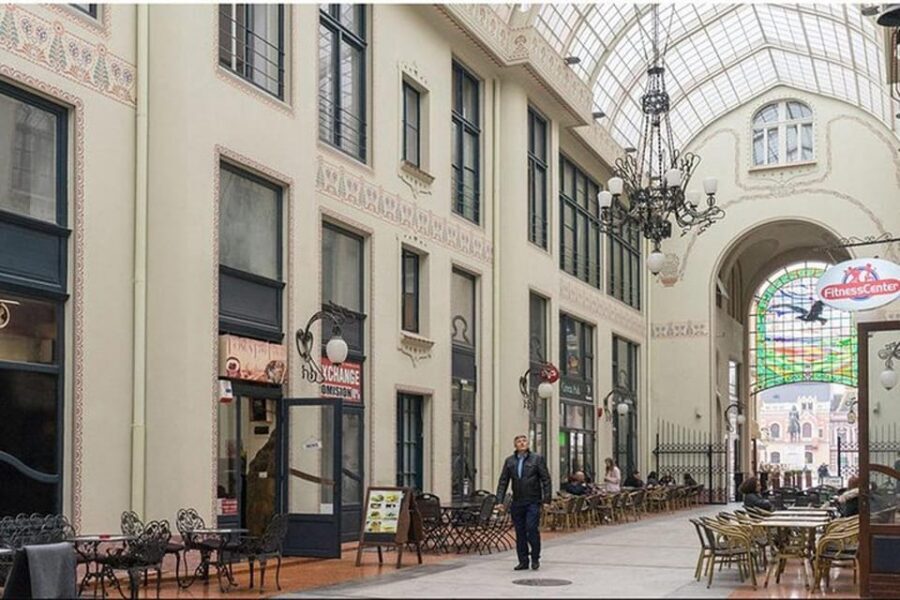
- A real “style decoder” lesson: Gothic, Baroque, Rococo, Renaissance, Brâncovenesc, Eclectic, Neo-classic, and Secession.
- History tied directly to facades: events and influence that shaped what you see on the streets.
- A tight 2-hour loop: fortress, palaces, theater, cathedral, and synagogue without wasting time.
- Hotel pickup and drop-off included: less hassle means more looking.
- A long, guided synagogue segment: more time for context than a quick stop.
Two hours in Oradea: why this tour feels efficient
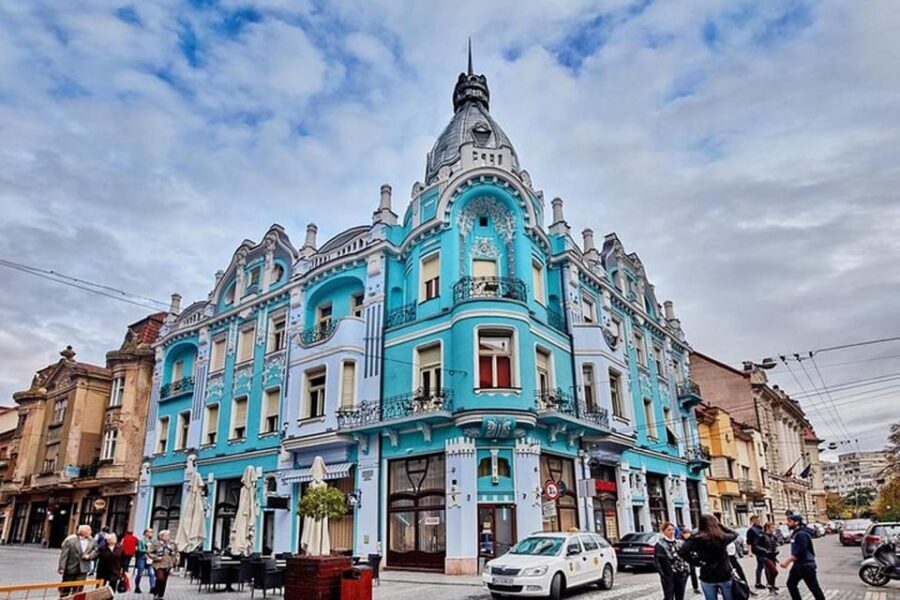
Oradea has a lot going on visually, but it can be hard to sort out when you’re on your own. This tour helps you do the sorting fast. Instead of throwing a list of sites at you, the guide builds a toolkit first: what the different architecture styles look like, how their features differ, and where to look next.
That matters because once you understand the basics, you stop seeing every building as random. You start seeing patterns. And then Oradea stops being just a stop on the way and starts becoming a place you understand.
The other efficiency trick is timing. The route is short, but the guide balances longer segments (like the Oradea Fortress and the Orthodox Synagogue) with quicker orientation stops at major landmarks.
You can also read our reviews of more tours and experiences in Oradea.



The architecture lesson that actually makes you look differently
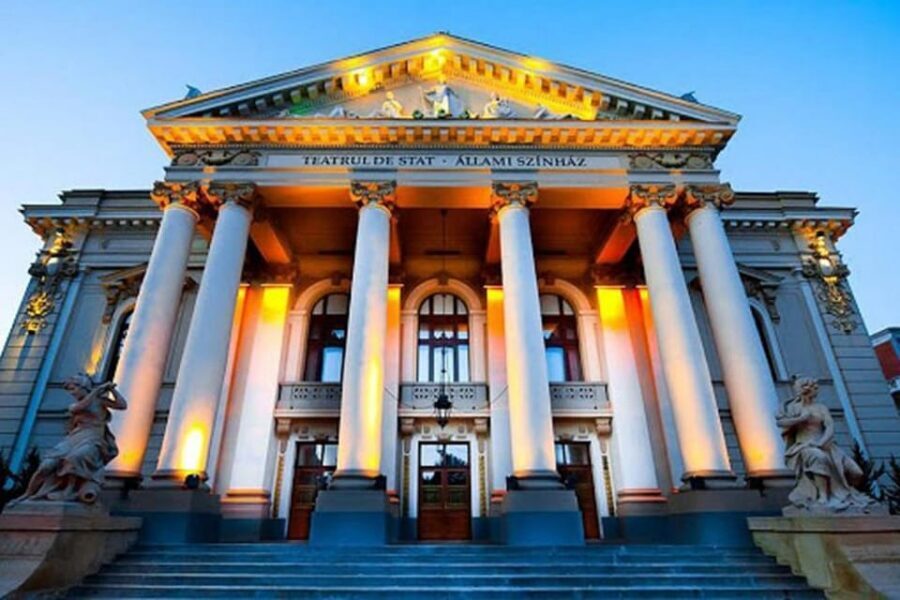
What makes this tour useful is the order. You don’t just walk past buildings. You learn the characteristics of key styles first, then you see examples, and then you’re invited to use what you learned anywhere across Europe.
Here’s what that means in practice:
- You’ll get a guide-led explanation of styles including gothic, barock/baroque, roccoco, renaissance, brâncovenesc, eclectic, neo-classic, and secession.
- Then you’ll connect those styles to what you’re seeing on Oradea’s streets.
- The final payoff is mental, not material: you’ll be able to recognize traits beyond this single city.
You don’t need to be an architecture nerd to benefit. If you’ve ever looked at a church and wondered why two “old-looking” buildings feel totally different, this is the kind of tour that fixes that feeling.
And yes, it’s also a confidence boost. By the time you hit the later stops, you’re not just sightseeing. You’re interpreting.
Piața Unirii start point: getting oriented fast
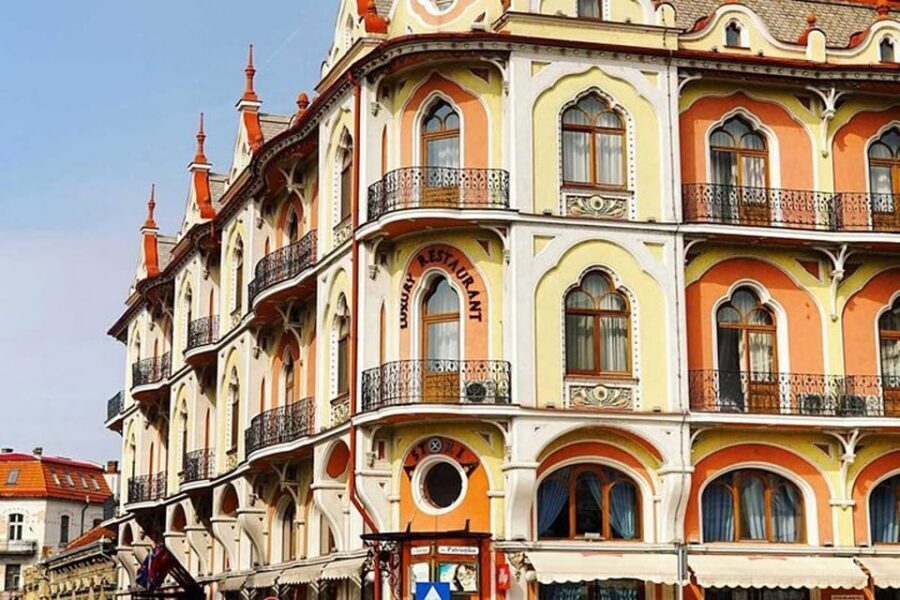
You’ll begin in Piața Unirii, with the meeting point set at Unirii Platza in front of the Ferdinand statue. This is a smart start because it gives you a central reference point before you fan out for the fortress and landmark buildings.
If you’re arriving by taxi or using public transit, this start also reduces uncertainty. You know exactly where to go, and because hotel pickup and drop-off are included, you’re not forced to figure out logistics right when you’re arriving tired.
Bring comfortable shoes. Even though the tour is only two hours, you’ll be on your feet on uneven city sidewalks and around historic sites.
Oradea Fortress (guided for about 50 minutes): the long look that sets context
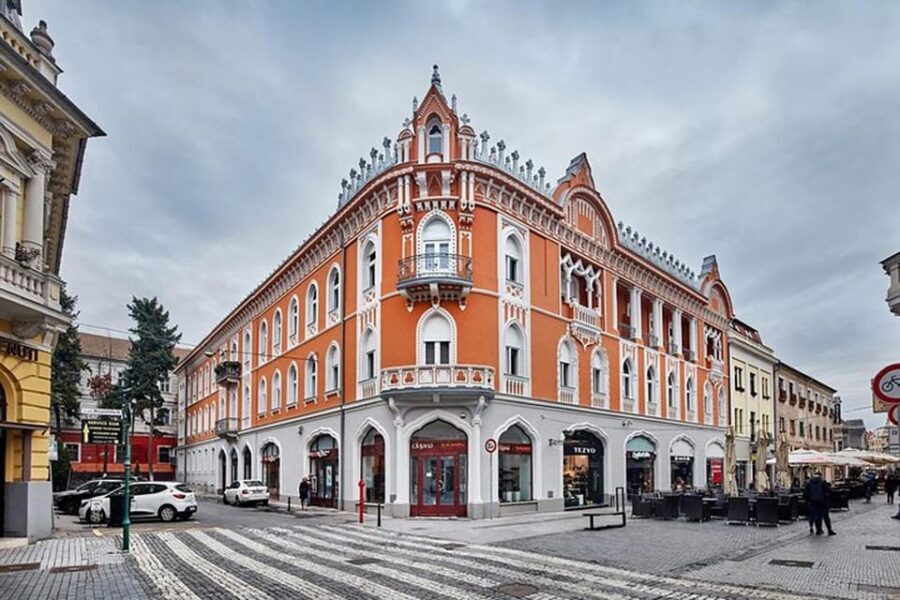
The Oradea Fortress stop is the “anchor” of the route, with a guided visit around 50 minutes. This is not a quick photo stop. It’s where the guide gives you background that helps the rest of the architecture make sense.
Why the fortress works so well here:
- It frames Oradea as a place shaped by defense, power, and change over time.
- When you later see palaces and churches, you’ll have better context for why certain styles and building ambitions emerged when they did.
- The longer time helps you slow down. Fortress areas reward walking and looking, not racing.
If you like history but don’t want a full museum session, this is a good compromise. You get enough time to absorb the story and still keep energy for the later stops.
One practical note: fortress areas can involve uneven surfaces and stairs or slopes. The tour isn’t designed for wheelchair users or people with mobility impairments, so if that’s you, it’s worth choosing a different format.
Moskovits Palace and the theater corridor (10-minute stops that matter)
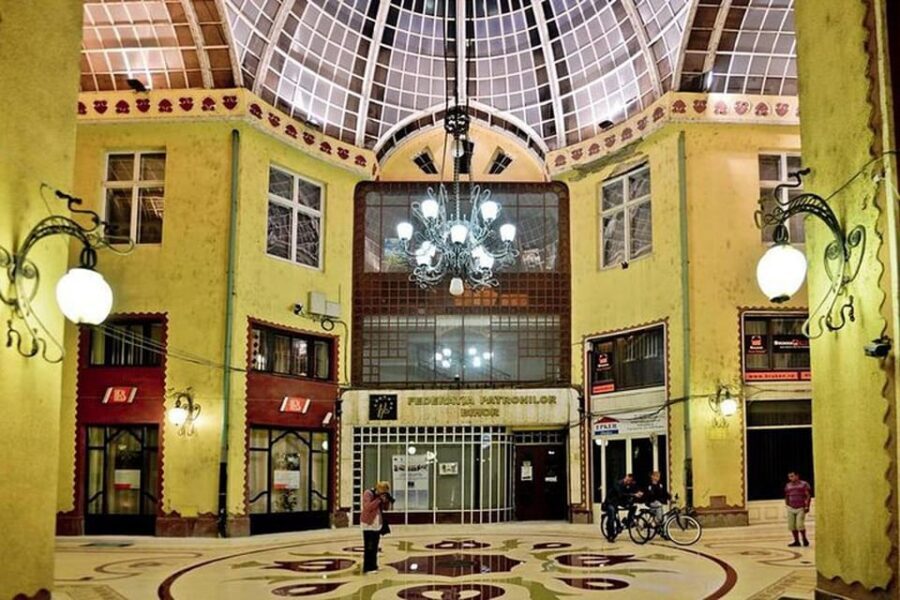
After the fortress, the itinerary moves into landmark architecture with shorter guided segments.
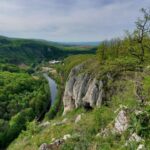
Moskovits Palace (about 10 minutes)
This is a quick architectural highlight. Use the time to look for stylistic clues the guide just explained. If you pay attention, you’ll start spotting the fingerprints of different periods in details like proportions, decorative energy, and the overall “feel” of the facade.
Teatrul Regina Maria and Trupa Iosif Vulcan (about 10 minutes)
This is where civic buildings start to show a different kind of ambition. Theater architecture often aims for presence and identity, and that connects neatly to the tour’s theme: how historical events and cultural shifts leave visible marks.
Don’t expect a deep dive in 10 minutes. Think of it as a guided sampler that primes your eyes for what comes next.
Poynar House (10 minutes): a small stop with big style payoff
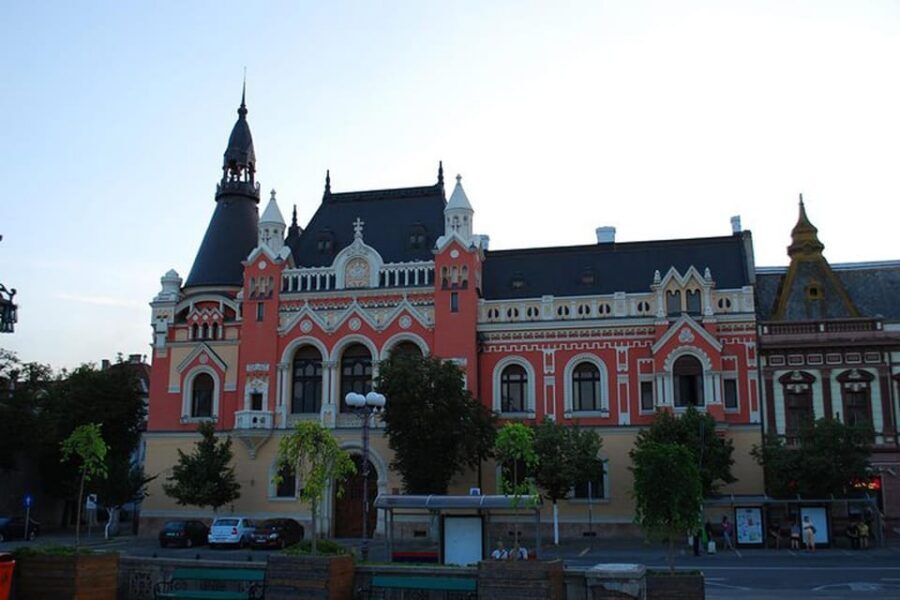
The Poynar House stop is short, but that can be a good thing. A short stop is built for targeted looking: you can focus your attention on the style features the guide wants you to recognize.
This kind of stop works well when you’re traveling with family or friends too. Someone who just wants to see the highlights still gets a named attraction, while someone who likes architecture gets a usable lesson.
If you tend to get distracted by too many stops in a row, you’ll also appreciate that it’s not all rushed. The tour keeps a steady rhythm.
Catedrala Adormirea Maicii Domnului (10 minutes) and Black Eagle Palace (visit)
Catedrala Adormirea Maicii Domnului (about 10 minutes)
This is your religious landmark moment in the loop. With the guide’s style framework fresh in your mind, you’ll be looking for the way the building communicates its era through form and ornament.
Even with only about 10 minutes, you’ll come away with something concrete: you’ll be able to describe what you’re seeing in terms of style traits rather than vague impressions.
Black Eagle Palace (about 10 minutes)
Then you shift to a palace setting, which usually means you’ll notice how architecture signals status. This stop is presented as a visit (not described as a long guided segment), so treat it as a look-and-learn moment.
When the guide connects building choices to historical pressures, the palace becomes more than a pretty facade. It becomes a document of what Oradea valued at the time.
Orthodox Synagogue (guided for about 40 minutes): more time, extra meaning
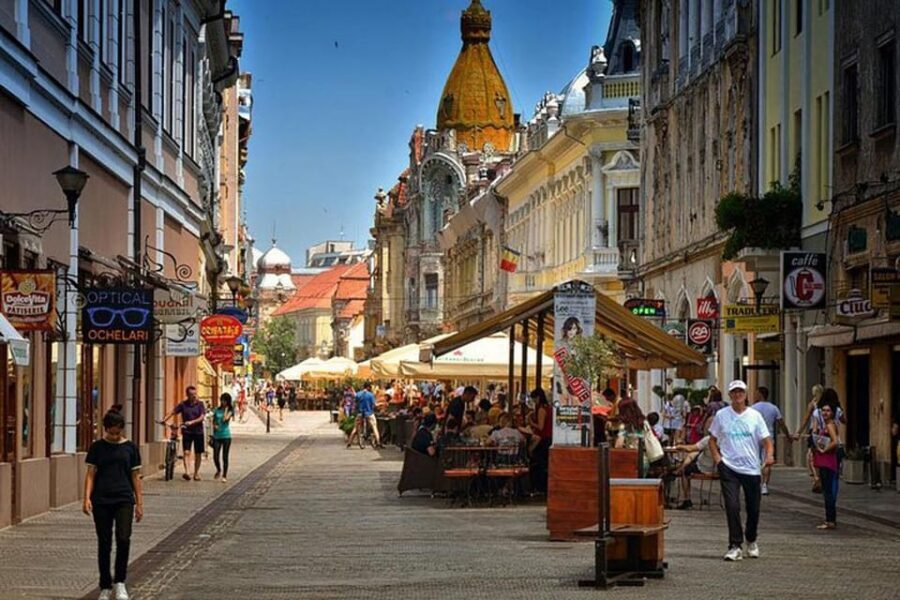
The Orthodox Synagogue is the longest guided stop after the fortress, with about 40 minutes. It’s also the only stop mentioned with an entrance fee.
Entrance fee
Plan for 5 RON, which is listed as about 1 EUR. This isn’t included, so keep a bit of cash ready.
Why the synagogue segment is valuable
You don’t just get location and date facts. The tour is built to emphasize the particular historical events that helped shape architectural character. With a longer guided window, you’ll have time to connect context to the building instead of rushing through it.
If you like places where architecture and community history overlap, this is one of the most satisfying stops on the route.
Price and value: $94 for a private group up to 60 people
This tour is priced at $94 per group, up to 60 people, for a total duration of 2 hours. That pricing structure is what makes it interesting for groups.
Here’s how to think about value:
- You get a live guide (German or English).
- You get hotel pickup and drop-off in Oradea.
- You get a structured route with multiple major landmarks rather than wandering around.
- You get a focused education on architecture styles, which is usually what people pay for in longer or more specialized tours.
Your real per-person cost depends on your group size, since the price is per group. If you’re traveling as a small group, confirm how many people can be included under one booking. If you’re traveling with a bigger party, this can work out to very good value fast.
What to bring (and what to skip) so the tour feels smooth
Keep it practical:
- Bring comfortable shoes and comfortable clothes.
- Bring cash for the Orthodox Synagogue entrance fee (5 RON / about 1 EUR).
- Plan for walking. This isn’t labeled as suitable for wheelchair users or people with mobility impairments.
It’s also stated that nudity is not allowed. You don’t need to think about it unless you’re traveling in a very casual way, but it’s part of the rules.
Who should book this Oradea city tour?
You’ll like this tour if:
- You want to learn architecture styles and be able to recognize them later.
- You prefer a route that’s guided but not slow.
- You want a compact overview of Oradea’s major landmarks in about two hours.
- You’re traveling with people who enjoy history and visual culture, even if they don’t call themselves architecture fans.
You should skip it (or choose a different option) if:
- Mobility is an issue for you or your group.
- You need step-free, wheelchair-friendly planning. This one is not suitable for wheelchair users.
Should you book the Oradea city tour?
Yes, if you want a guided shortcut to understanding Oradea’s architecture. The biggest reason to book is the format: you learn the style “language,” then you see examples, then you get back the ability to look smarter anywhere in Europe.
Book it especially if you like practical city tours with clear focus, and if hotel pickup and drop-off would save you energy.
Skip it if your group has mobility needs, since the tour is not designed for wheelchair users or mobility impairments. Also plan for the synagogue entrance fee so you’re not surprised at the last stop.
FAQ
How long is the Oradea city tour?
It lasts about 2 hours.
Where does the tour start and end?
It starts at Piața Unirii and returns back to Piața Unirii.
What is the meeting point?
Meeting point is Unirii Platza in front of the Ferdinand statue.
Is hotel pickup and drop-off included?
Yes. Pickup from your hotel in Oradea and drop-off back at your hotel are included.
What languages are available for the guide?
The live guide speaks German and English.
Is the group private?
Yes, it’s a private group.
Are entrance fees included?
No. Entrance fees are not included. The Orthodox Synagogue entrance fee is listed as 5 RON (about 1 EUR).
Is the tour suitable for wheelchair users or people with mobility impairments?
No. It’s not suitable for people with mobility impairments or wheelchair users.