REVIEW · BUCHAREST
Eastern Orthodox Church Art in Bucharest
Book on GetYourGuide →Operated by Bucharest Break · Bookable on GetYourGuide
Icons in Bucharest move faster than you think. This 2.5-hour walk turns painted church walls into a live map of Wallachian Middle Ages influence, with Byzantine-flavored Orthodox art you can actually see up close. You start near the Old Princely Court area and hop between sanctuaries where the artwork isn’t behind glass.
I love two things most: the focused look at Orthodox Church Art and the way the guide brings the churches to life through clear explanations. The small group size (limited to 10) helps you ask questions and spend real time on details, not just rush to the next doorway.
One consideration: every stop is an active church, so you’ll need modest dress and quiet behavior. If you’re coming straight from sightseeing in casual, revealing clothes, plan a quick wardrobe adjustment or you might feel constrained.
In This Review
- Key things you’ll notice on this church-art route
- Why Orthodox church art feels different when you walk it in sequence
- Starting at the Old Princely Court area: Saint Anton Church and the icon-shop launch
- Saint George Km0 on Lipscani Street: a fresco you’ll want to study longer than planned
- The hard-to-find Orthodox Basilica stops: Saint Elijah and Lady’s Church
- Saint Elijah (Orthodox Basilica)
- Lady’s Church
- Stavropoleos Monastery: eclectic surroundings and a calmer art pause
- Finishing with neo-Baroque Saint Demetrios and the church-art contrast effect
- Saint Cyprian Church: a final included stop that rounds out the route
- What $57 gets you in 2.5 hours (and why it can be good value)
- Church etiquette you’ll want to follow before you walk in
- Guide quality you should look for: flexibility and art explanations that land
- Who should book this tour (and who might want to skip it)
- Should you book Eastern Orthodox Church Art in Bucharest?
- FAQ
- Where is the meeting point?
- How long is the tour?
- What is the group size?
- Which churches are included?
- Is food or drinks included?
- What languages is the guide available in?
- What should I wear or bring?
- What clothes are not allowed?
- Are churches active during the tour?
- Is cancellation possible?
Key things you’ll notice on this church-art route
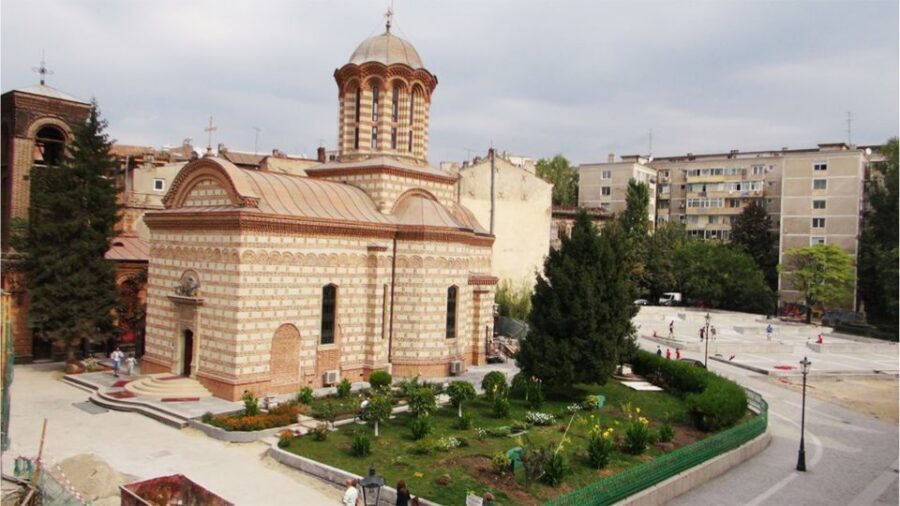
- Wallachian Middle Ages atmosphere as you connect the dots between historic spaces in central Bucharest
- Byzantine and Orthodox art explained in a practical, step-by-step way while you stand in front of frescoes
- Fresco highlights like the Lipscani Street work at Saint George Km0 and the early preserved originals at Lady’s Church
- Churches you can miss on your own, including spots described as hard to find even for locals
- A style shift at the end, moving into a neo-Baroque 19th-century mood with Saint Demetrios
- Small-group pace, usually capped at 10, with guide flexibility when walking slows down
Why Orthodox church art feels different when you walk it in sequence
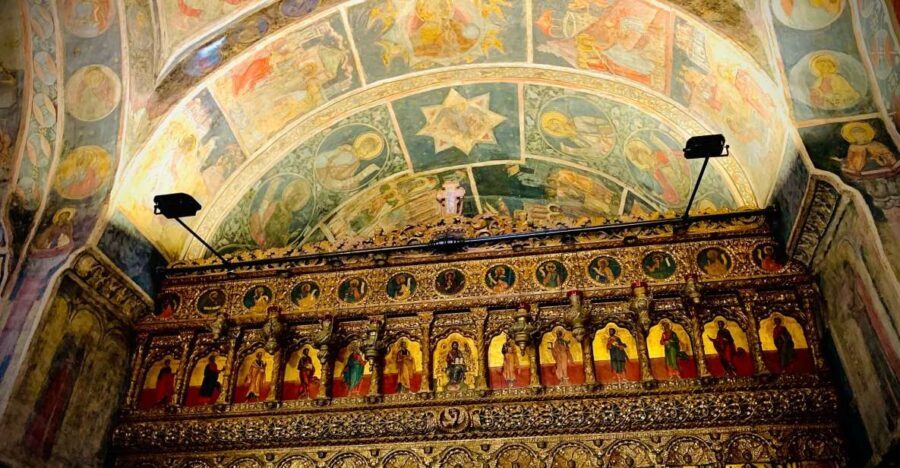
You don’t experience Orthodox art like you do a museum painting. Here, it’s part of an active spiritual setting, and the building layout shapes what you see and how you read it. On this tour, you get a clear route, so the artwork doesn’t feel random. It starts with place and history, then moves into frescoes and icon-focused details you can compare stop by stop.
The length matters too. At 2.5 hours with a small group, you’re not stuck in a half-day crawl. You’ll cover multiple churches, but there’s still time to look carefully, not just snap photos and sprint away. And because it’s a small group, the guide can slow down where you want more context, or speed up when you’ve already got the picture.
There’s also a very practical bonus: you finish with a plan for where to browse icon-related shops, since the meeting point is in front of an Anton icon shop. You walk into the tour with one eye on the route and the other eye on what you might take home.
You can also read our reviews of more tours and experiences in Bucharest.
Starting at the Old Princely Court area: Saint Anton Church and the icon-shop launch
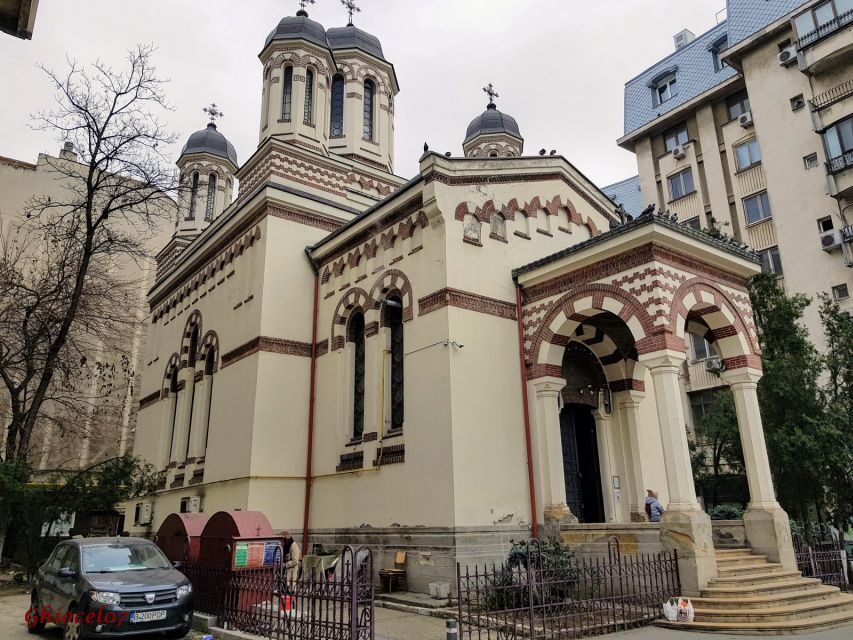
The tour kicks off in front of the Anton icon shop. That’s not just a convenient meeting point. It sets the tone right away: you’re in Bucharest, but you’re also close to the kind of devotional culture where icons and painted church art aren’t just background. They’re part of daily faith.
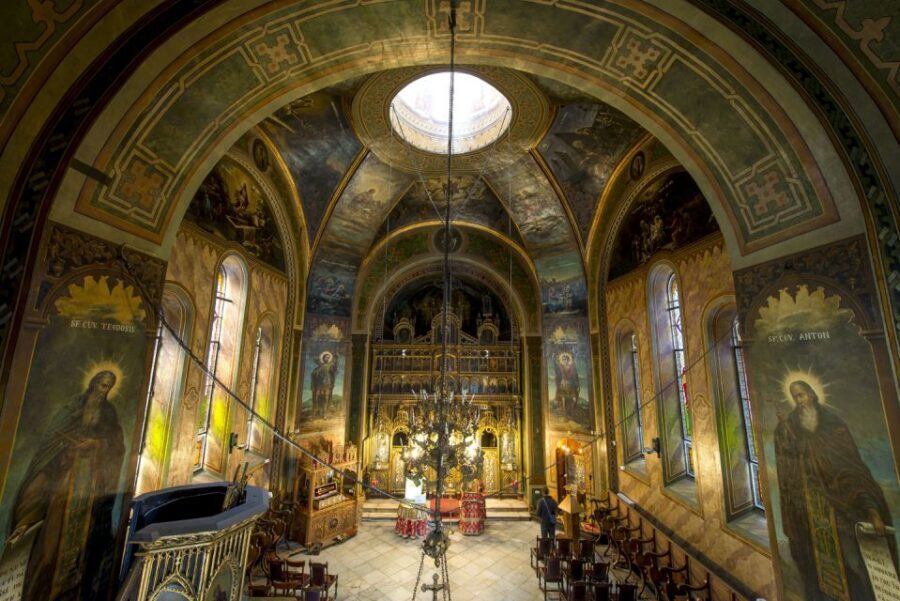
From there, you move to Saint Anton Church, positioned as your first major stop. Starting here works well because it gives you a baseline. When you’re new to Byzantine and Orthodox visual language, you need an early anchor: the guide helps you notice how the artwork behaves on walls and ceilings, and how churches communicate through symbols and sacred imagery rather than Western-style perspective alone.
Practical tip: wear comfortable shoes and expect some time standing. The guide’s approach tends to reward lingering, not skimming. If you rush your first stop, you’ll feel it later when you start comparing fresco choices across churches.
Saint George Km0 on Lipscani Street: a fresco you’ll want to study longer than planned
Next you head along Lipscani Street to Saint George Km0. This is a “slow down” stop. The highlight here is a fresco made by one of Romania’s greatest church painters, and it’s the kind of work where the guide’s commentary helps you see what you’d otherwise miss.
Why this stop matters for your understanding: it’s not only about admiring. It’s about learning how Orthodox church art tells stories without needing a modern caption. Frescoes can look overwhelming at first. On the tour, you’re guided to the specific areas worth your attention, so the art becomes readable instead of just beautiful noise.
One drawback here: Lipscani is a busy central street. You’ll want a calm moment inside the church to reset your eyes. If you’re photo-happy, pace yourself. You’ll get better results if you take notes on what the guide points out, then return to look again from a slightly different angle.
The hard-to-find Orthodox Basilica stops: Saint Elijah and Lady’s Church
After the more straightforward central streets, the tour shifts into the “how did I miss this” zone. Two churches are singled out as hard to find even for locals, which is a huge part of the value. You get access to places that feel like the city’s quieter art network, not just the headline sites.
Saint Elijah (Orthodox Basilica)
Saint Elijah is described as an Orthodox Basilica and one of two in the city. That’s a helpful clue for what to expect: you’re looking at a major Orthodox church setting, not a small chapel. The scale can change your focus. You’ll notice how art reads differently when the space is larger and the composition has room to breathe.
The best part of this stop on a tour like this is comparison. You’ll have already seen fresco approaches at Saint Anton and Saint George, so now you can ask: what feels consistent in Orthodox art, and what feels uniquely expressed in Romanian church painting?

Lady’s Church
Then comes Lady’s Church, known for some of the oldest preserved original frescoes in Bucharest. That detail changes the emotional weight. You’re not just looking at beauty. You’re looking at something that has survived.
This is the kind of stop where you’ll feel how time sits inside art. Frescoes age in a specific way, and preservation affects what’s visible. With a guide, you can also understand why these older layers matter for interpreting the broader story of Eastern Orthodox church art in Bucharest.
If you’re the type who likes to learn by observation, this is a top pick. Bring patience. You’ll get more from staying still and letting the guide walk your eyes across the work.
Stavropoleos Monastery: eclectic surroundings and a calmer art pause
From Lady’s Church, you go to Stavropoleos Monastery, described as eclectic. That word is practical. Monasteries often feel like a pocket of order inside the city’s noise, and “eclectic” hints that you’ll notice contrasts in style, setting, and how the complex feels spatially.
Why I like placing Stavropoleos here in the route: it acts like a reset. After focusing on frescoes and big church interiors, a monastery atmosphere helps you slow down again and think about the purpose of art in Orthodox life. Even if you’re not a religious scholar, you start understanding that these spaces are built for worship and memory, not for display.
You’ll get a meaningful break in energy before the final stretch. The tour’s pacing also helps you connect earlier icons and fresco themes with what you see next, instead of mentally dropping the story halfway through.
Finishing with neo-Baroque Saint Demetrios and the church-art contrast effect
The last stop is Saint Demetrios, described as a neo-Baroc 19th-century gem. That’s your “contrast moment,” because it shifts the feel of the artwork and the church mood. After earlier stops that lean heavily into Byzantine-influenced Orthodox visuals, ending with a neo-Baroque period church makes you notice how different eras can speak to the same sacred intent.
This is also where the tour becomes memorable for people who think they’re only here for icons. You start realizing you’re learning a timeline of styles tied to living religious culture. In one route you go from older Orthodox fresco focus to a later church aesthetic, and the whole arc makes Bucharest feel more layered than you expected.
One practical reminder: the last stop is where people tend to run out of patience because they’ve already seen so much. Keep your energy. If the guide points out an artwork detail you usually wouldn’t look for, that’s often the payoff of the whole tour.
Saint Cyprian Church: a final included stop that rounds out the route
The tour also lists Saint Cyprian Church among its included sites. Even without extra detail attached here, the point is clear: you’re not doing a “two churches and out” run. You’re collecting several distinct Orthodox church art experiences, so your mental image of Bucharest’s Eastern Orthodox artistic language isn’t limited to one style or one particular interior.
If you’re the kind of traveler who likes to take notes, use this last leg to write down what you noticed across all stops: which fresco areas felt most memorable, which church atmosphere made the artwork easiest to read, and what the guide emphasized as key visual cues.
This is also where the small-group format pays off. If you have questions, the guide can still give you real answers instead of saying, catch up later, because later might be too late.
What $57 gets you in 2.5 hours (and why it can be good value)
Let’s talk value without pretending it’s a bargain steal. At $57 per person for about 2.5 hours, you’re paying for three things: access to multiple active churches, a live guide in English, Spanish, and Romanian, and time in front of specific art points rather than generic sightseeing.
The math feels more fair when you think about the alternative. If you try to plan and navigate on your own, it’s not just walking time. It’s also the mental work of knowing what matters in each church. This tour gives you that structure quickly, so you stop guessing and start seeing.
The price also makes sense because the group is small, capped at 10 participants. In a larger crowd, you’d lose the chance to ask questions and the guide would have to rush pacing. Here, you can linger just enough to actually interpret what you’re looking at.
If you’re doing Bucharest for the first time, this tour is a smart use of time because it adds artistic and cultural depth early. You end up better at recognizing what you’re seeing during the rest of your days in the city.
Church etiquette you’ll want to follow before you walk in
Because these are active churches, you need to adjust your behavior and your clothing. The tour is very clear about modesty expectations, and you should take them seriously. A church isn’t a stage set.
Plan for these rules:
- No short skirts
- No sleeveless shirts
- No tight clothing
- No ripped clothing
- No strong fragrances
- No pets
If you’re traveling in warm weather, this is the part that can catch you off guard. Pack a light layer you can wear easily, even if it’s warm outside. Your future self will thank you when you’re not trying to solve the outfit problem on the sidewalk.
Also remember: you’ll be spending real time inside. Comfortable shoes aren’t optional if you want to enjoy the art instead of counting steps.
Guide quality you should look for: flexibility and art explanations that land
The tour is led by a live guide, and the overall vibe from real experiences is that the guide knows how to explain Eastern Orthodox church art in a way that feels usable. Names like Helen and Elena show up in past bookings, and the consistent thread is clear communication and a willingness to adapt to the group.
One especially useful detail: the route can be tailored to people with mobility needs. That doesn’t mean it’s a fully accessible experience for every situation, but it does mean the guide understands that comfort matters and will try to make the experience work for you.
If you’re Catholic, Orthodox, or neither, you still get value here as long as you’re respectful. Church art becomes easier to understand when the guide can frame what you’re seeing without turning the visit into a debate.
Who should book this tour (and who might want to skip it)
This is a great fit if you:
- Love religious art and want to understand what you’re looking at
- Enjoy walking city neighborhoods with a clear story
- Want access to multiple active churches without figuring everything out yourself
- Like small groups and guides who answer questions
It might not be your best choice if you:
- Want strictly museum-style stops with no dress or behavior expectations
- Hate standing and reading details in quiet interiors
- Are hoping for a food-focused experience (this tour does not serve drinks or food)
One more small practical note: it’s helpful to plan a café or restaurant stop after. The tour doesn’t include food, but the route is in the central Bucharest area where you can easily grab something nearby.
Should you book Eastern Orthodox Church Art in Bucharest?
If you want more than photos of church exteriors, book this. The combination of multiple active Orthodox churches, a guided approach to fresco and icon-focused details, and a small group pace makes it a strong value for a short stay.
It’s also a smart way to understand Bucharest’s identity because church art is one of the clearest visual threads tying the city to its past. You’ll leave with better eyes for symbolism and style, and you’ll likely spot more details on your own afterward.
Just go in prepared: bring comfortable shoes, dress modestly, and be ready to slow down. Then this route turns into one of those practical tours that makes the rest of your trip make more sense.
FAQ
Where is the meeting point?
You meet in front of the Anton icon shop.
How long is the tour?
The duration is 2.5 hours.
What is the group size?
It’s a small group limited to 10 participants.
Which churches are included?
The tour includes Saint Anton Church, Saint George Km0 Church, Saint Elijah, the Lady’s Church, Stavropoleos Monastery, and Saint Cyprian Church.
Is food or drinks included?
No. The tour does not serve food or drinks, but you can stop at cafés, bars, or restaurants.
What languages is the guide available in?
The live tour guide speaks English, Spanish, and Romanian.
What should I wear or bring?
Bring comfortable shoes, and dress modestly for active churches.
What clothes are not allowed?
Short skirts, sleeveless shirts, tight clothing, and ripped clothing are not allowed.
Are churches active during the tour?
Yes, the churches are active, so modest behavior and appropriate dress are required.
Is cancellation possible?
Yes, you can cancel up to 24 hours in advance for a full refund.