REVIEW · BUCHAREST
Life under Communism
Book on Viator →Operated by Guided Stories · Bookable on Viator
Communism in Bucharest has brick-and-mortar proof. On this 3-hour walk, you connect the big political story to real places: Ceaușescu’s rise and fall, the architecture meant to show power, and the 1989 revolution sites that ended the system.
I especially like two things: the guide-led storytelling stays grounded in everyday life, not slogans, and the English is clear even when the topic gets heavy. Guides such as Cristina are praised for being able to answer questions and keep the pace comfortable.
One watch-out: it’s a walking tour, so wear comfortable shoes, and plan for the one admission that’s not included (the Palace of Parliament).
In This Review
- Key things I’d circle on your map
- Where Bucharest’s Communist Era Still Shows on the Streets
- Route Walkthrough: From Catedrala Patriarhala to Piața Revoluției
- Catedrala Patriarhala: The Regime’s Violent Start
- Palace of Parliament: The World’s Second-Largest Administrative Building
- Manastirea Antim: Religion Under Communism’s Pressure
- Old Town and Caru’ cu bere: Foreign Policy With a Side of Beer
- Piața Revoluției: Where Communism Collapsed in 1989
- Price and value: Is $42.33 worth it?
- Timing and logistics that actually affect your day
- Who this tour suits best (and who should adjust expectations)
- A balanced take: what it does well, and what it can’t do
- Should you book Life Under Communism in Bucharest?
- FAQ
- How long is the Life under Communism tour in Bucharest?
- What does the tour cost?
- Is the tour in English?
- What’s included in the price?
- Do I need to pay admission tickets?
- Where do you start and where does the tour end?
- Does the tour run in bad weather?
- Is there food included during the tour?
- How many people are in a group?
Key things I’d circle on your map
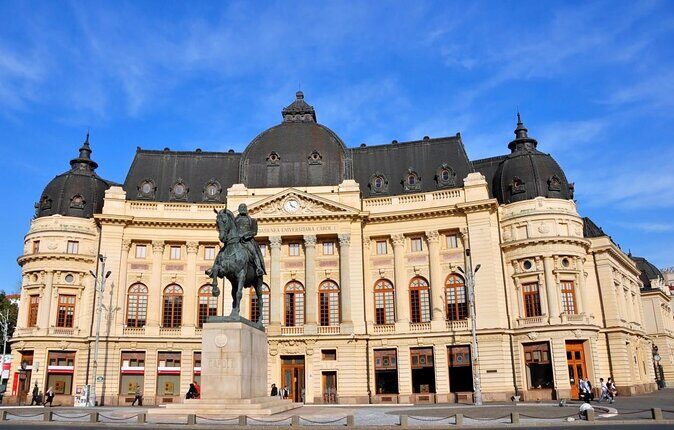
- Ceaușescu’s rise and fall explained through Bucharest’s most important political landmarks
- Palace of Parliament context about why the world’s second-largest administrative building became a symbol
- Communism’s pressure on religion at Manastirea Antim
- 1989 Revolution setting at Piața Revoluției, including the feeling of how abruptly it ended
- Small group size (max 20), which helps you ask questions and move at a human pace
- Most stops are free for admission, with the Parliament as the main paid exception
Where Bucharest’s Communist Era Still Shows on the Streets
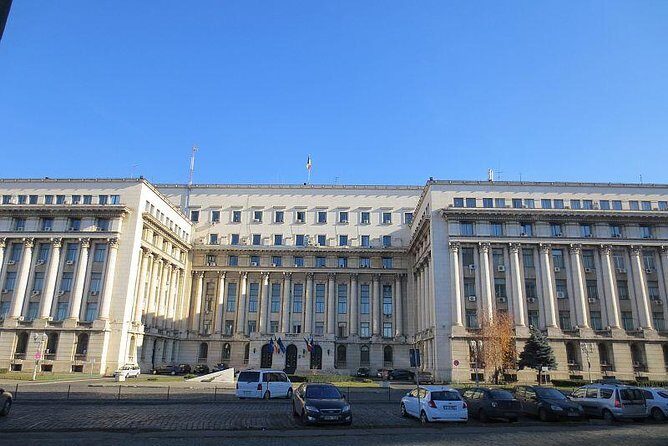
Communism in Romania was not just an idea. It was a system built into buildings, routines, and fear, and Bucharest still carries the fingerprints.
This is a compact 3-hour experience that’s built around the most legible proof you can see in a single afternoon. You start at a major church site, move through the regime’s monumental building, step into a monastery that survived pressure, then finish at the heart of the 1989 uprising.
You can also read our reviews of more tours and experiences in Bucharest.
Route Walkthrough: From Catedrala Patriarhala to Piața Revoluției
You meet at Aleea Dealul Mitropoliei 19, București, and finish at Revolution Square, Piața Revoluției. The timing is designed around short, story-heavy stops—think 10 to 15 minutes per main location—plus the walking time between them.
It’s also intentionally set up for discussion. With a max group of 20, the guide can slow down when you have questions, and several groups have praised how guides handle slower pacing and create moments to rest.
Catedrala Patriarhala: The Regime’s Violent Start
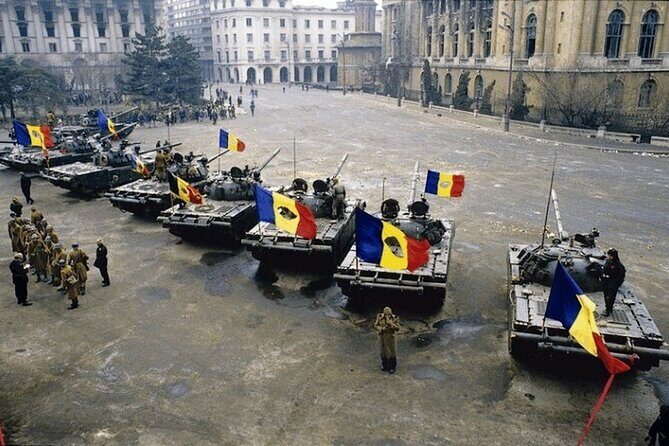
Your first stop is Catedrala Patriarhala, and the lesson begins with violence. This isn’t a neutral “history facts only” start; it frames communism as something that took power with force, not politeness.
What you get here is a mindset shift. By the time you reach the later landmarks, you’ll understand why the regime treated public life as something to control—from institutions to symbols.
Practical tip: since the visit is short, arrive ready to listen. If you want to ask questions, this is a good moment to do it before you’re on the move again.
Palace of Parliament: The World’s Second-Largest Administrative Building
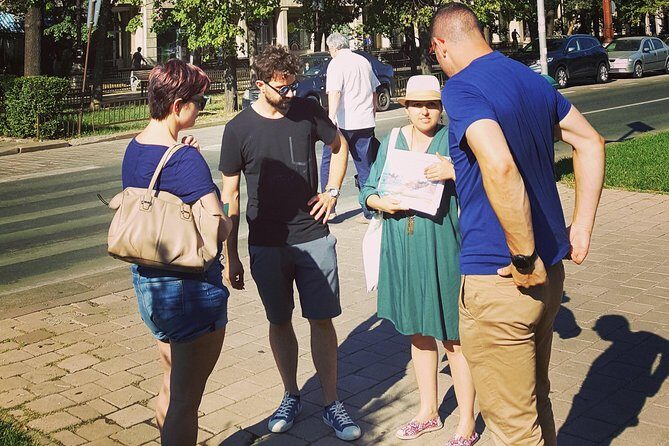
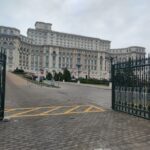
Next comes the Palace of Parliament, the centerpiece for understanding how communist power tried to look permanent. The tour highlights the real story behind this vast administrative building—why it became a symbol, and what that size meant for the country.
One thing to plan for: the admission ticket for this stop is not included. Budget for it so the only “surprise” is how much history you can pack into a visit that’s short on time but heavy on meaning.
Also, it’s worth knowing that the route is built for seeing meaning quickly. You won’t just stare at stone and call it culture—you’ll hear how the building’s scale linked to propaganda, control, and cost.
Manastirea Antim: Religion Under Communism’s Pressure
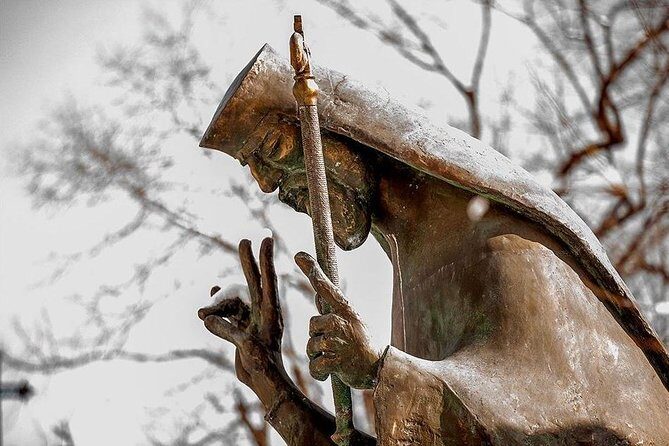
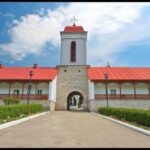
After the political monument, you shift to a quieter place: Manastirea Antim, a picturesque medieval monastery. The point of the stop is how religion was impacted once communism gained control.
This is one of those contrasts that helps the whole story click. When you compare a regime-building project with a religious site that had to operate under restrictions, you see how communism treated faith: not as a private matter, but as something to manage.
Why this stop matters: it adds nuance. You’re not only learning about power at the top. You’re also learning what power did to everyday beliefs and institutions.
Old Town and Caru’ cu bere: Foreign Policy With a Side of Beer
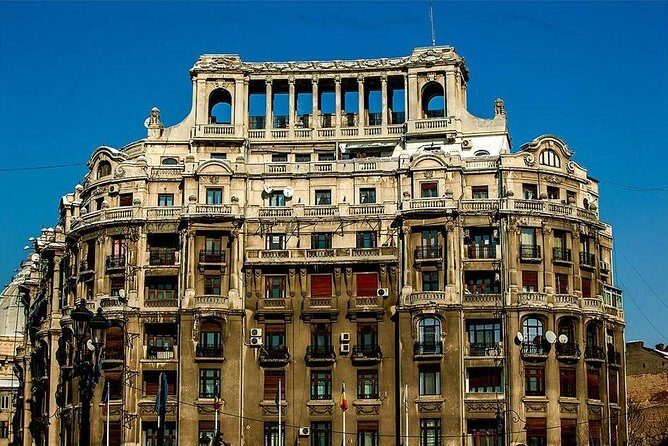
Then you move into Old Town, where the tour connects a landmark restaurant to the political world. The guide points to Caru’ cu bere and explains its role tied to foreign policy during the communist era.
This is where Bucharest’s history becomes more human. You start hearing how international relationships worked in practice: what visitors saw, what officials wanted projected, and how public spaces fit into the regime’s communications.
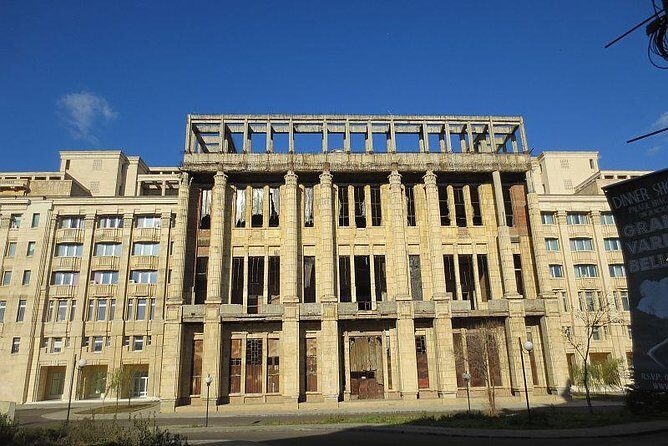
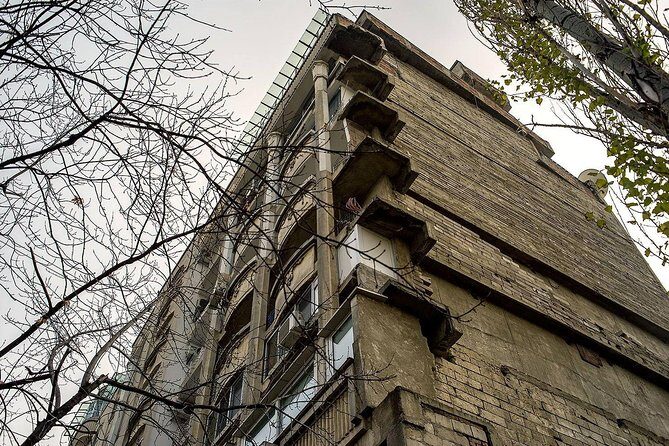
On the way, you may also spot smaller remnants that many people miss—run-down buildings that hint at the earlier security machinery. One of the best ways to understand a system like this is to notice how its structures linger even after the labels are gone.
Shoes note: Old Town streets can be uneven. Comfortable shoes matter here more than you think.
Piața Revoluției: Where Communism Collapsed in 1989
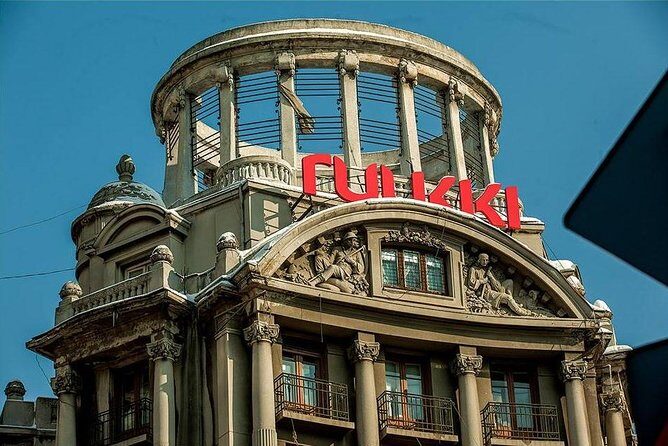
You finish at Piața Revoluției, the stage for the violent end of the regime. This stop is about the collapse of communism and Ceaușescu’s downfall, explained with a focus on how sudden and costly the change became.
If you’ve seen photos from 1989, you’ll recognize the atmosphere even from the street. The guide ties the story to what happened on the ground—how quickly loyalties shifted and how the city became the battlefield for a new reality.
Some buildings in the area still show signs of the fighting, and the tour uses that to make the timeline feel less abstract. You walk away with a clearer sense of how political control can break in hours, not decades.
Price and value: Is $42.33 worth it?
At $42.33 per person for about 3 hours, this is priced like a guide-led history experience, not a casual stroll. The value comes from the combination: multiple high-impact landmarks, a professional guide, and a route that keeps connecting policy to physical places.
Admission costs are mixed. Several stops are free for admission, but the Palace of Parliament ticket is not included. So your real all-in cost depends on that one paid entry, but the structure still keeps the rest of the walk budget-friendly.
Also, the guide time isn’t spread thin. Even when individual stops are brief, you’re getting interpretation, context, and the kind of Q&A that helps you connect the dots—especially if Bucharest is new to you and you want to understand what you’re actually looking at.
Timing and logistics that actually affect your day
This runs in all weather conditions, and you’ll want to dress appropriately. Since it’s outdoors much of the time, layers and rain protection can make a difference between an interesting walk and a miserable one.
There’s no hotel pickup or drop-off, so plan your commute to the meeting point on your own. It is near public transportation, which helps you stay flexible.
The experience also uses a mobile ticket, and you’ll receive confirmation at booking. And because it’s limited to 20 travelers, you’re more likely to get back-and-forth conversation rather than a one-way lecture.
Who this tour suits best (and who should adjust expectations)
This tour fits you if you want a clear path through Romania’s 20th-century story using Bucharest’s most meaningful stops. It’s also ideal if you prefer to understand systems through people’s lives—how daily life was shaped by the state, not just how leaders made speeches.
It may feel intense if you only want lighter topics. This is an era of repression and violence, and the tour doesn’t sugarcoat the fact that communism took power through force and ended through struggle.
If you walk slowly, good news: guides on this route have been praised for accommodating a slower pace and finding places to sit or lean when needed. That matters on a 3-hour walk.
A balanced take: what it does well, and what it can’t do
The tour’s strength is the way it connects major landmarks to cause-and-effect. You’re not only seeing architecture; you’re learning what the architecture was meant to do.
The limitation is simple: in three hours, no route can cover every detail of Romanian history. What this experience gives you is a focused spine—enough to understand the major arc from dictatorship to revolution.
If you want to go deeper afterward, you’ll be set up to read, visit more museums, and compare what you learn next to what you saw on the streets.
Should you book Life Under Communism in Bucharest?
If you’re spending limited time in Bucharest and want your history to have locations you can point to, I’d book it. The route is built around the most legible communist-era sites, and the English-speaking guides are repeatedly praised for clarity and for answering questions.
You should book with eyes open if you dislike walking or need long breaks. Also remember the Palace of Parliament admission isn’t included, so check your budget before you go.
For a first-time visitor, this is one of the fastest ways to get oriented in Romania’s 20th-century story—without drowning in facts you’ll never remember.
FAQ
How long is the Life under Communism tour in Bucharest?
It lasts about 3 hours.
What does the tour cost?
The price is listed as $42.33 per person.
Is the tour in English?
Yes, it is offered in English.
What’s included in the price?
A professional guide is included.
Do I need to pay admission tickets?
Most stops have free admission, but the Palace of Parliament admission ticket is not included. The other stops listed are free.
Where do you start and where does the tour end?
You start at Aleea Dealul Mitropoliei 19, București 030167, Romania, and you end at Revolution Square, Piața Revoluției, București.
Does the tour run in bad weather?
It operates in all weather conditions, and you should dress appropriately. If canceled due to poor weather, you’ll be offered a different date or a full refund.
Is there food included during the tour?
Food and drinks are not included unless specified.
How many people are in a group?
The tour has a maximum of 20 travelers.