REVIEW · BUCHAREST
Hike Bulgaria Love Swing, Veliko Tarnovo and Tarevet Fortress
Book on Viator →Operated by ETTA Mundo · Bookable on Viator
One day, three icons of the region. You’ll get Tsarevets Fortress medieval drama, a cliffside Love Swing view hike, and a Danube engineering photo stop, all wrapped in a private ride with a guide in English.
What I like most is how the day mixes big sights with time to wander. Tsarevets takes you through Bulgaria’s royal stronghold, and Veliko Tarnovo gives you a real neighborhood feel on Samovodska street. One thing to plan for: it’s a long day with plenty of car time, and the Love Swing hike can turn muddy after rain or snow.
In This Review
- Key highlights worth knowing
- Tsarevets Fortress: Medieval royalty and Art Deco church art
- Veliko Tarnovo’s Samovodska street: Crafts, inns, and a slower pace
- Arbanasi to the Love Swing: An easy hike with a cliff payoff
- Friendship Bridge over the Danube: Soviet truss engineering, real scale
- Your 9–11 hour rhythm: Comfort, timing, and what you should bring
- Price and value: what’s included, what’s extra, and how to budget
- Who this tour fits best (and who might feel it’s not right)
- Should you book the Bulgaria Love Swing + Tsarevets + Love Swing day trip?
- FAQ
- FAQ
- What’s the total duration of the tour?
- Does the tour include hotel pickup in Bucharest?
- Is this a private tour or shared group?
- Do I need tickets for Tsarevets Fortress?
- Are meals included?
- How long is the hike to the Love Swing?
- What should I know about conditions on the Love Swing trail?
- Is the tour in English?
- What happens if weather is poor?
Key highlights worth knowing
- Private Bucharest pickup with an air-conditioned vehicle keeps the road time comfortable.
- Tsarevets Fortress with a guided history chat plus time for the top hill church paintings.
- Veliko Tarnovo free time in Samovodska for craft workshops, bakeries, and the Hadji Nikoli Inn (1858).
- Easy hike to the Love Swing from Arbanasi with panoramic cliff views and a guide’s local context.
- Friendship Bridge over the Danube: Soviet-era truss bridge with a mobile central section (85 m).
- Walking sticks and WiFi on board are included if you want them.
Tsarevets Fortress: Medieval royalty and Art Deco church art
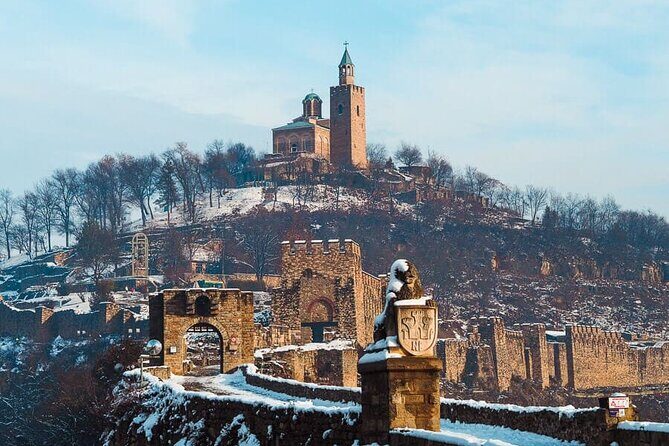
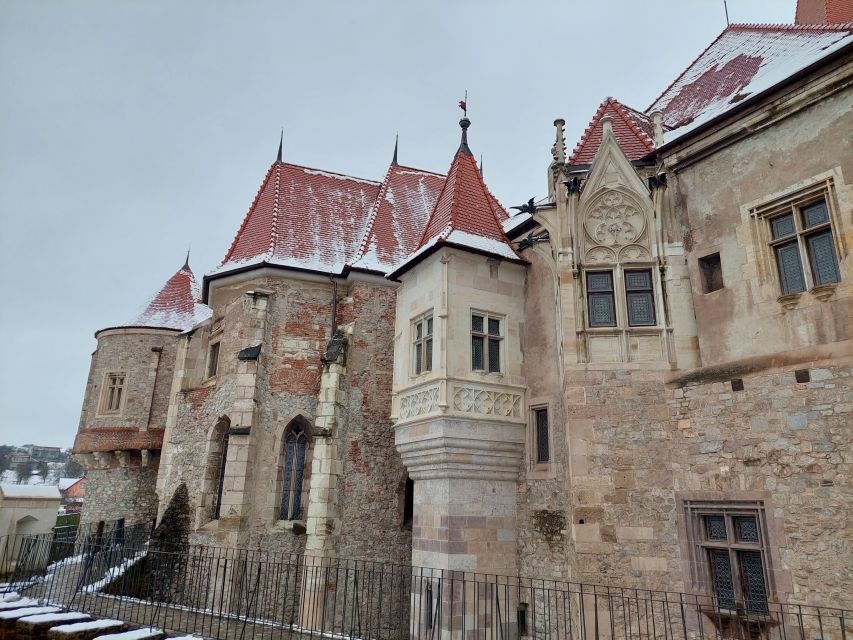
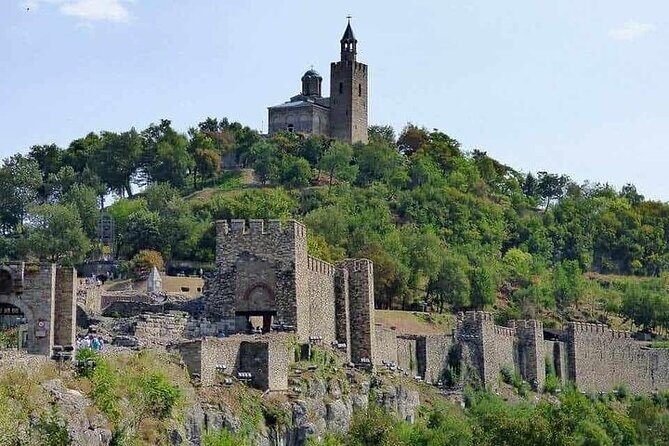
Tsarevets Fortress sits high above Veliko Tarnovo, and it’s easy to see why it mattered. This was one of the strongest Bulgarian fortifications from the Middle Ages. A guide walks you through what the site meant when rulers lived here, then shifts you to what you’re seeing now—ruins, stonework, and sweeping views that put the scale in your head.
Plan on about 3 hours at Tsarevets. That time matters because you’re not just “walking for photos.” You’ll also get an explanation of the past and the present, which helps the fortress feel like a story rather than a pile of walls.
One detail you don’t want to miss is the top hill church. You’ll be pointed toward unique paintings with an Art Deco style, which feels surprising in a medieval fortress setting. It’s the kind of contrast that makes you look twice and, honestly, helps the stop stay memorable even if you’ve seen other fortresses.
Practical note: Tsarevets admission costs extra (15 Leva / about €7.50 per person), so I’d mentally budget that before you go. Also, wear shoes with decent grip. Even if the walking is not extreme, stone surfaces and uneven paths are common.
You can also read our reviews of more hiking tours in Bucharest

Veliko Tarnovo’s Samovodska street: Crafts, inns, and a slower pace
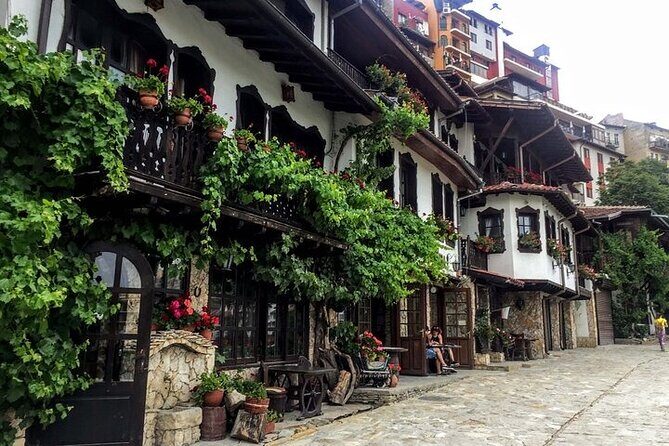
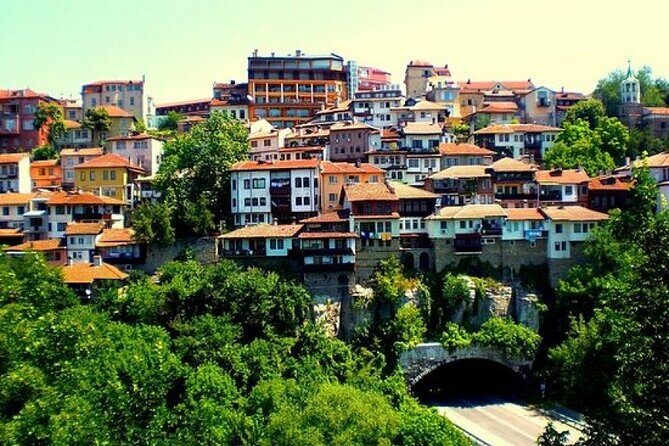
After the fortress, the tone shifts. You’ll head to Veliko Tarnovo, often called the City of the Tsars. It’s the historical and cultural capital of Bulgaria, set along the Yantra River, and it’s famous for its role during the Second Bulgarian Empire.
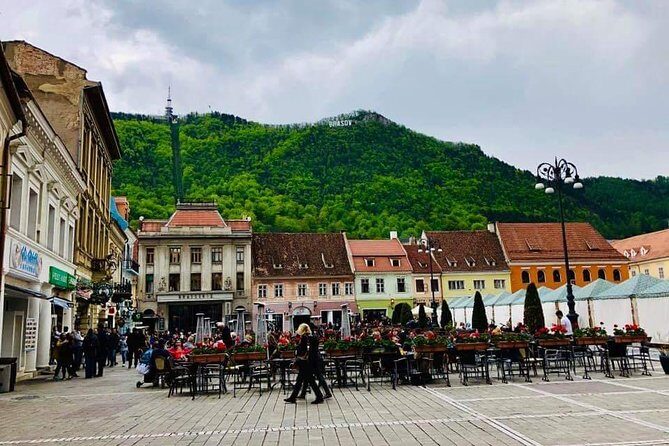
Your time here is shorter—about 1 hour—but it’s built for wandering. The best use of that hour is to move toward the lively older lane known as Samovodska. This is where you see renovated old houses side by side with traditional craft workshops, plus bakeries and pastry shops. It’s also where you can spot the Hadji Nikoli Inn, built in 1858.
What makes Samovodska valuable is that it feels like a living street, not just a staged viewpoint. You can pause for a snack, browse small workshops, and watch how the town’s heritage shows up in everyday things like food and crafts.
A possible drawback: because the free time is only about an hour, you can’t expect a full museum-style tour of Veliko Tarnovo. If you want deeper time in town, this day trip is more of a strong sampler than a full exploration. That said, for many people this “taste” is exactly the point.
Arbanasi to the Love Swing: An easy hike with a cliff payoff
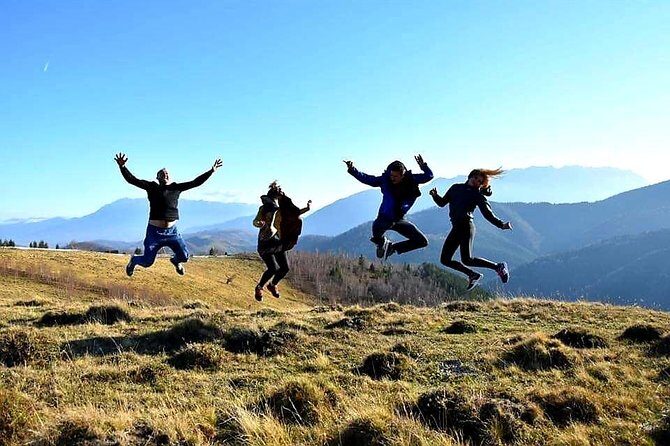
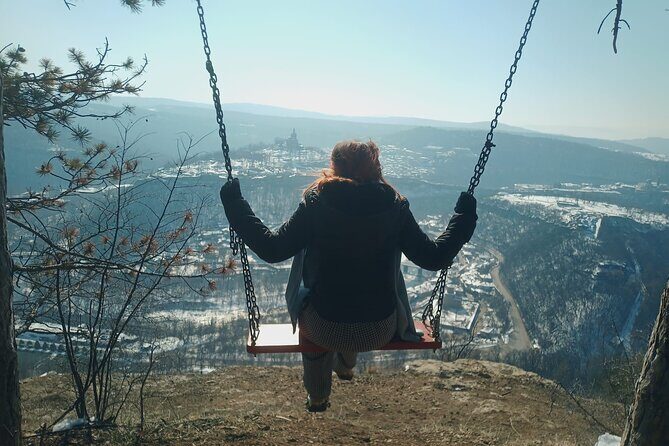
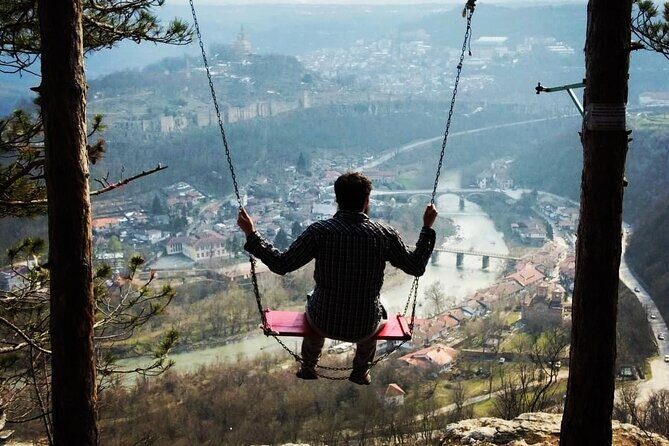
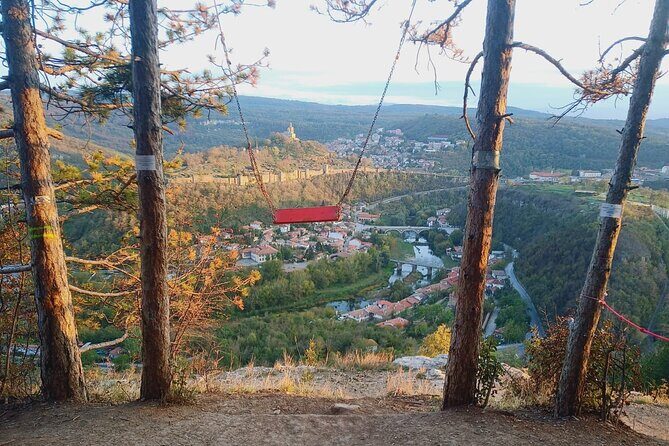
The Love Swing stop is where the day becomes more active and more personal. You start with a short, easy hike from Arbanasi, a UNESCO-listed area. The hike leads to a panoramic view called Love Swing, named for the swing rocker that stretches over a cliff edge.
You’ll have a guide with you for extra guidance and a history lesson, which helps you understand what you’re seeing instead of just rushing to the viewpoint. This is also one of those moments where the setting does part of the work for you: the Danube-and-empire stories of earlier stops give way to a simple, physical reward—big sky, big drop, and that classic swing silhouette.
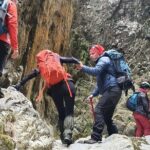
The hike is described as easy, and the tour includes walking sticks for anyone who wants them. But here’s the honest consideration: after rain or snow, the trail to the Love Swing can become muddy. It’s still doable, just unpleasant if you’re wearing the wrong shoes or you hate slush.
My tip: pack footwear you can trust. Think grip over fashion. If the weather is questionable, it’s worth bringing a small towel or wipes for the end of the walk, because you’ll be heading straight back into the rest of the day.
Admission for Love Swing is free, so you’re not paying extra for the viewpoint moment. What you are paying for is time with a guide and a smooth transfer into the setting, which makes the stop feel effortless.
Friendship Bridge over the Danube: Soviet truss engineering, real scale
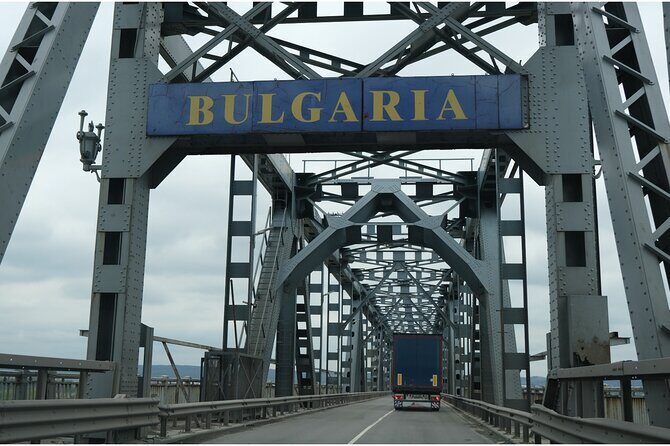
Next comes a very different kind of “wow”: infrastructure. The Danube Bridge—also called the Friendship Bridge—crosses the Danube River and connects the Bulgarian bank to the Romanian bank. It’s one of only two bridges connecting Romania and Bulgaria, so it also has a practical, political role in how the countries connect.
This is not a long stop, but it’s packed with details. The bridge is a steel truss design, designed by Soviet engineers, and it’s 2,223.52 m long. The central part is mobile—it can lift for oversized boats passage—and that mobile section is 85 m. Maintenance of the mobile part is handled by Romania, and it’s checked periodically.
If you like “how things work” travel, this stop is a treat. You get to look at a massive object and understand how it’s engineered to handle river traffic. The bridge was constructed in about two and a half years with Soviet Union support, and at the time it was the only shared Danube crossing between Bulgaria and Romania (1954).
A small caution: since it’s a bridge stop, how much you enjoy it depends on weather. Flat wind and cold can happen near big water. Dress in layers so you can enjoy the views without turning the photo stop into a shiver session.
Your 9–11 hour rhythm: Comfort, timing, and what you should bring
This tour runs about 9 to 11 hours, depending on the day. The reality is you’re spending a good chunk in the car because you’re covering multiple regions around Veliko Tarnovo and returning to Bucharest.
The good news: transport is private and comfortable. You get hotel pickup and drop-off, an air-conditioned vehicle, and WiFi on board. The vehicle also helps if you’re traveling with limited time in the city. The guide keeps the day coherent, so you’re not piecing together driving times yourself.
You should still plan the day like a long one:
- Bring a refillable water bottle.
- Pack snacks since lunch is not included.
- Wear shoes that can handle uneven ground and possible mud near Love Swing.
- Dress in layers, because mornings and hilltops can feel cooler.
One thing I appreciate from the feedback is how guides keep the day moving without rushing the important bits. Some groups have had guides like Andrei and Victor, and both are noted for friendly energy and a strong history angle—meaning you’re not stuck with silence while driving.
If you like structured travel with room to breathe, this format works. If you hate car time, this may feel like too much. But the balance here is that you do get meaningful stops rather than just quick drive-bys.




Price and value: what’s included, what’s extra, and how to budget
The tour price is $145.57 per person. That number matters less than what you actually get in exchange.
Included in the price:
- Private transportation
- Hotel pickup and drop-off
- Walking sticks for those who want them
- WiFi on board
- An air-conditioned vehicle
Not included:
- Lunch
- Tsarevets Fortress admission (15 Leva / about €7.50 per person)
So when you’re budgeting, the main “extra” is the Tsarevets ticket. You’re also effectively paying for the guided value: explanation at Tsarevets, guidance during the Love Swing hike, and the Danube bridge stop with context.
Where the value really shows is in the combination. It’s not only viewpoints; it’s viewpoints plus history talk plus transfers. If you tried to DIY this route from Bucharest—driving, finding parking, timing between sites, and lining up guided context—you’d likely burn more time and end up spending money anyway.
In short: if you want a guided sampler day that covers a fortress, an old-capital town lane, a cliff viewpoint hike, and a major bridge stop, this is a solid way to buy convenience.
Who this tour fits best (and who might feel it’s not right)
This works best for you if:
- You want a full day out of Bucharest without renting a car.
- You’re comfortable with moderate walking and a short hike.
- You like guided context, especially for medieval sites and regional history.
- You enjoy a mix: architecture, viewpoints, and a one-time practical engineering stop.
It may not be ideal if:
- You strongly dislike long road days.
- You can’t handle muddy conditions after rain or snow. The hike is doable, but it may be unpleasant.
Also, service animals are allowed, and the tour asks for moderate physical fitness. That’s a helpful target because while the Love Swing hike is described as short and easy, you still need footing and basic stamina.
Should you book the Bulgaria Love Swing + Tsarevets + Love Swing day trip?

I’d book it if you want a well-paced, guided “greatest hits” day from Bucharest. The strongest reason is the mix: Tsarevets Fortress gives you a major medieval site with a guide-driven history lesson, Veliko Tarnovo adds time to wander Samovodska street, and Love Swing delivers that cliff-edge moment with a short hike that doesn’t feel technical. Add the Friendship Bridge stop for something different, and you get a day that feels varied without being chaotic.
Hold off or be cautious if the forecast includes rain or snow and you’re not into muddy trails, or if you know you’ll resent sitting in the car for hours. In good weather, this trip turns into a smooth, memorable route through two countries’ shared Danube region and Bulgaria’s standout hilltop heritage.
FAQ
FAQ
What’s the total duration of the tour?
It runs about 9 to 11 hours, roughly a full day.
Does the tour include hotel pickup in Bucharest?
Yes, pickup is offered, and the tour also returns you back to the meeting point.
Is this a private tour or shared group?
It’s private. Only your group participates.
Do I need tickets for Tsarevets Fortress?
Yes. Tsarevets admission is not included and costs 15 Leva (about €7.50) per person.
Are meals included?
Lunch is not included.
How long is the hike to the Love Swing?
The hike to the Love Swing takes about 1 hour, and it’s described as short and easy.
What should I know about conditions on the Love Swing trail?
After rain or snow, the hike can become muddy. It’s still doable, just might be unpleasant.
Is the tour in English?
Yes, it’s offered in English.
What happens if weather is poor?
The experience requires good weather. If it’s canceled due to poor weather, you’ll be offered a different date or a full refund.