REVIEW · SIBIU
From Sibiu: Blue Line & City Tour Sighisoara – UNESCO
Book on GetYourGuide →Operated by Carpathian Travel Center · Bookable on GetYourGuide
Sighișoara feels like a storybook fortress. This 8-hour trip from Sibiu is a smart way to see one of Europe’s best-preserved UNESCO medieval citadels without wrestling with transportation.
I especially like the tight, walk-focused route inside the citadel and the way the tour hits the big “why it matters” spots, from Vlad the Impaler’s birthplace to the guild-era defenses.
What I like most is the English-speaking specialized guide (the explanations are praised as clear and patient). And the Clock Tower is a standout: you get the main landmark’s panoramic view and even a look at its clock mechanism and historical artifacts.
One consideration: this tour is built for walkers. You’ll cover cobbled streets, and there’s a major climb on the 17th-century Covered Staircase with 164 steps—so wear shoes you trust and pace yourself.
In This Review
- Key Things That Make This Sighișoara Tour Worth Your Time
- Why Sighișoara Works So Well From Sibiu
- Timing, Meeting Point, and How the Day Stays Manageable
- The Ride South: What the Transport Feels Like
- First Stop Inside the Citadel: Market Place Energy and Medieval Street Geometry
- Dracula’s Birth House: Legend Meets Museum Reality
- Climb the 64-Meter Clock Tower for the Best Big-Picture View
- The Covered Staircase (164 Steps): One Walk-Up, Two Reasons to Care
- Church on the Hill: Gothic Details and Fresco Atmosphere
- German Cemetery: The Place That Adds Gravity
- Guild Defenses: Butchers’ Bastion, Tailors’ Tower, Furriers’ Tower
- Tin Moulders’ Tower and the Venetian House: When Styles Show Up
- The House with the Deer Antler: A Quirky Finale That Sticks
- What You Actually Get for the Price ($88) and Where Extras Show Up
- Comfort Checklist: Shoes, Water, and What to Pack
- Who This Tour Fits Best (and Who Should Rethink It)
- Should You Book This Sighișoara Tour From Sibiu?
- FAQ
- What are the tour operating days and seasonal schedules?
- Where do I meet in Sibiu?
- How long is the tour, and what time does it start?
- Is the tour guided in English?
- What is included in the price?
- Are meals included?
Key Things That Make This Sighișoara Tour Worth Your Time
- Small group (max 8) means you’re not lost in a crowd when questions pop up.
- Clock Tower from 64 meters gives you a real sense of how the citadel sits and how the streets connect.
- Dracula’s Birth House turns a legend into a historical stop, now a restaurant and museum.
- Covered Staircase (164 steps) is both a practical walk-up and a cool piece of local architecture.
- German Cemetery and guild towers add depth beyond the postcard stuff.
- A clear return schedule: depart Sighișoara at 13:30 so you’re not stuck for hours after the main walk.
Why Sighișoara Works So Well From Sibiu

Sighișoara doesn’t just look medieval. It still feels like it’s functioning as a medieval city—towers, walls, guild buildings, hill churches, and tight streets all in one place. That’s why this day trip is such a good value: you get the meaning behind the pretty scenes.
The tour also makes a practical choice. You don’t waste the day trying to “figure it out.” Instead, you’re led through the citadel’s major landmarks in a sensible walking circuit, finishing with standout details like the House with the Deer Antler façade.
And if you’re into the Dracula story, this is where it gets grounding. You’re not just chasing spooky photos. You visit the legendary Vlad the Impaler birthplace, which is now a restaurant and museum, so the stop has a historical angle.
You can also read our reviews of more city tours in Sibiu
Timing, Meeting Point, and How the Day Stays Manageable
The tour is scheduled for a full day at a workable pace: it runs for 8 hours total, with a 09:00 AM departure from Sibiu.
Your starting point in Sibiu is listed as sala Thalia on Bulevardul Corneliu Coposu. Build in a buffer and arrive about 15 minutes early so you don’t feel rushed when it’s time to board.
The itinerary has a nice rhythm. You travel to Sighișoara, tour the citadel from late morning into early afternoon, then you depart Sighișoara at 13:30. That matters because you avoid the slow, late-afternoon drag that can happen when you plan everything on your own.
The Ride South: What the Transport Feels Like
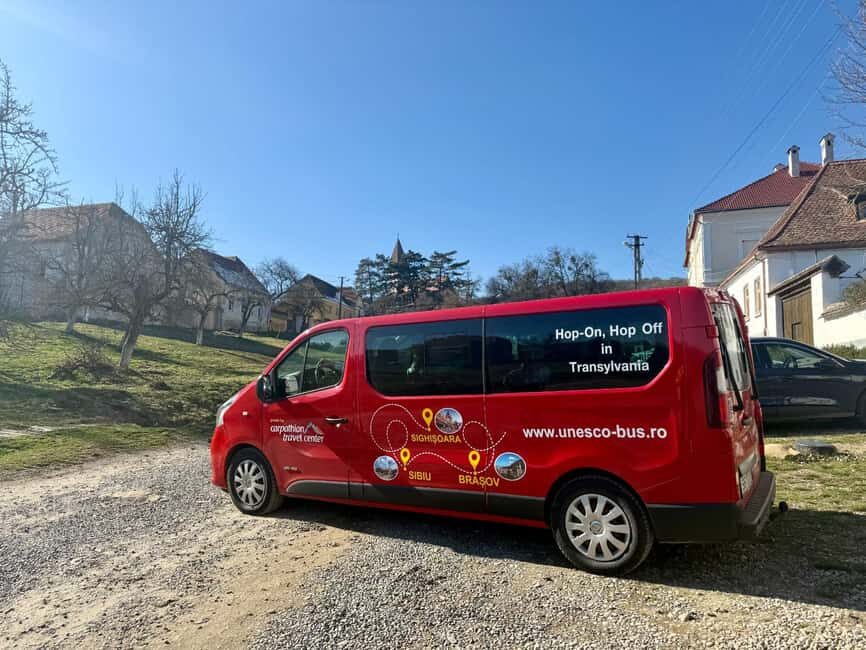
You’ll travel by modern air-conditioned minivan, described as part of the UNESCO bus / hop-on-hop-off style transport. The important part for you: you get comfortable transit rather than a DIY scramble.
I also like that the routing isn’t necessarily “one boring road both ways.” The experience is described as safe and drivers can take different routes back. In a small group, that can make the transfer feel shorter and less repetitive.
Along the way, you’ll have short scenic panoramic stops. That’s useful because it gives you quick photo angles and context for what you’re about to walk through—without turning the trip into a sightseeing marathon.
First Stop Inside the Citadel: Market Place Energy and Medieval Street Geometry
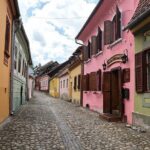
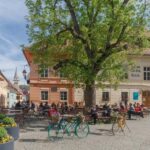
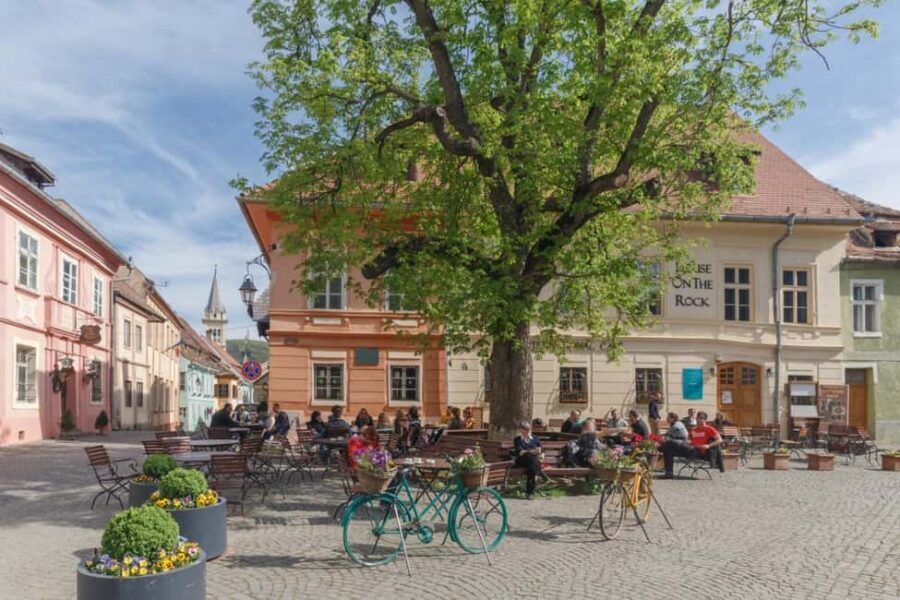
Once you’re in Sighișoara, the tour flow starts where it should: at the citadel’s Market Place. This is the kind of square where you immediately get the layout—colored burgher houses, cobbled streets, and tower silhouettes that help you read the city like a map.
The Market Place stop is more than a photo pause. It sets the mental model for the rest of the walking route. After you see the square, the hills, churches, and defensive structures start making sense instead of looking like random landmarks.
Then you move into the stories that sit behind the buildings.
Dracula’s Birth House: Legend Meets Museum Reality
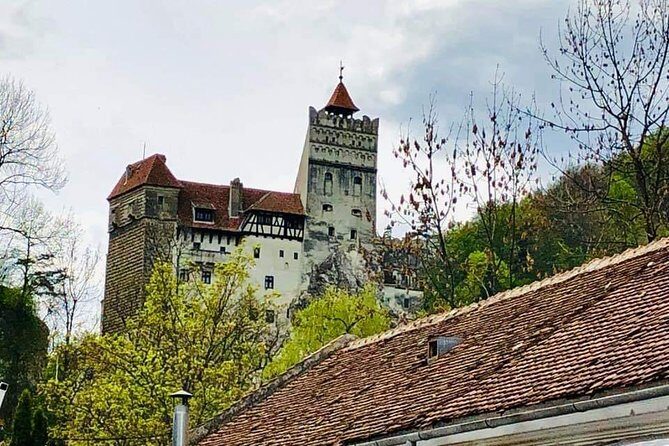
The birthplace of Vlad the Impaler (often tied to Dracula in popular culture) is one of the tour’s big “headline” stops. You’ll visit Dracula’s Birth House, which is now a restaurant and museum dedicated to Sighișoara’s history.
This is a strong choice for two reasons. First, it anchors the legend in a specific place. Second, the museum angle means the stop isn’t only about myth. You’re there for context—how Sighișoara fits into the larger historical picture.
If you care about the Dracula story, don’t treat this as a quick selfie stop. Plan to slow down enough to read a few details inside the museum spaces. Even on a day tour, that extra attention turns the visit from touristy to meaningful.

Climb the 64-Meter Clock Tower for the Best Big-Picture View
The Clock Tower is the citadel’s main landmark, and the tour treats it like the center of the universe. You’ll see it from the outside, then you’ll go up for a panoramic view from its 64-meter height.
What I like about this stop is the “two-layer” payoff. You get the broad view—roofs, hills, and street lines—so you can understand how the citadel spreads. Then you get the clock story: the tour includes the clock mechanism and historical artifacts inside.
Practical tip: bring your camera, but also take a breath for a minute at the top. The view helps you connect where you’ve been with where you’re going next.
The Covered Staircase (164 Steps): One Walk-Up, Two Reasons to Care
If Sighișoara has one moment that feels both useful and cool, it’s the Covered Staircase. You’ll climb the 17th-century wooden passage with 164 steps, built to protect schoolchildren from harsh weather.
That fact alone is worth your attention. It’s easy to see medieval structures as decoration. This one is a real-life solution: people needed to move between parts of the city, and they built a roofed route so daily life could function.
It’s also a great place to pace yourself. Take your time, rest if you need to, and don’t try to sprint between photo spots. The tour includes plenty of walking, so you’ll feel better if you keep the climb steady.
Church on the Hill: Gothic Details and Fresco Atmosphere
From the staircase, the route rises to School Hill and the Church on the Hill. The church is described as a stunning Gothic church with a rich interior and medieval frescoes.
This stop works well because it adds a different “texture” to the day. Up to this point, you’ve been moving through squares, towers, and defensive elements. A Gothic church interior shifts the mood toward art, ceremony, and the long timeline of medieval life.
If you’re traveling with limited museum time, this is a high-payoff stop. A church with frescoes gives you background that makes the rest of the architecture feel less random.
German Cemetery: The Place That Adds Gravity
The tour includes the German Cemetery, where some of Sighișoara’s influential families are buried.
This is one of those stops that can quietly become the most memorable part. It adds the human side of the story—families, legacies, and the longer continuity of the city beyond the legend-heavy highlights.
If you prefer your travel to feel a bit grounded (not only photogenic), make a point to slow down here. Even a short cemetery visit can change how you interpret the towers and guild buildings you’ve already seen.
Guild Defenses: Butchers’ Bastion, Tailors’ Tower, Furriers’ Tower
A major theme of Sighișoara’s citadel is defense tied to community trades. The tour covers:
- Butchers’ Bastion & Tower, including how craft guilds helped protect the citadel
- Tailors’ Tower & Furriers’ Tower, describing historical fortifications built to guard against invaders
This is more than medieval trivia. Guild towers help you understand how the city worked as a system. You’re not just looking at walls; you’re seeing the logic of who maintained what and why.
If you like learning through architecture, this section is a highlight. It gives structure to what could otherwise feel like a blur of tower names and angles.
Tin Moulders’ Tower and the Venetian House: When Styles Show Up
Next you’ll encounter the Tin Moulders’ Tower and the Venetian House, described as an elegant Renaissance-style building with an intriguing history.
This is a good moment to pay attention to style changes. When you spot Renaissance touches inside a medieval citadel, you get a clue that Sighișoara’s story didn’t stop at one era. The city adapted, traded, and evolved.
Think of it as a visual reminder: a UNESCO site may be labeled “medieval,” but it isn’t frozen in time.
The House with the Deer Antler: A Quirky Finale That Sticks
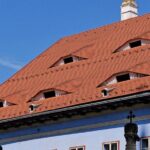
The tour ends at the House with the Deer Antler, known for deer antlers mounted on the façade.
This kind of finale works because it’s memorable. After churches, cemeteries, defensive towers, and legends, the deer-antler detail gives your brain a quick win. It’s also a neat example of how local identity can show up in small, strange, specific details.
What You Actually Get for the Price ($88) and Where Extras Show Up
At $88 per person for an 8-hour day, you’re mostly paying for three things:
- transportation from Sibiu to Sighișoara and back in a modern air-conditioned minivan
- a guided city tour in English through the citadel highlights
- the “don’t-waste-time” walking circuit that connects major stops efficiently
Included services are solid: an English-speaking specialized guide, a map with Romania, and the UNESCO bus / hop-on-hop-off style transport.
What’s not included is also clear: meals and drinks, plus personal expenses. So plan to budget for a snack stop or a simple meal during your free time in Sighișoara (or after the tour, depending on your schedule).
If you’re the type who can’t stand buying tickets and figuring routes while on vacation, this price is easier to justify. You’re buying guidance and flow.
Comfort Checklist: Shoes, Water, and What to Pack
This day trip is walking-heavy. The tour guidance explicitly pushes comfortable shoes, plus basics like a hat, camera, sunscreen, and water.
Here’s how I’d pack it for real life:
- shoes with grip for cobblestones and stairs
- a small water bottle so you’re not forced to hunt mid-walk
- sunscreen and a hat, especially during warmer months
- a camera for the Clock Tower panorama and the Market Place streets
Also note what’s not allowed: smoking.
Who This Tour Fits Best (and Who Should Rethink It)
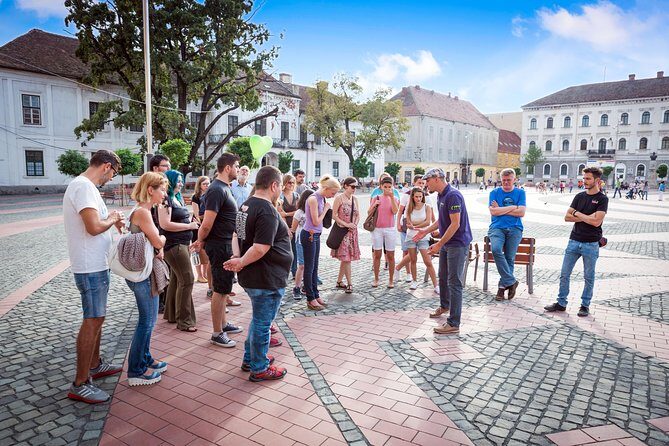
This tour is described as a small group capped at 8 participants, with an English live guide. That makes it ideal if you want structure but still prefer not to be in a huge bus herd.
It’s also a strong match for solo travelers. One verified booking specifically notes feeling safe on the experience, which lines up with what you’d want from a guided day trip.
On the other hand, it’s not suitable for:
- children under 5
- people with mobility impairments
- wheelchair users
If steps and long walking are a concern, this may be frustrating rather than charming.
Should You Book This Sighișoara Tour From Sibiu?
I’d book it if you want a focused day inside the UNESCO citadel with an English guide who explains the buildings and the stories behind them. The Clock Tower view, Dracula’s Birth House, and the guild-defense stops are exactly the kind of “big hits” that add up when someone else handles the order.
You should also consider booking if you’re traveling on a schedule and can’t afford to lose time figuring out logistics. The 09:00 departure and leaving Sighișoara at 13:30 keep the day readable.
Skip it (or pick another option) if you can’t handle a lot of walking or if 164 steps on the Covered Staircase is a dealbreaker.
FAQ
What are the tour operating days and seasonal schedules?
Program A runs January–April and November–December on Thursday, Friday, and Saturday. Program B runs May–October on Tuesday, Thursday, Saturday, and Sunday.
Where do I meet in Sibiu?
The meeting point is sala Thalia, Bulevardul Corneliu Coposu.
How long is the tour, and what time does it start?
The duration is 8 hours. The departure hour is 09:00 AM from Sibiu, with departure from Sighișoara at 13:30.
Is the tour guided in English?
Yes. The tour includes a live English-speaking guide.
What is included in the price?
Included services are the Sighișoara city tour with an English-speaking specialized guide, a Romania map, and transport in a modern air-conditioned minivan (UNESCO bus / hop-on-hop-off style).
Are meals included?
No. Meals and drinks are not included, and you’ll need to plan for personal expenses.