REVIEW · IASI
Tour guide in Iasi, Romania
Book on GetYourGuide →Operated by LPS DATE COMPANY · Bookable on GetYourGuide
Iasi’s past comes alive fast. This small-group tour in Iasi County mixes storytelling with a guided walk through the city center, starting at Piata Unirii and the Alexandru Ioan Cuza statue. Expect a lively, organized approach that moves you through major periods and legends, then gives you time to look around on your own.
I really like two things here. First, the guide’s storytelling style is built for real understanding, not just dates. Second, the pace stays practical: the route is mostly near the center, so you spend your time learning, not crossing the whole city.
One consideration: the guide leans on how the city evolved over roughly the last 250 years, because earlier history has gaps in the proofs. If you’re hunting for very specific medieval details, you may want to pair this with extra reading.
In This Review
- Key things to love about this Iasi tour
- Union Square start: where the tour keeps you oriented
- How the story moves through Iasi’s centuries
- The route stays near the center for a reason
- What the guide skills actually change for you
- Storytelling that’s easy to follow
- Improvisation and communication
- Time management that respects your day
- Photo stops and free time: turning a guide’s hints into your own plan
- Price and value: is $70 a fair deal for this format?
- What to bring, and who this tour fits best
- Tips to get the most out of the 3-hour experience
- Should you book this Iasi city story walk?
- FAQ
- Where does the tour meet?
- How long is the tour?
- What languages is the tour available in?
- What size is the group?
- What should I bring?
- Who is the tour not suitable for?
Key things to love about this Iasi tour

- Story-first history that explains how the city changed over centuries
- Small group feel (limited to 4) so questions don’t get swallowed
- Improvisation and humor that keep the walking tour from turning into a lecture
- Good time management with a route that mostly stays near the center
- Photo opportunities at key spots plus free time to explore
Union Square start: where the tour keeps you oriented
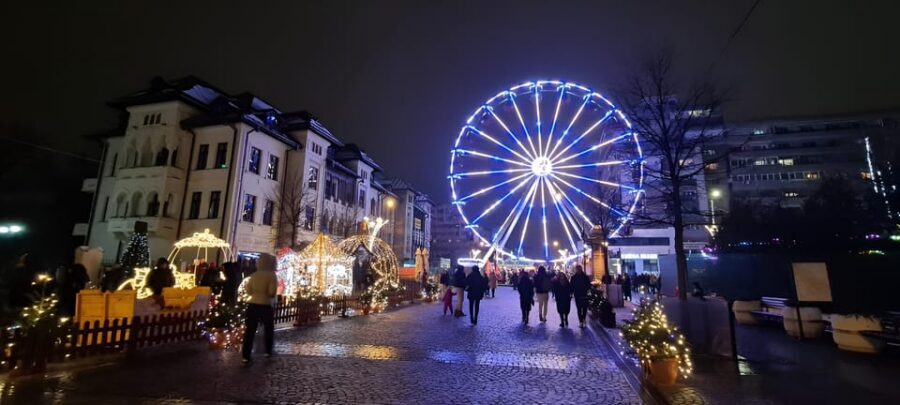
The tour begins right in the middle of things: Piata Unirii (Union Square), in front of the Alexandru Ioan Cuza statue. I love meeting points like this because they do two jobs at once. You don’t waste time hunting a corner, and you naturally step into the city’s “main stage” energy.
From there, the walk stays close to the center. That matters more than it sounds. A lot of history tours promise a highlight reel but quietly turn into long, exhausting transit. Here, the plan is to keep the route near downtown so the experience stays focused on stories, buildings, and context.
You’ll get a clear sense of where Iasi’s identity lives, too. The guide doesn’t just point at monuments. The approach is more like: this is where the city keeps memory, this is why the setting matters, and this is what changed when different periods took over.
You can also read our reviews of more tours and experiences in Iasi.


How the story moves through Iasi’s centuries
This tour is built around a time sweep. The guide tells you when Iasi was first mentioned, then follows key events through the 17th and 18th centuries. After that, the storytelling shifts into more detail about what happened later—especially how the city evolved once the historical trail becomes easier to track.
Here’s what I’d call the “smart choice” in that approach: the guide prefers to explain Iasi’s evolution during the last 250 years because the earlier record is incomplete. That’s honest, and it helps the tour avoid pretending the evidence exists when it doesn’t.
You’ll also notice the guide treats the city like a set of living layers, not a single museum hallway. In practice, that means stories tied to people and places get woven into what you’re seeing in real time. A guide named Peter stands out in the reviews for being passionate about historical figures and monuments, and for telling stories in a way that makes individual houses and landmarks feel connected.
If you like explanations that connect architecture, public life, and political shifts, you’re going to enjoy this format. If you want a strict timeline with ultra-specific archival details at every step, you might still learn a lot, but you’ll get more interpretation than hardcore fact-dumping.
The route stays near the center for a reason

The tour is designed to avoid turning into a long slog. It’s mostly centered around downtown, with enough walking to feel like a city walk, but not so much that you’re counting steps instead of absorbing stories.
That center-focused structure also makes the photo stops more useful. You’re not constantly repositioning for shots, and you’re more likely to catch buildings in good sightlines while you’re still fresh. The plan explicitly includes photo opportunities at key locations, so it’s not just “good luck with your camera.”
You’ll also get free time for exploration. I like this because it lets you switch from guided listening to personal wandering. Use that window to zoom in on details that caught your attention during the walk—doorways, facades, courtyards, or street-level vibes the guide mentioned.
What the guide skills actually change for you
The highlights list four strengths: storytelling, improvisation, communication/interpersonal ability, and time management. You feel those skills in the real flow of the experience.
Storytelling that’s easy to follow
The tour doesn’t treat history like homework. The guide’s goal is to help you understand what each period meant for the city’s look and identity. In reviews, Peter gets praised for being well-informed and passionate, and for making the tour fun through enthusiasm and humor.
When a guide can explain complex change without turning it into a wall of facts, you can actually remember what you learned. That’s the real value: your brain stops treating history like separate chapters and starts seeing it as cause-and-effect.


Improvisation and communication
Improvisation matters because group energy changes. A small-group format means questions pop up naturally: someone wants a clarification, someone spots a detail, someone wants a specific angle. A guide who can respond smoothly keeps the tour from feeling rigid.
Communication also shows up after the tour. One review mentions Peter sending recommendations on WhatsApp afterward, which is the kind of practical extra that helps you continue exploring without guessing.
Time management that respects your day
Three hours is short, so time management is everything. This tour aims to hit major periods, show different parts of the city, and still leave space for free exploration. If you’ve done tours where you feel rushed and then cut off before you’re ready, you’ll appreciate a guide who keeps things moving but not chaotic.
Also, note the duration: the plan is 3 hours. One review said theirs ran around 4 hours, so there may be some flexibility depending on pace and questions.
Photo stops and free time: turning a guide’s hints into your own plan
Some tours give you a few photos and then immediately speed away. This one builds in both photo opportunities and free time to explore.
Here’s how to make the most of it. During the guided part, watch for the guide’s cues about what to photograph or look for. If they mention a building or a person connected to it, that’s usually your cue that there’s a detail worth finding up close.
Then, during your free time, don’t just wander randomly. Pick one or two things the guide pointed out and go back for a closer look. If you liked the architecture angle, look at facades and street details. If you liked the political or character stories, skim signage and plaques carefully (when available) and reconnect it to what you heard.
Because the route stays mostly near the center, your free time is still useful. You’re not stranded far from the main sights. You can also hop into nearby cafés or sit for a bit without turning it into a logistical puzzle.
Price and value: is $70 a fair deal for this format?
At $70 per person for a 3-hour small-group tour, you’re paying for three things that usually cost extra when you do them separately: a strong local guide, a curated story that organizes periods into something understandable, and a group size that keeps the experience interactive.
The “value math” looks better when you compare this to two common alternatives:
- A generic walking tour with a big group: You may get broad coverage, but you often lose questions and personal attention.
- Trying to self-guide: You can cover sights on your own, but you’ll miss the guided connections between what you see and why it matters.
Here, you also get photo opportunities and free exploration time, plus detailed pre-tour information and tips. That last bit helps you show up ready and not spend the first part figuring out where everything is.
One practical detail: the tour is limited to 4 participants. That small cap is a big part of why the guide’s communication and improvisation can actually work. In a big crowd, those strengths get diluted.
What to bring, and who this tour fits best
Bring comfortable shoes. That’s the one item the tour explicitly calls out. I’d treat it as a signal that you’ll walk enough to need decent footing, especially with old-center streets where surfaces can vary.
In terms of who it suits:
- Great for adults and older kids who enjoy historical storytelling and walking.
- Ideal if you like architecture and city identity, but don’t want a dry lecture.
- Nice for couples or small groups who want space to ask questions.
And it’s not a fit for everyone. The tour is not suitable for children under 7, wheelchair users, and people over 70. If any of those categories affect you, look for an alternative format that better matches your needs.
Tips to get the most out of the 3-hour experience
If you want to walk away feeling like you genuinely “got” Iasi, do this:
- Arrive a few minutes early at Piata Unirii so you’re not rushed.
- During the story, don’t multitask with your phone. If something clicks, you’ll want to photograph or revisit it later.
- Use your free time with intention. Choose one “theme” you enjoyed most: a person, a period, or an area the guide highlighted.
- If you’re unsure what to ask, wait until the guide brings up a building or character. That’s usually where the best questions come from.
And if you’re the type who loves details, don’t be shy about asking for clarification. The guide’s strength includes communication and interpersonal ability, and the small group format makes it easier.
Should you book this Iasi city story walk?
Book it if you want a short, organized introduction to Iasi that feels like a conversation more than a lecture. This tour is especially strong for people who enjoy storytelling, humor, and a guide who can explain how the city shifted from period to period. The small group size (max 4) and the center-focused route are a big part of why it works.
Skip it (or at least think twice) if you’re looking for heavy early-medieval specifics or you need an itinerary that’s comfortable for wheelchair users or seniors over 70. The tour’s time sweep is designed around what can be explained well, and the earlier gaps in the historical record are part of that reality.
If you like meeting a city through the guide’s narrative—and then using your own eyes to follow up—this is a solid, good-value way to spend a morning or afternoon in Iasi.
FAQ
Where does the tour meet?
The meeting point is in front of the Alexandru Ioan Cuza Statue at Piata Unirii (Union Square).
How long is the tour?
The duration is 3 hours.
What languages is the tour available in?
The live guide offers the tour in English and Romanian.
What size is the group?
The group is limited to 4 participants.
What should I bring?
Wear comfortable shoes.
Who is the tour not suitable for?
It is not suitable for children under 7 years, wheelchair users, or people over 70 years.