REVIEW · BUCHAREST
Private: RedPatrol Bucharest Contrasts Tour in a Vintage Car
Book on Viator →Operated by Red Patrol · Bookable on Viator
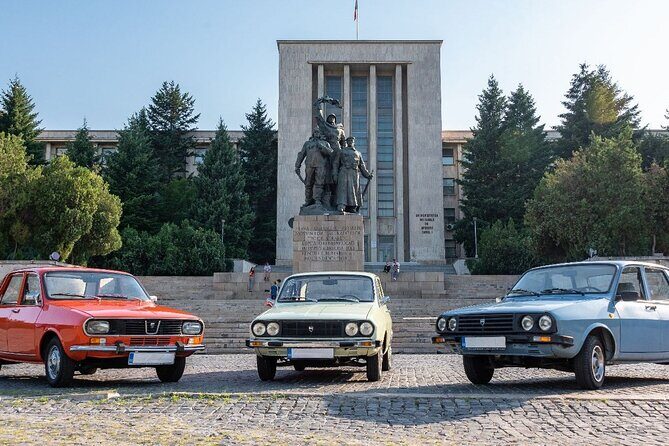
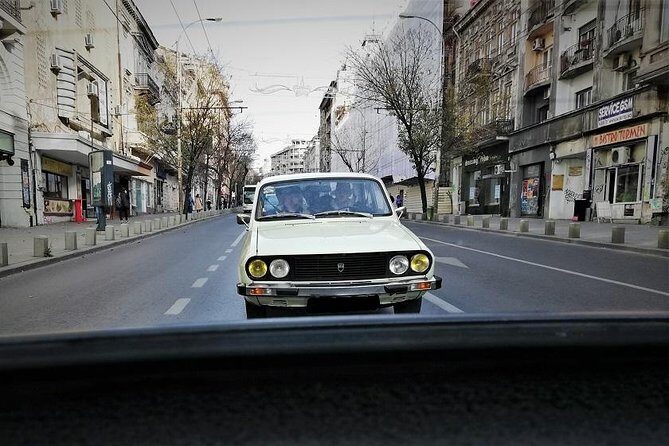
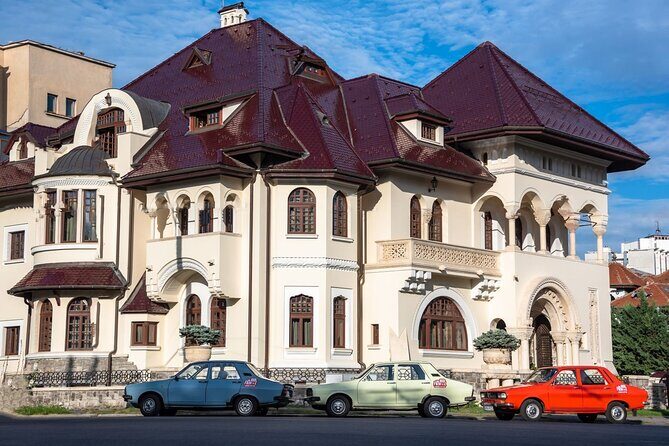
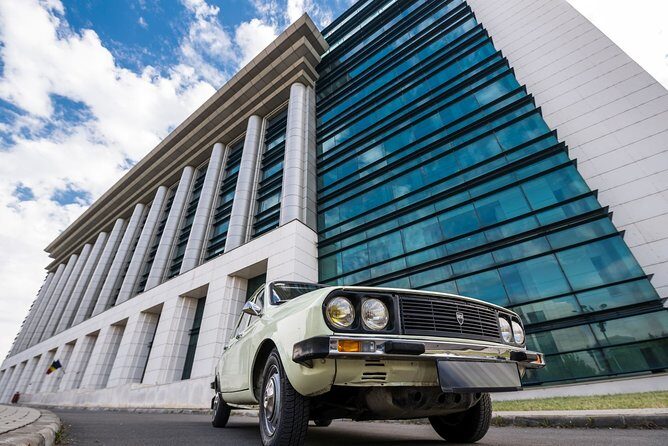
A Dacia ride in Bucharest hits different. This private tour threads together palaces and working-class neighborhoods, with tight stories about what communism built (and what it left behind). I like the up-close feel of cruising in a classic Dacia 1300/1310 and having time for photos and street-level context, not just viewpoints. One drawback: the car is a 70s classic, so don’t count on modern comfort like AC or navigation, even though it’s heated in winter.
What makes this experience work is the focus. You’re not trying to do every museum in town. You’re getting the social map of Bucharest: where power sat, where factories ran, and where people ended up after big political swings. On top of that, pickup and drop-off from your address means you spend less time “figuring it out” and more time looking out the window.
In This Review
- Key Highlights You’ll Feel Immediately
- Booking a Private Dacia Ride: What You’re Really Paying For
- The Contrasts Concept: How Bucharest Makes More Sense After This Route
- From Uranus to Academia Română: The Revolution’s Stopped Demolition Story
- Fântână and the Bourgeois Neighborhood Roots
- Cotroceni Palace Gardens: Belle Époque Bucharest, Briefly
- Drumul Taberei Park: Working-Class Blocks and the Mall Built on Ruins
- Ferentari and Piața Rahova: Bucharest’s Hard Contrast Zone
- Fosta Uzină Rocar: Ruined Factories and the Story of a Neighborhood Up and Down
- Broscuțe Park: The Colonel’s Quarter and Stalinist-Era Life
- Palace of Parliament: The Biggest Building, Rebuilt After Total Demolition
- What the $126.43 Value Covers (And What It Doesn’t)
- Comfort Tips: How to Enjoy the Ride Without Fuss
- Who This Tour Suits Best
- Should You Book This Contrasts Tour?
- FAQ
- How long is the Bucharest Contrasts tour?
- How much does the tour cost?
- Is pickup and drop-off included?
- What language is the tour offered in?
- Is this a private tour?
- Do I get to drive the Dacia?
- Are admission tickets included for all stops?
- What is included in the tour package?
- What if plans change and I need to cancel?
Key Highlights You’ll Feel Immediately
- A restored Dacia 1300/1310 ride that brings Bucharest’s past to life, not just talk about it
- Pickup from your address and a private setup, so the pace fits your group
- Stop-and-story design with photo breaks in the neighborhoods that matter most
- Admission included at specific sites (like Fosta Uzină Rocar and Broscuțe Park), while other stops are outside-only
- Strong guide storytelling, including drivers like Mihai and Ivan who connect the city’s layers fast
Booking a Private Dacia Ride: What You’re Really Paying For
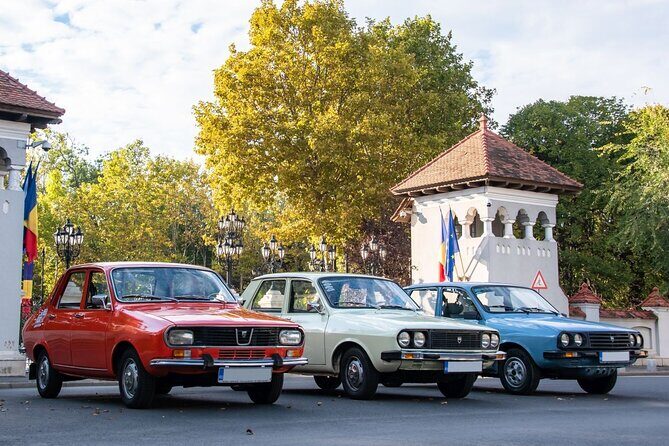
You’re paying for a guided ride that blends transport and commentary into one smooth package. The price is $126.43 per person, and the tour runs about 3 to 4 hours. For that length of time, the big value is that it’s private: only your group, with hotel pickup and drop-off across Bucharest, plus water in the car and a small tour gift.
One thing to understand upfront: you won’t drive the Dacia. A professional local guide is also the driver, so you can relax and watch the city change every few minutes. The cars are fully restored classics built to meet safety traffic regulations, but they’re still period vehicles. That means no modern driver aids and no AC, and it’s not automatic in the way you might expect. (You’ll just ride; still, you’ll feel the difference in comfort.)
Practical tip: Bucharest is a city where the “meaning” of a place often depends on what’s next to it. This tour is built to show those juxtapositions in motion, then pause briefly so the stories land.
You can also read our reviews of more private tours in Bucharest

The Contrasts Concept: How Bucharest Makes More Sense After This Route
This isn’t a random driving tour. It’s a designed line through Bucharest’s eras of power and its aftershocks. You start near landmarks tied to the regime’s big plans, then move through royal-era neighborhoods, Belle Époque vibes, and finally into areas shaped by heavy-handed 20th-century history—communist housing blocks, Soviet occupation quarters, and the industrial zones that later went silent.
The timing matters. Each stop is short—often around 15 to 30 minutes—so the guide gives you the “why” quickly, then moves you on. If you’re the type who gets restless in long bus tours, this shorter format is usually a plus.
And if you’re coming from somewhere else in Europe, you’ll notice something: Bucharest’s contrast is not subtle. It’s built into the streets. You’ll be shown how neighborhoods changed from royal or bourgeois power bases into communist mass housing, then into the post-1990 patchwork of today.
From Uranus to Academia Română: The Revolution’s Stopped Demolition Story
Your first real historical punch comes at Academia Română, in the Uranus area. The stop is about 20 minutes, and admission is not included (this is more about the exterior and the surrounding context).
This is where the tour turns from architecture to cause-and-effect. You’ll hear how, in the 1980s, Ceaușescu’s demolition plans were halted by the Romanian Revolution. It’s the kind of detail that changes how you see a building or empty space. Instead of asking what it is, you start asking who tried to control what would be there—and what got interrupted.
A smart added layer here: the guide connects the region’s story to nearby markers of different eras. One standout contrast mentioned in guide talk is how Academia Română’s communist-era symbolism sits next to the presence of Bragadiru Palace, associated with Dumitru Bragadiru. Even if you don’t go inside anywhere, the point is visual: one side of Bucharest grew from top-down power; another became cultural-facing for the masses later.
Fântână and the Bourgeois Neighborhood Roots
Next you shift to a more human-scaled chapter of the city. Fântână is tied to a bourgeois neighborhood that began in the 19th century, linked to the area around the first Royal Palace of Romania. Expect about 15 minutes and note the admission at this stop is free.
This is a good reset after the darker planning stories. You get a brief orientation of how Bucharest’s “in-between class” spaces grew over time—places that weren’t royal courts, but weren’t working-class outskirts either. The guide keeps it short, so you learn just enough to place later neighborhoods correctly.
If you like walking into a city with a simple map in your head—who lived where, and why—this stop helps.
Cotroceni Palace Gardens: Belle Époque Bucharest, Briefly
Then it’s on to Cotroceni Palace’s gardens, with about 30 minutes here. Admission is not included, so treat it like an exterior-focused visit and a storytelling pause.
This is where you see Bucharest’s royal phase in a calmer setting. The Cotroceni area is connected to the first Royal Palace in the modern monarchy era, and the guide frames it as Belle Époque Bucharest—the city imagining itself as European and grand.
The practical value is not just the beauty. It’s the contrast engine again. Once you’ve seen royal landscaping and “state-symbol” spaces, the later housing blocks and industrial ruins make more emotional sense. You start to understand the same geography used for very different purposes across decades.




Drumul Taberei Park: Working-Class Blocks and the Mall Built on Ruins
The next stop is Parcul Drumul Taberei (also called Park Camp Road), about 20 minutes. Admission is not included.
Here, you get a working-class communist story in plain terms: large apartment blocks built for mass living, plus a later layer where a shopping mall was built on the ruins of a communist canteen. That detail matters. It shows how physical space can keep being reused, even when the political story changes.
Expect photos and guided explanation rather than museum time. If you want a quick, human read on Soviet- and communist-era urban planning, this is a strong moment.
One consideration: because it’s an outside stop, you’ll get more out of it if you’re comfortable standing and looking, and if you’re ready to switch from “pretty streets” mode to “history in the concrete” mode.
Ferentari and Piața Rahova: Bucharest’s Hard Contrast Zone
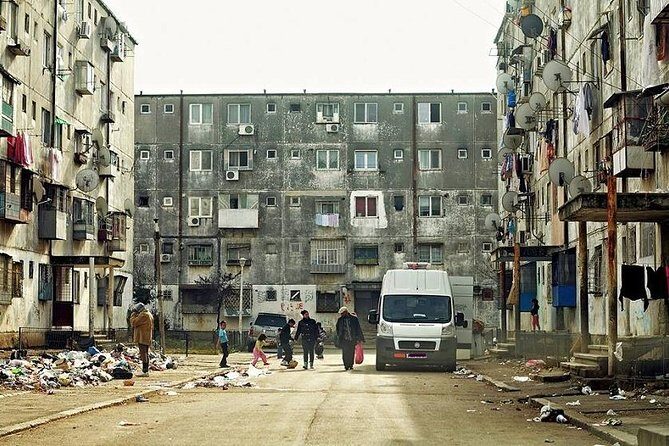
This is the area many people come for, but it’s also the area you should approach with respect and curiosity. The tour explores the Ferentari fallen industrial area built in the 1970s, then moves to Piața Rahova for about 30 minutes. Admission at both of these stops is not included.
In Ferentari, the guide frames how the area formed during the socialist industrial push—then what happened when that economy collapsed. It’s part of why Bucharest can feel so layered: industrial zones don’t just disappear; they often turn into other kinds of urban survival spaces.
Then you go to Piața Rahova, in the wider Ferentari blocks area. You’ll hear the story of how it shifted from a workers area into a city ghetto after the post-socialist 1990s. The tour also includes a stop in the peasant market, which is one of the most practical ways to learn a neighborhood. Instead of only hearing about hardship, you see how daily life keeps going—food, trade, and social routines.
This isn’t a “comfort tour.” It’s a look at inequality with context. If you’re hoping for a purely pretty day, you may find the tone heavier here.
Fosta Uzină Rocar: Ruined Factories and the Story of a Neighborhood Up and Down
After that, the pace stays focused with Fosta Uzină Rocar. It’s about 20 minutes, and admission is included for this stop.
This area is described as a ruined socialist-times zone left behind after factories collapsed. What the guide does well here is connect the physical abandonment to the bigger narrative: when production stops, neighborhoods don’t instantly “reset.” People adapt, economies shift, and the landscape bears the memory.
Because admission is included, this is one of the few moments where you get more than a visual glance. You’ll get a brief exploration and the kind of neighborhood rise-and-fall storytelling that explains why locals might talk about these places with mixed feelings.
Broscuțe Park: The Colonel’s Quarter and Stalinist-Era Life
Next comes Broscuțe Park, about 20 minutes, with admission included. This stop moves the timeline further into the Soviet occupation era. The area is described as the Colonel’s Quarter, tied to early occupation-era life.
The tour’s framing here is about daily living under Stalinist days in Bucharest—how the rhythm of life gets shaped by occupation structures and power hierarchies. It’s another outside exploration, but admission included suggests you’ll be entering or viewing a space tied to that story.
If you want the city’s 20th-century political history connected to real people’s lived environment, this part helps connect the dots between communist planning and Soviet influence.
Palace of Parliament: The Biggest Building, Rebuilt After Total Demolition
The final major anchor is the Palace of Parliament. You’ll spend around 20 minutes here, and admission is not included.
This is your scale moment. The guide presents it as the biggest civil building in the world, tied to a neighborhood of about 20 square kilometers that was completely rebuilt after a total demolition. That’s a huge, almost abstract fact—until you hear it spoken aloud in context.
Practical reality: since admission isn’t included, your experience here is more about the exterior and the neighborhood context. If you want interior museum-style exploration, you’d need other arrangements. But for understanding how power tried to dominate space, this stop is still the right capstone.
What the $126.43 Value Covers (And What It Doesn’t)
Let’s be blunt about value. You get a lot that’s not always included in cheaper tours: pickup and drop-off from your address, transport in a fully restored classic Dacia with a guide-driver, water, and a tour gift. Even better, the tour is private, so you’re not squeezed into someone else’s schedule.
Still, two “value boundaries” matter:
- Not every stop includes admission. Some are outside-only or admission-free, while others require the included ticket only for specific sites.
- This is a ride experience, not a long indoor museum day. Each stop is brief. That’s the point, but it affects how much you’ll take in if you prefer long visits.
Also, the car is a 70–80s classic without AC, ABS, GPS navigation, servo-direction, or automatic gear drive. You won’t drive it, but weather can still affect the feel of the trip. The good news: during wintertime the cars are heated.
One scheduling tip: this tour is often booked about 132 days in advance on average, so if you’re traveling in peak season or on a tight calendar, book early.
Comfort Tips: How to Enjoy the Ride Without Fuss
To enjoy this well, plan like you’re doing city walking and street photos, even though you’re mainly riding.
- Wear shoes that handle uneven sidewalks and standing time.
- Bring a camera you can access quickly, since photo stops are part of the format.
- Dress for temperature shifts. Even with heating in winter, it’s still an older-style vehicle.
- Keep your expectations aligned with the stop length. You’ll get context and direction fast, then move on.
Also note the rules that help keep the experience smooth: no pets, and no children under 10. That can make the day feel calmer and easier to manage.
Who This Tour Suits Best
I’d point you to this tour if you want Bucharest through the lens of social change—palaces to neighborhoods, industry to abandonment, state planning to daily life. It fits well with couples, friends, and solo travelers who like stories and street-level context.
You might skip it if you’re only interested in interior museum visits, or if you need modern car comfort to stay happy for a half day. The Dacia is part of the appeal, so if the idea of riding a classic vehicle sounds stressful, you’ll feel that stress all day.
Should You Book This Contrasts Tour?
Yes, if you want a guided half-day that explains Bucharest’s contradictions with real neighborhood context. The tour’s “value engine” is simple: pickup + private guide-driver + classic Dacia transport + stop-and-story pacing. It’s also supported by a very high overall rating (4.9 on 9 reported reviews), with repeated praise for guides like Mihai and for the way the Dacia ride adds fun without turning the history into a gimmick.
Book it when you want to understand the city’s layers fast, then use the rest of your time for whatever you’re most curious about.
FAQ
How long is the Bucharest Contrasts tour?
It lasts about 3 to 4 hours.
How much does the tour cost?
The price is $126.43 per person.
Is pickup and drop-off included?
Yes. Pickup and drop-off are included from addresses across Bucharest.
What language is the tour offered in?
The tour is offered in English.
Is this a private tour?
Yes. It’s private, meaning only your group participates.
Do I get to drive the Dacia?
No. You won’t drive the Dacia car. A professional guide and driver will drive.
Are admission tickets included for all stops?
No. Some stops have admission not included, while other stops include admission (notably Fosta Uzină Rocar and Broscuțe Park). Other stops are free.
What is included in the tour package?
Hotel pickup and drop-off, a professional local guide and driver in your car, transport on a guided circuit, water in the car, and a personalized tour gift.
What if plans change and I need to cancel?
You can cancel for a full refund with free cancellation up to 24 hours in advance of the experience start time.