REVIEW · BUCHAREST
Bucharest: Communist Bike Tour
Book on GetYourGuide →Operated by Bike The City Bucharest · Bookable on GetYourGuide
Communism still steers Bucharest, and this bike tour turns that heavy topic into a ride you can actually follow. I love how the route links the big turning points, from the first Romanian parliament to Revolution Square and Ceaușescu’s endgame at the Central Committee. I also love the practical side: helmets, locks, and an efficient 4-hour loop let you see serious distances without burning a whole day. The one drawback: it’s not a fit if you have limited mobility or if city traffic makes you nervous, since you’ll be cycling through busy streets.
The best part for me is the way the live guide ties buildings to real decisions people made. You’ll hear the story in English, and guides like Horia (and sometimes Alex or Chorea) often widen the frame beyond communism to help you understand how the city works now.
In This Review
- Key things you’ll notice on this communist bike loop
- Turning politics into street-level understanding
- Getting started by Hanu’ Berarilor: what to expect before you pedal
- Old city framing: how the guide sets up the whole story
- Coral Temple stop: faith, community, and early communist momentum
- The first Romanian parliament and the bombing campaign
- Stalin-era elite housing: when architecture shows the winners
- Revolution Square: the uprising’s public stage
- Ceaușescu’s last speech at the Central Committee site
- Casa Radio: Bucharest’s biggest unfinished communist project
- The National History Museum and the communist reshaping of a major complex
- Price and value: why $53 can feel fair for 4 hours
- Who should book, and who should skip
- Quick tips for a smoother ride in Bucharest traffic
- Should you book the Bucharest Communist Bike Tour?
- FAQ
- How long is the Bucharest Communist Bike Tour?
- What does the price include?
- Is food or drinks included?
- Where is the meeting point?
- Is the tour offered in English?
- Do I need to bring a helmet?
- Is the tour suitable for people with limited mobility?
Key things you’ll notice on this communist bike loop
- Old-city checkpoints that explain what communism did to Bucharest, not just what it believed
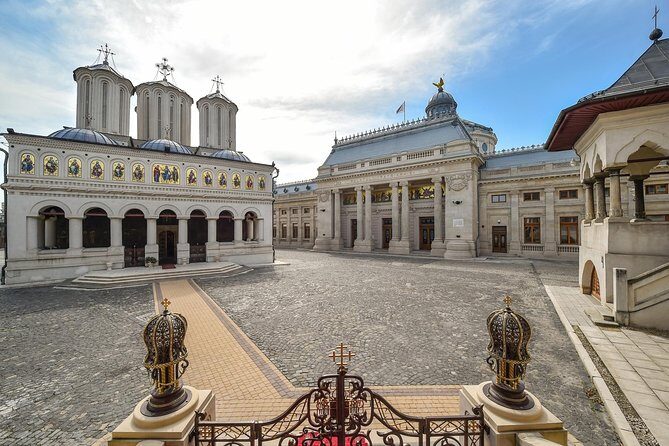
- Coral Temple context, including how the Jewish community helped seed early communist momentum in the 1920s
- The first Romanian parliament and the communist bombing campaign, a turning point in the fight over Romania’s democracy
- Stalin-era elite housing plus Soviet-era occupation life, seen through the neighborhood where Russian generals lived
- Casa Radio and the National History Museum, two of the city’s biggest unfinished communist-era statements
- Revolution Square and the Central Committee site, where the December 1989 revolution took off
Turning politics into street-level understanding
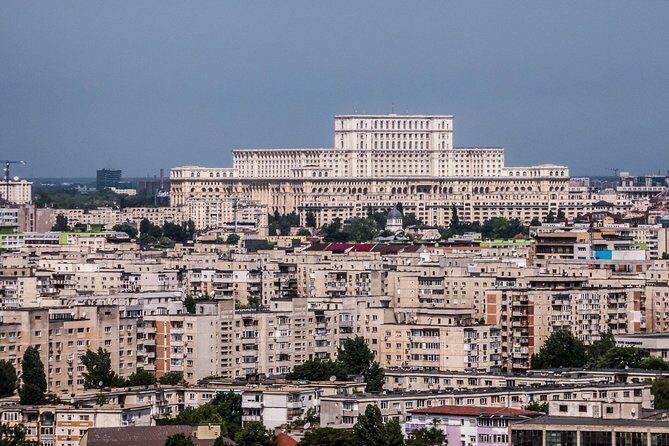
This tour works because it treats politics like something you can see and measure. You’re not just reading about regimes; you’re riding past the spaces they built, reshaped, and left half-finished. Bucharest has a talent for layering time on top of time, and a bike makes those layers easier to track than a slow walk or a scatter of separate taxi stops.
I also like that the tour doesn’t act like communism was only a set of ideas. It shows how the era reorganized daily life through architecture, government power centers, and whole neighborhoods built for the ruling class. That’s the difference between a vague history lesson and a route that actually gives you orientation when you’re back on foot later.
You can also read our reviews of more cycling tours in Bucharest
Getting started by Hanu’ Berarilor: what to expect before you pedal
You meet just across from the restaurant Hanu’ Berarilor (Casa Oprea Soare). That’s a handy landmark, because it’s right in the old-city area where you can also grab coffee before you roll, if you feel like arriving early and getting your bearings.
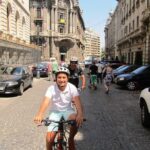
The ride is 4 hours, and you’ll have a live English guide plus the usual “keep you safe and rolling” gear: bikes, helmets, and bike locks are included. The lock matters more than people think. Bucharest is very walkable and bike-friendly in parts, but you’ll still want the option to secure your bike quickly when stops get tight.
One more thing you should factor in: this isn’t marketed for people with limited mobility. And even if you’re mobile, you should only book if you’re comfortable riding in dense city traffic. One review highlighted that the route has an extended action range that’s worth the effort, but only if you can handle the street conditions.
Old city framing: how the guide sets up the whole story
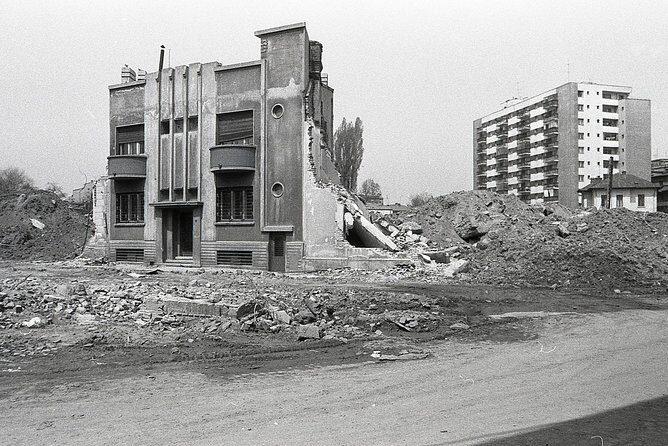
The tour begins in Bucharest’s old city center, and the guide gives context on why the communist era damaged historic parts of the city. That opening matters. If you start by looking only at what remains, the biggest lesson can get lost. This way, you’re warned early that some of what you see isn’t accidental—it’s the result of decisions made under pressure.
As you pedal away from the start, the guide’s job is to keep the story moving. You’ll bounce between ideology, public events, and physical locations, and the route is built so each stop connects to the next. It’s a smart rhythm for a topic that can otherwise feel heavy.
Coral Temple stop: faith, community, and early communist momentum
Next up is Coral Temple. This stop comes with a specific piece of political context: the Jewish community in the region were among the initiators of the communist movement in the early 1920s.
Why this is worth your time: it complicates the usual one-note narrative. Instead of treating communism like a single “import” or a single “group” idea, you see it growing through multiple communities and motivations. Even if you don’t agree with the politics, understanding who participated, and why, helps you read later events with fewer assumptions.
Practically, this is also a good “settling in” stop. You’ll have momentum on the bike but still get a dense chunk of context before the tour hits the more dramatic sites.
The first Romanian parliament and the bombing campaign
The tour continues at the site connected to a communist bomb attack against the democratic Romanian government, tied to what’s described as the first Romanian parliament.
This is one of the route’s emotional anchors. The guide isn’t just telling you that violence happened; the stop is positioned to explain what it meant for Romania’s democratic process. In a city full of official buildings, a parliament site lands differently than a generic monument. You’re seeing where political authority was fought over, not just where it was proclaimed.
A drawback to note: this kind of stop can be emotionally intense if you’re sensitive to accounts of political violence. It’s not graphic as presented here, but the focus is real-world conflict. If you prefer lighter sightseeing, you might feel the tone shift.
Stalin-era elite housing: when architecture shows the winners
After the parliament-era material, you move toward the post-World War II period and the Soviet occupation that lasted 12 years. One highlight is the neighborhood where the Russian army generals who were in charge of ruling Romania lived.
This section matters because it shows communism as an arrangement, not a slogan. When power is concentrated, you can often find it in the built environment: where senior officials live, how much space they get, and what the city is organized to protect. Riding through this kind of neighborhood gives you a shortcut to reading hierarchy on sight.
The route ties this to a Stalin-era elite model as well—an area built for communist elites during the Stalin era. Think of it as the physical blueprint of who counted most. If you’ve ever wondered why certain districts feel like they were designed for insiders, this is the kind of stop that answers that question without a long lecture.
Revolution Square: the uprising’s public stage
Then you reach Revolution Square, one of the tour’s stated highlights. This stop is where the city’s political story turns from quiet power to public rupture.
What I like about ending up here (instead of only focusing on earlier checkpoints) is that it helps you connect the earlier decades to what happens in December 1989. The communist system isn’t treated like a fixed background; it’s shown as something that eventually breaks in a very specific time window.
If you’re the type who enjoys connecting past to present, you’ll probably appreciate this. Revolution Square isn’t just “about history.” It’s a place the city still uses to tell time, even after regime change.
Ceaușescu’s last speech at the Central Committee site
The last stage includes the site in front of the Communist Central Committee, where Ceaușescu held his last speech and where the revolution started in December 1989.
This is the tour’s big finale, and it’s easy to see why. A speech location is different from a random monument. It’s tied directly to a moment that triggered change, and your ride ends at the kind of place people pointed toward when history shifted fast.
One travel tip: slow down in your head even if the pace stays moving. This is one of those stops where you’ll get more out of a quiet moment of observation. Notice scale, positioning, and how power buildings typically dominate the street.
Casa Radio: Bucharest’s biggest unfinished communist project
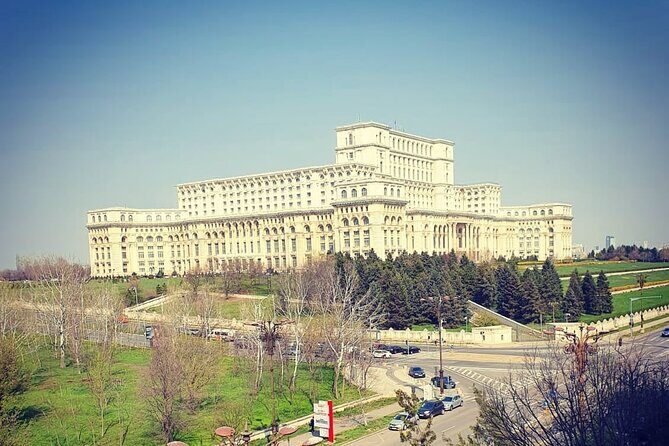
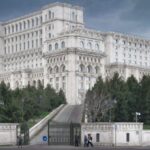
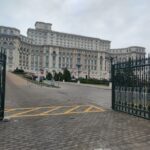
Another major highlight is Casa Radio, described as the biggest unfinished communist urban project. It’s the kind of place that makes the political point without needing extra explanation: if plans can stop mid-construction, what else can stop mid-story?
Casa Radio is valuable on this tour because unfinished projects can be more honest than finished ones. They show priorities that changed, resources that shifted, and regimes that ran into limits—sometimes political, sometimes practical. Even if you’re not an architecture fan, the emptiness still tells you something.
The drawback here is the same with any large urban site. If it’s busy around the area or streets are tight, your bike position matters. Keep awareness high and don’t count on long photo pauses.
The National History Museum and the communist reshaping of a major complex
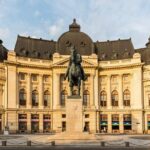
The tour’s last content-heavy segment passes by the biggest unfinished communist building: the National History Museum. The description focuses on how the communist regime completely reshaped the buildings during its flourishing times.
That phrase—reshaped—does a lot of work. Instead of only replacing structures with new ones, communism in this telling is shown as reworking what already existed or redirected major civic projects into a new political meaning. You’re not just looking at a single building; you’re looking at a reminder of how government can use culture, museums, and public space to frame identity.
If you’re short on museum time when you arrive in Bucharest, this stop gives you a taste of the cultural power play without committing to an indoor visit. You get the message from the street level.
Price and value: why $53 can feel fair for 4 hours
At about $53 per person for a 4-hour guided bike tour, you’re paying for three things together: a live English guide, a bike with helmet, and a bike lock. If you’ve tried to plan city cycling elsewhere, you know that adding up bike rental + safety gear + guide time can get expensive fast.
What makes the price feel fair is that the tour is designed like a route, not a random set of stops. The guide is using the city’s geography to connect causes and effects: early political movements, attacks on the democratic government, Soviet occupation living patterns, and the later collapse of the regime.
Since food and beverages are not included, you’ll want to plan your own snacks around the ride. For many people, that’s a small trade-off: you’re not forced into a set meal plan, and you can pick what fits your day.
Who should book, and who should skip
This tour is a great match if you:
- want a fast way to see major sites tied to Romania’s communist era
- enjoy guided storytelling with context, not only photo stops
- can comfortably ride a bike in city traffic for several hours
It’s not a match if:
- you have limited mobility (it’s explicitly not recommended)
- you’re uncomfortable cycling in dense traffic conditions
One more “fit” question: are you okay with a tour that spends time on political conflict and regime power? If you prefer lighter themes, consider pairing this with a more relaxed afternoon, so your day doesn’t feel like one long lecture.
Quick tips for a smoother ride in Bucharest traffic
You’ll get bikes, helmets, and locks, but you still control how pleasant the ride feels. Bring comfortable shoes—your feet will be doing some walking at stops, and you’ll want grip and comfort.
Also, if you’re not used to riding in busy city streets, treat this as a confidence-builder rather than a speed test. Keep your spacing, listen for guide cues, and don’t rush photo moments. The route covers a lot of ground, and the best way to enjoy it is to stay relaxed and steady.
Finally, since food isn’t included, plan to have water and a light snack before you start if you know you get hungry. A 4-hour ride can feel longer than you expect when you’re paying attention and absorbing history.
Should you book the Bucharest Communist Bike Tour?
I’d book it if you’re the type of traveler who likes real places with a clear story thread. This tour connects communist-era ideology to specific sites: Coral Temple, the first Romanian parliament area tied to the bombing campaign, elite neighborhoods from Stalin and Soviet rule, and the big unfinished projects like Casa Radio and the National History Museum. It then brings everything to a public climax at Revolution Square and the Central Committee site tied to Ceaușescu and the December 1989 revolution.
Skip it if cycling in dense traffic makes you uneasy or if mobility is a concern. In that case, you’ll likely feel stressed rather than informed.
If you are comfortable on a bike, this is one of those value-rich ways to understand Bucharest beyond the postcard layer. You’ll ride away with a sharper mental map of how power reshaped the city—and why those buildings still matter.
FAQ
How long is the Bucharest Communist Bike Tour?
The tour lasts 4 hours.
What does the price include?
The ticket includes a live guide, bikes, helmets, and bike locks.
Is food or drinks included?
No. Food and beverages are not included.
Where is the meeting point?
Meet just across from the restaurant Hanu’ Berarilor (Casa Oprea Soare).
Is the tour offered in English?
Yes. The live guide speaks English.
Do I need to bring a helmet?
No. Helmets are included in the ticket price.
Is the tour suitable for people with limited mobility?
No. It is not recommended for people with limited mobility and is not suitable for people with mobility impairments.