REVIEW · SIGHETU MARMATIEI
Maramures in a nutshell
Book on Viator →Operated by MaramuresbyRadu · Bookable on Viator
Maramureș is loud in color and craft. This is a private, full-day route from Sighetu Marmatiei that mixes church stops with hands-on local skills, so you see rural Romania the way it actually lives. I love that the day starts with pickup from your accommodation and runs as a true private tour—just your group—so you can ask questions and set the pace.
I also love the craft focus: you’ll meet artisans in Sârbi, learn what they do, and you may even get a chance to try on traditional clothing before settling in for a traditional lunch. The main thing to consider is timing: it’s a packed 9 hours with several short church visits, so if you hate rushing, wear comfortable shoes and plan for quick in-and-out stops.
In This Review
- Key things you’ll notice on this Maramureș day
- A private Maramureș day from Sighetu Marmatiei
- Merry Cemetery: empiric tombstones and the stories behind them
- Bârsana Monastery: legends, church atmosphere, and an artifacts museum
- Sapânța-Peri and Desesti: UNESCO wooden churches in short, satisfying visits
- Budesti Josani’s St Nicholas Church: the UNESCO stop that feels most guided
- Sârbi artisan workshop: weaving, hats, and fruit distilling
- Traditional lunch in a local inn: the calm midpoint
- The guide factor: when friendly storytelling makes the day work
- Price and value for an all-day private circuit
- How to plan your day so you don’t feel rushed
- Who this Maramureș tour fits best
- Should you book Maramures in a nutshell?
- FAQ
- Where does the tour start?
- How long is the Maramureș tour?
- Is this tour private or shared?
- What language is the tour offered in?
- Which stops include admission tickets?
- Are any stops free to enter?
- Is lunch included?
- Can I bring a service animal?
- How far in advance is it usually booked?
- What if my plans change?
Key things you’ll notice on this Maramureș day
- Private door-to-door feel: pickup from your accommodation in Sighetu Marmatiei and nearby areas
- Merry Cemetery’s empiric tombstones: not a typical cemetery tour—read the stories on the markers
- Bârsana Monastery with a museum: visit the church area and its legends, plus older religious artifacts
- UNESCO wooden church quick hits: Sapânța-Peri, Desesti, and Budesti Josani keep the day moving
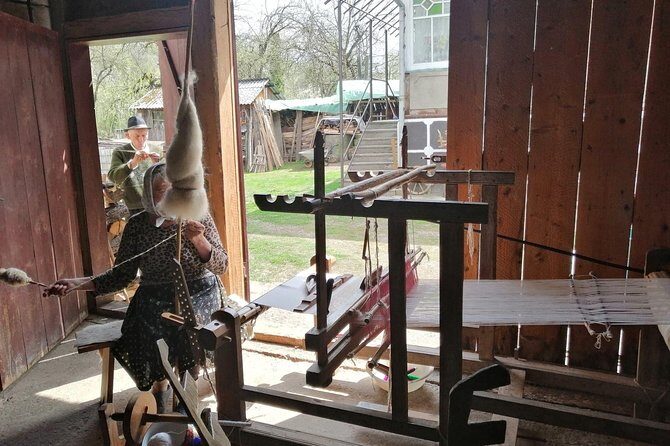
- Real artisan work in Sârbi: weaving carpets/dresses, hat weaving, and fruit distilling
A private Maramureș day from Sighetu Marmatiei
This tour is built for people who want more than one pretty viewpoint. It’s a private circuit that starts at 9:00 am with pickup right from your accommodation in Sighetu Marmatiei (and close by). That matters, because Maramureș’s best moments often happen in village workshops and small church interiors—places you don’t always reach easily on your own.
The overall rhythm is simple: cemetery first, then monasteries and wooden churches, then a stop dedicated to the crafts of local makers. You’ll be out for about 9 hours, and the tour is offered in English. One bonus: in the UK-style sense of “worth it,” the price is per person at $180.44, and the private setup means you’re paying for time and local access, not just transportation.
You can also read our reviews of more tours and experiences in Sighetu Marmatiei.

Merry Cemetery: empiric tombstones and the stories behind them
Your first stop is Merry Cemetery, where you walk around and read the empiric tombstones for about 30 minutes. This is the kind of place that rewards slow attention, not speed. The markers are what make it memorable—simple but intensely expressive, and full of the community’s way of telling stories.
What I like about opening here is the mood. You go from the living culture you’ll see later to a cemetery that feels like it belongs to daily life, not only to mourning. It’s also a good mental reset before the heavier spiritual sites later in the day.
Possible drawback: the visit is timed (about 30 minutes). If you’re the type who wants to stand and read everything carefully, bring patience—and be ready to pick a few tombstones to focus on deeply rather than trying to read every single one.
Practical tip: plan on a bit of walking on uneven ground. Closed-toe shoes will save you from frustration.
Bârsana Monastery: legends, church atmosphere, and an artifacts museum

Next up is Bârsana Monastery for about 1 hour. You’ll visit the monastery and listen to explanations about legends and stories connected to the church area. After that, there’s an Old religious artifacts Museum included in the visit.
This stop is different from a quick exterior-only photo stop. You’re getting a guided explanation while you’re standing where the stories are supposed to live. In places like this, the details matter: how people describe the church, what legends they repeat, and why certain objects are kept and shown. The museum portion gives you something tangible to anchor the stories to, rather than treating the monastery as only a viewpoint.
One thing to keep in mind: 1 hour sounds generous until you’re inside, listening, and trying to take in the artifacts. If you like museums, you’ll enjoy the extra time. If you’re not museum-inclined, you still won’t feel like you’re losing time, because the museum is tightly connected to the religious setting.
Sapânța-Peri and Desesti: UNESCO wooden churches in short, satisfying visits
After Bârsana, the day shifts into quicker stops—churches with enough impact to matter, but short enough to keep you moving. Sapânța-Peri Monastery is next (about 20 minutes, and the admission is free). Then you go to Desesti for about 30 minutes, also free admission, with a UNESCO wooden church visit.
These short visits are actually a smart way to handle Maramureș’s wooden-architecture highlights. If you try to do fewer sites with lots of time, you can end up stuck in one place while you miss the variety that makes the region special. Here, you get multiple styles and details, spaced out with clear transitions.
Sapânța-Peri (20 minutes, free): expect a quick focused look at a striking wooden church—70+ meters high, according to the tour details. High means you’ll likely spend some time looking up and around, checking proportions and details.
Desesti (30 minutes, free): you’ll have enough time to get oriented, see the major features, and still move on before you’re exhausted.
Possible drawback: because these stops are short, you’ll get more “first look” than “deep study.” If you’re an architecture fanatic, you might want to take extra photos and accept that you won’t be able to read every detail slowly.
Budesti Josani’s St Nicholas Church: the UNESCO stop that feels most guided
Sârbi and the artisans come later, so before that, you visit the St Nicholas Church in Budesti Josani for about 30 minutes with admission ticket included. This is another UNESCO wooden church stop, and the extra time compared with Sapânța-Peri helps you slow down just a bit.
Why this one matters: by the time you reach it, you’ve already seen enough wooden church features that your brain starts recognizing patterns—construction style, how interiors feel, and how ornamentation communicates local identity. That makes Budesti Josani less like a “new” site and more like a continuation of the theme you started earlier.
Possible drawback: this is still a timed stop, so you won’t have hours. If you tend to get motion sickness or tire easily, sit for a moment once you’re inside and let the guide’s explanations land before you start taking lots of photos.
Sârbi artisan workshop: weaving, hats, and fruit distilling
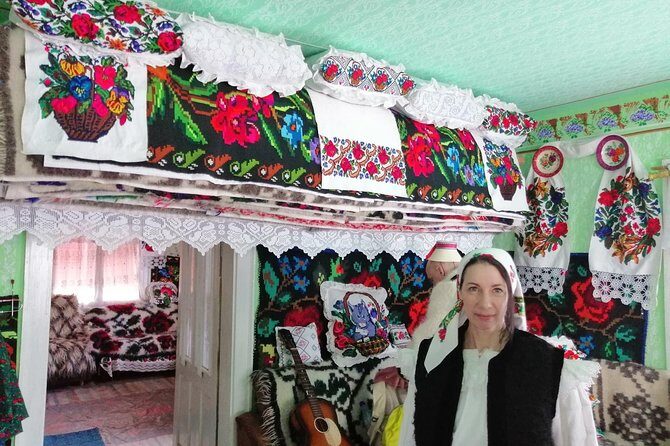
This is one of the best parts of the day. Sârbi is where you meet the artisans for about 1 hour. The tour description is specific about what you might see: women weaving carpets or dresses, men weaving hats, and distilling fruits.
This is the craft stop that turns the whole day from sightseeing into understanding. Churches are important, but the reason Maramureș feels real is that people still make things by hand. Watching weaving work (and learning what goes into it) gives you a new lens for the region’s traditional clothing and home textiles later.
The reviews add even more texture here. One standout detail is that, in addition to meeting makers, you might see a whirlpool carpet washing demonstration during the crafts segment. That’s the kind of practical, hands-on moment that makes your photos feel less like postcard images and more like proof of a real process.
Possible drawback: with a full day, you can arrive at the artisan stop a little tired. That’s when you’ll benefit most from taking short breaks—ask questions, watch for a minute or two, then stand back and reset.
Traditional lunch in a local inn: the calm midpoint
Some tours skip the “eat like a local” part or make it feel generic. This one includes a traditional lunch, and it’s scheduled as part of the day’s flow—often at a local inn.
Why lunch matters here: after multiple church visits, you want food that helps you slow down. It also gives you a natural chance to talk with your guide about everyday life in Romania—what people do, what’s changed, and what hasn’t. In at least one guide experience highlighted in the reviews, Ioana stood out as someone who didn’t just explain the sights, but also had insights about living in Romania. If you get a guide like that, your lunch becomes more than a break.
Practical tip: ask your guide what dish is most local for that day. If you’re picky, this is the moment to set expectations politely rather than hoping the menu will magically change.
The guide factor: when friendly storytelling makes the day work
A tour can have great stops on paper, but the guide decides how it feels in real life. One guide name that shows up positively is Ioana. People highlight her as personable, friendly, and full of insights—plus she’s described as someone who keeps answering questions without getting worn down.
Even if you don’t know which guide you’ll have, it’s worth choosing this tour because the structure depends on explanations: legends at monasteries, context at UNESCO wooden churches, and the meaning behind craft techniques. When the guide is strong, you don’t feel like you’re just moving from one ticket gate to the next.
Price and value for an all-day private circuit
At $180.44 per person for about 9 hours, the price isn’t meant to be “cheap.” It’s meant to buy you a specific kind of day: private timing, pickup from your accommodation, and access to artisans and indoor sites.
Here’s how I’d think about value:
- You’re paying for time with a guide who can connect the dots between cemetery stories, monastery legends, and the craft world in Sârbi.
- You’re paying for private logistics so you aren’t coordinating buses or worrying about missing small rural stops.
- Several admissions are included (Merry Cemetery and Bârsana, plus Budesti Josani), while others are free (Sapânța-Peri and Desesti). That mix helps the day feel fair rather than like every stop costs extra.
When it feels like a good deal: if you’re traveling with a partner or small group, or you want a guide who can answer questions in English while you move around rural villages. When you might rethink it: if you’re the type who only wants one or two major sites and you plan to spend lots of time photographing without listening to context—because this tour’s value is in the explanations and interaction.
How to plan your day so you don’t feel rushed
This tour moves through six stops in about 9 hours. That’s not a problem if you plan for it.
What helps:
- Wear shoes for village walking and uneven cemetery ground.
- Bring a light layer. Churches and monasteries can feel cooler inside.
- Set your expectations: some stops are 20–30 minutes by design, so you’ll be choosing what to focus on rather than seeing everything slowly.
And if you’re the question-asking type, this tour usually rewards you. A strong guide can turn those short time windows into meaningful learning.
Who this Maramureș tour fits best
This experience is a great match if you want:
- A private day rather than a crowded group bus ride
- Culture that includes crafts, not only churches
- A balanced hit of cemeteries, monasteries, and UNESCO wooden churches
- A lunch stop that feels like part of the region, not just a reset button
It’s especially suited for first-timers to Maramureș who realize quickly that rural areas aren’t just scenery—they’re people making things and keeping traditions alive.
If you hate moving around a lot, you may find the pacing brisk. But if you can handle a full day with short guided stops, you’ll likely come away feeling you learned something real.
Should you book Maramures in a nutshell?
I’d book this tour if your goal is to understand Maramureș beyond the postcard level. The best reason is the combination: Merry Cemetery’s story markers, Bârsana’s legends plus artifacts, UNESCO wooden churches in efficient time blocks, and then Sârbi where you meet makers and see weaving and fruit distilling.
Choose another option if you only want slow museum-style visits at one or two sites. This day is structured for variety, and that’s the point.
If you can commit to the 9-hour pace and want a private, English-guided look at local craft culture, this is a strong pick.
FAQ
Where does the tour start?
It starts at 9:00 am in Sighetu Marmatiei. Because it’s private, pickup is from your accommodation or close by in the area.
How long is the Maramureș tour?
The duration is about 9 hours.
Is this tour private or shared?
It’s private. Only your group participates.
What language is the tour offered in?
The tour is offered in English.
Which stops include admission tickets?
Merry Cemetery has admission included. Barsana Monastery has admission included (and the museum is part of the stop). Budesti Josani (St Nicholas Church) has admission included.
Are any stops free to enter?
Yes. Sapânța-Peri Monastery and Desesti are listed as free admission.
Is lunch included?
Yes, a traditional lunch is included as part of the experience.
Can I bring a service animal?
Service animals are allowed.
How far in advance is it usually booked?
On average, this is booked about 90 days in advance.
What if my plans change?
You can cancel for a full refund if you cancel up to 24 hours in advance of the experience start time. Changes less than 24 hours before the start aren’t accepted.